



The development of appropriately designed, culturally safe, trauma-informed health and aged care for Stolen Generations survivors must be a priority, according to a new report from the Healing Foundation.
The Foundation delivered its report From Sorry to Action – A plan to act on Bringing them home (2026-2028) to the Australian Government this week, marking National Sorry Day on 26 May, the anniversary of the Bringing them home report being tabled in Parliament in 1997.
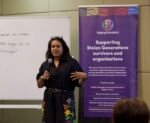
Leonie Williamson, a Gubbi Gubbi and Butchulla woman and Deputy CEO of the Healing Foundation, reflects below on her own experiences, growing up and hearing stories of forced removals and the continuing impacts on survivors today.
Leonie Williamson writes:
I was in my late teens when the Bringing them home report was handed down in 1997. I remember the sadness on learning the stories of children taken away from their families and the fear, trauma and grief that followed.
Still to this day I am shocked by the number of people I know, and have known, as family and community whose lives had been shaped by these acts of removal.
For Aboriginal people like me, these stories were, and are, always there. What Bringing Them Home did was put them on the public record as something systematic and national, not incidental or isolated.
These removals happened in my lifetime, and they remain very real for not only the people who were removed, but for the children and grandchildren they raised – along with families and communities from whom they were stolen. They are felt in memories, in bodies, in family relationships, and in the social and emotional wellbeing of communities.
In 2025, The Healing Foundation released the report, Are you waiting for us to die? The unfinished business of Bringing them home. It found that only five of the original 83 recommendations had been clearly implemented, just six per cent, almost three decades after the report was tabled.
That brought great sadness that so little had been done, but also a sense of renewal and a belief that there were still things that could be achieved if governments and institutions treated this work as urgent.
That is the purpose of From Sorry to Action: A plan to act on Bringing them home (2026-2028). The Action Plan identifies practical actions that governments and other institutions can take now in a number of priority areas, including health and ageing, records and redress, education and data, and accountability.
At its heart, this is a health and healing issue. The impacts are evident in higher rates of trauma, anxiety, depression, chronic disease and early death, and in socio-economic disadvantage that limits choices across a lifetime.
They are also felt in less visible ways that survivors and descendants talk about constantly, the grief of disconnection, fractured identity, family loss, and the way removal casts a shadow across generations. These are not side effects. They sit at the centre of what any serious response has to address.
Survivors experience significantly poorer outcomes than other Aboriginal and Torres Strait Islander peoples of the same age. They are more likely to experience violence, homelessness, poor mental health and substance use, and to live with chronic health conditions. These are not random disparities. They are the ongoing effects of policies that removed children from loving families, communities, culture and Country, and of the failure to fully repair that harm.
Critical timing
Acting now is crucial. Most survivors are now over 50 and are increasingly interacting with aged care, health and community care systems. Yet they face rigid identity requirements, a lack of culturally safe, trauma informed care, and co‑payments for services they rely on.
The Action Plan calls for changes such as more flexible identity verification for My Aged Care, redress and compensation payments being exempt from asset testing, exemptions from Support at Home co‑payments, and a permanent, independent First Nations Aged Care Commissioner. These are concrete, system level reforms that can be delivered within existing frameworks and would make a real difference to people’s lives.
For many survivors and descendants, records access is about health, connection and dignity. Records can contain crucial information about family, removal, institutions, Country and identity. They can help people reconnect, understand their own histories and make sense of experiences that may never have been fully explained.
In my own family, my mother is in her mid-70’s and still searching for records about what happened to her mother and grandmother. Part of that search is about being able to find and mark graves of family, to acknowledge their lives and passing.
Part of it is about finally seeing a whole story beyond protection orders, pastoral stations, policing and dormitories, and about the justice of having that history remembered. The Action Plan proposes changes that could make this much easier.
Education, research and data also shape whether systems respond properly to this history. Bringing them home recommended long ago that the history and effects of forcible removal be embedded across school curricula, tertiary education and professional training, but progress has been uneven.
The Action Plan responds with stronger national education commitments, survivor-led teaching resources and better data about survivors and descendants. Importantly, it recognises the role of Stolen Generations organisations, which can have a large impact for a relatively modest investment because they already understand and serve these communities.
Despite decades of evidence and advocacy, there has not been a joined up response. There are actions that can be taken now, but they require effort across governments, health and aged care systems, education institutions, record holders and the structures that oversee Closing the Gap.
The message I would want governments and others to take from this is simple: act now. There cannot be more excuses and there cannot be more time lost. The changes being asked for are achievable, and they have been long fought for by survivors and their organisations.
When the 30th anniversary of Bringing them home arrives in 2027, the measure of progress will not be how many speeches are given. It will be whether survivors can say they feel seen, that there has been genuine commitment, and that the country is honestly trying to respond to this work.
That will depend less on what is said on commemorative days, and more on the intention behind them and whether governments and institutions finally choose to act on what survivors have been telling us for decades.
• Leonie Williamson (Gubbi Gubbi, Butchulla) is Deputy CEO of the Healing Foundation.

See Croakey’s archive of articles on cultural safety






Add Comment