

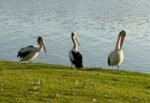


Introduction by Croakey: South Australia has recorded its first confirmed case of H5N1 bird flu, in a vagrant migratory seabird – a southern giant petrel that was found on Knights Beach at Port Elliot on the Fleurieu Peninsula.
The South Australian Government said in a statement today that this is currently being treated as an isolated incident, and there are no detections in poultry anywhere in Australia at this time.
The Government said its preparations have included a $6.8 million State Government investment since 2022 to establish a mobile diagnostic laboratory, decontamination units and other equipment to enable rapid deployment and on-ground responses, and comprehensive training of over 240 personnel.
The statement said bird flu infections in people are rare, but can be serious, and advised that people avoid contact with sick or dead birds and report any sick or dead birds or marine mammals to the Emergency Animal Disease Hotline on 1800 675 888.
“Good biosecurity and hygiene are crucial to protect your birds at all times, regardless of whether you’re a commercial producer or keep poultry, or pet birds at home,” the statement said.
Below Professor Euan Ritchie outlines the risks to Australian species and ecosystems, as well as steps that individuals can take to help reduce the risk of the infection spreading. Beneath his article, first published at The Conversation, are links to information sources.
Euan Ritchie writes:
The deadly H5N1 strain of bird flu has now been found in a second state, South Australia, after earlier being identified in Western Australia.
Authorities have confirmed three seabirds have died of the highly pathogenic avian influenza (HPAI) H5N1 virus. It is too early to know if H5N1 has spread beyond these animals to other wildlife or livestock in Australia.
But it appears very much a matter of when, not if, this happens.
Globally, H5N1 has already devastated wildlife populations. In Australia, this deadly virus could greatly disrupt ecosystems and push our most threatened species even closer to extinction.
The H5N1 strain of bird flu spreads through contact with bodily fluids such as saliva and faeces, infected animals or contaminated environments. It can also be transmitted through scavenging by species that feed on infected carcasses.
Since 2021, the H5N1 strain has killed millions of the world’s wild birds, mammals and poultry. This is because it can spread faster than other HPAI strains – including between mammals – and move between continents via migratory birds.
However, it’s hard to predict how H5N1 will affect our wildlife and ecosystems.
This strain of the virus is not yet established in Australia. And many of our species are endemic – meaning they’re not found anywhere outside Australia – so we don’t have the data needed to reliably predict how H5N1 may affect them.

Risk to threatened species
For threatened species, an H5N1 outbreak could be catastrophic. And a mass mortality event could be the final straw that finishes off a species. This is especially true if a population is already in decline, is geographically restricted or gathers to breed during certain seasons.
After the initial outbreak passes, populations may rebound through breeding and immigration. However, an extreme drop in numbers can create a genetic bottleneck, leading to rapid, substantial loss of genetic diversity. This, in turn, can threaten a population’s long-term health.
Since detecting H5N1 in Australia, authorities have understandably focused on protecting Australia’s spectacular birds – including the threatened regent honeyeater and orange-bellied parrot.
What’s received less attention are our iconic but increasingly threatened mammals. This includes the egg-laying platypus, native rodents such as the rakali and numerous marsupial species.
In the United States, the virus has already done widespread damage to native rodents such as squirrels and voles, and the marsupial Virginia Opossum. It may well do the same to Australia’s mammals.
Carnivorous marsupials such as endangered Tasmanian devils and quoll species are also at risk, as their hunting and scavenging may expose them to infected carcasses.
Kangaroos, wallabies, possums and bandicoots can also scavenge and eat meat, meaning they could come in contact with H5N1.
Species that live near shore birds in coastal and island habitats – including endangered mainland eastern barred bandicoots and threatened quokkas – are even more at risk.
The H5N1 strain could also prove deadly to our Australian sea lion and black swan populations. Black swans appear particularly susceptible to H5N1, which may be because they evolved in the isolated island continent of Australia. Unlike other swan species, they lack certain genetic traits that might help their immune systems fight the H5N1 virus.
Damage to ecosystems
Beyond individual species, H5N1 has the potential to greatly disrupt and devastate Australia’s ecosystems.
An H5N1 outbreak in predator species could see prey populations surge. If a local dingo population is wiped out by the virus, the kangaroos, wallabies, feral goats and other herbivores they prey on could rapidly increase in numbers. This could lead to overgrazing, which in turn would deprive other animals of food and shelter.
In freshwater and marine environments, an H5N1 outbreak could see many birds die in and around waterways in a short period. Nutrients from the bird carcasses could pollute waterways if not cleaned up, worsening water quality and oxygen levels and potentially causing widespread fish kills.
Compared to other countries and continents, Australia has had longer to prepare for an H5N1 outbreak.
The Federal Government has so far invested A$113 million to bolster our H5N1 response. This money will go towards disease surveillance, invasive species control, captive breeding programs and efforts to monitor wildlife health.
But we can also help stop the spread of H5N1 on an individual level by:
- immediately reporting any sick or dead animals to the Emergency Animal Disease hotline on 1800 675 888 or organisations such as Wildlife Health Australia
- not touching native wildlife
- only feeding birds in backyards, never in the wild, and following strict hygiene measures such as cleaning water baths weekly and opting for hanging bird feeders
- keeping dogs and cats away from wildlife, animal faeces and especially dead carcasses.
The arrival of H5N1 in Australia is not cause for panic, as this outbreak is yet to unfold.
But we must be extra vigilant in how we observe and interact with wildlife and nature. The future of our most vulnerable species depends on it.
Author details
Euan Ritchie is Professor in Wildlife Ecology and Conservation, School of Life & Environmental Sciences, Deakin University. He receives funding from the Australian Research Council and the Department of Energy, Environment and Climate Action. Euan is a Councillor with the Biodiversity Council, a member of the Ecological Society of Australia and the Australian Mammal Society, and President and Fellow of the Australian Mammal Society. Follow on Bluesky.
Further reading and resources
- Australian Centre for Disease Control: https://www.cdc.gov.au/diseases/bird-flu-avian-influenza
- Agriculture Department: https://www.agriculture.gov.au/campaigns/birdflu
- WA Government: Avian influenza in poultry
- The Conversation: What’s the risk of humans getting sick from bird flu? (This article highlights the risks to farm workers in the US, the importance of pasteurisation of milk, and the benefits of the seasonal flu vaccine, as reducing the burden of seasonal flu may help reduce opportunities for H5N1 to mutate and become more infectious to humans).
- Viruses on the Wing, site by Dr Michelle Wille, Senior Research Fellow & Outreach Coordinator, WHO Collaborating Centre for Reference and Research on Influenza, Department of Microbiology and Immunology, Peter Doherty Institute for Infection and Immunity
- Virology Down Under with Dr Ian M Mackay
- Birdlife Australia
- Statement by the Murray-Darling Conservation Alliance.

See Croakey’s archive of articles on One Health





Add Comment