
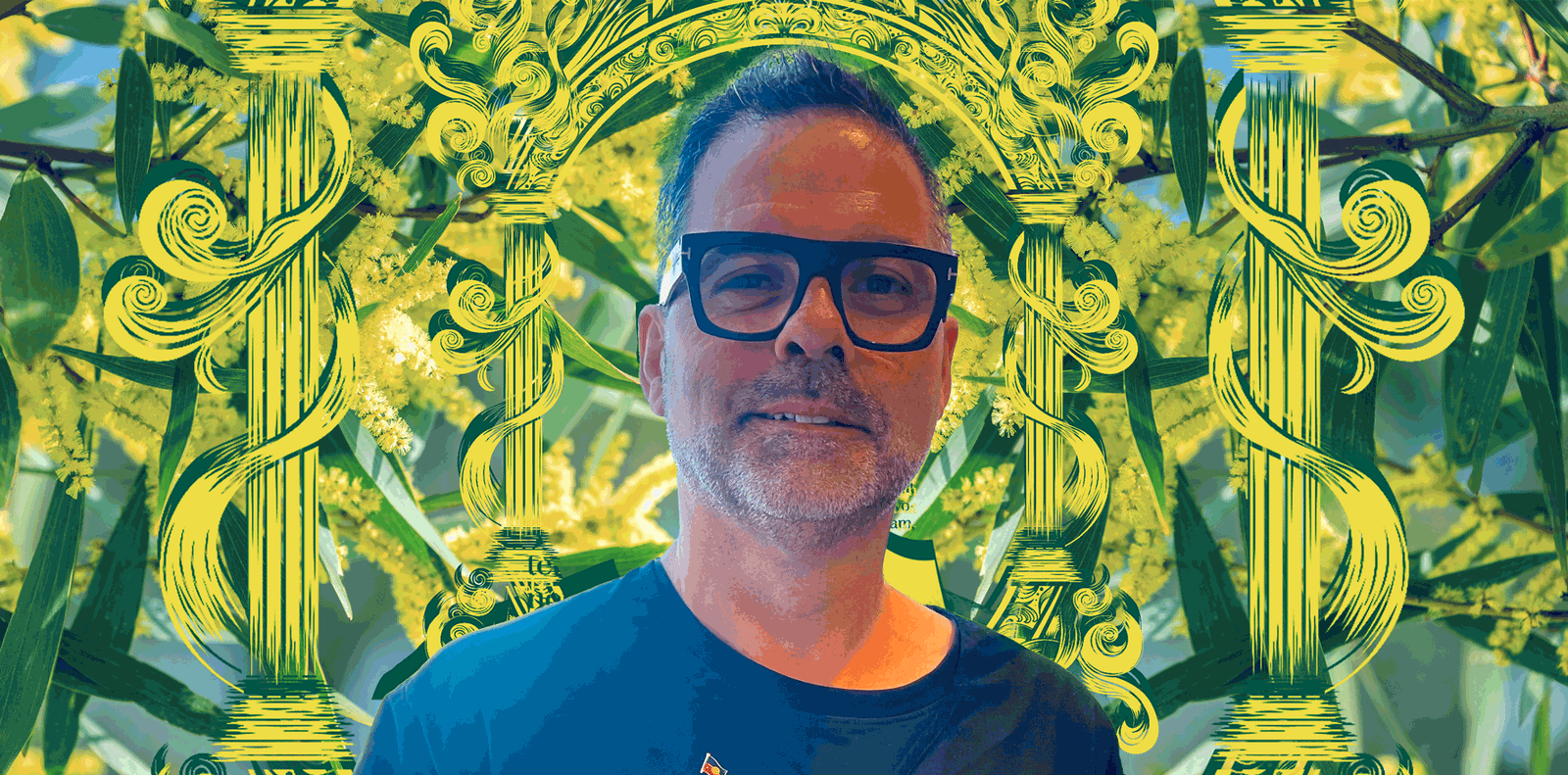

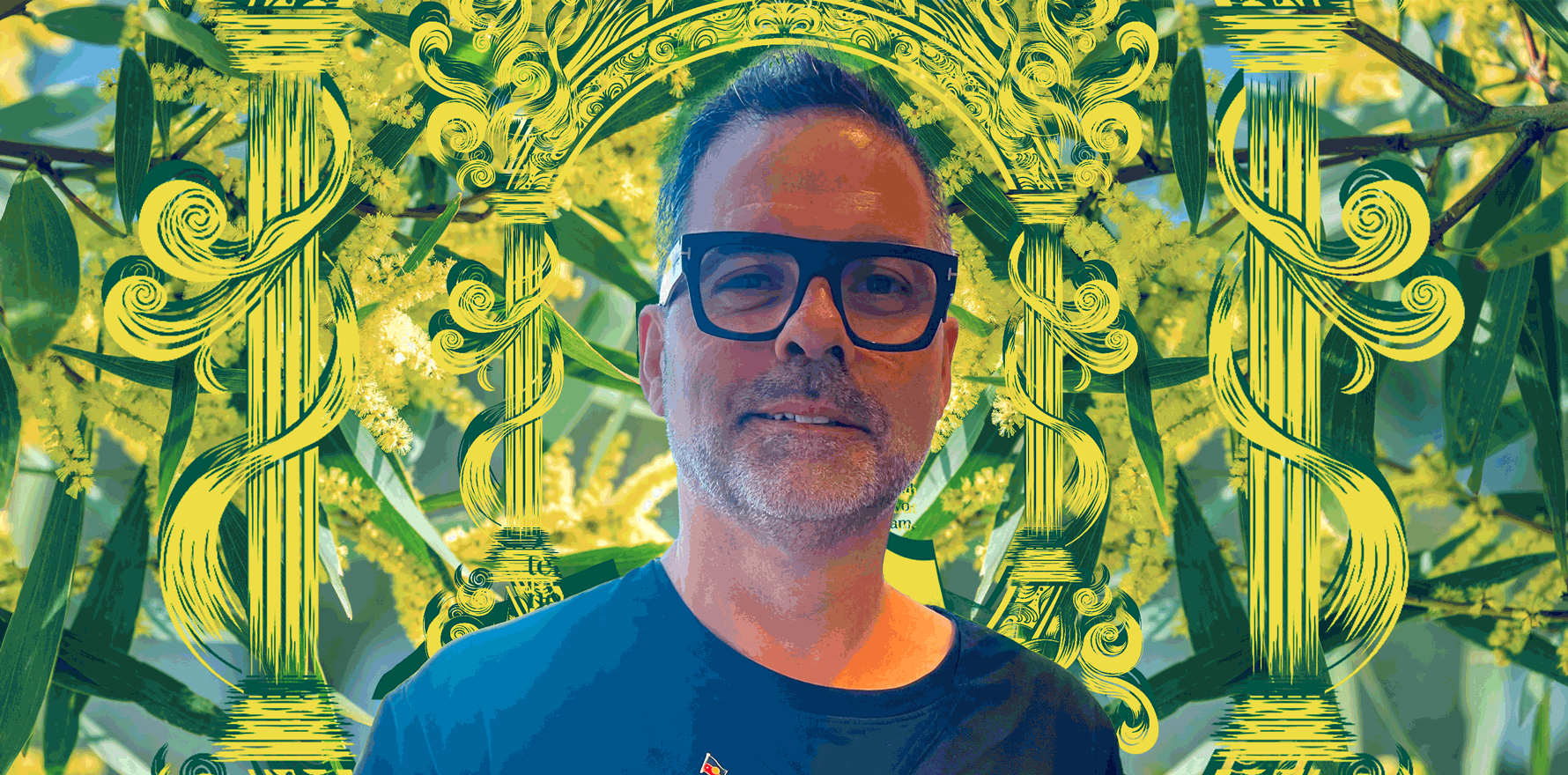
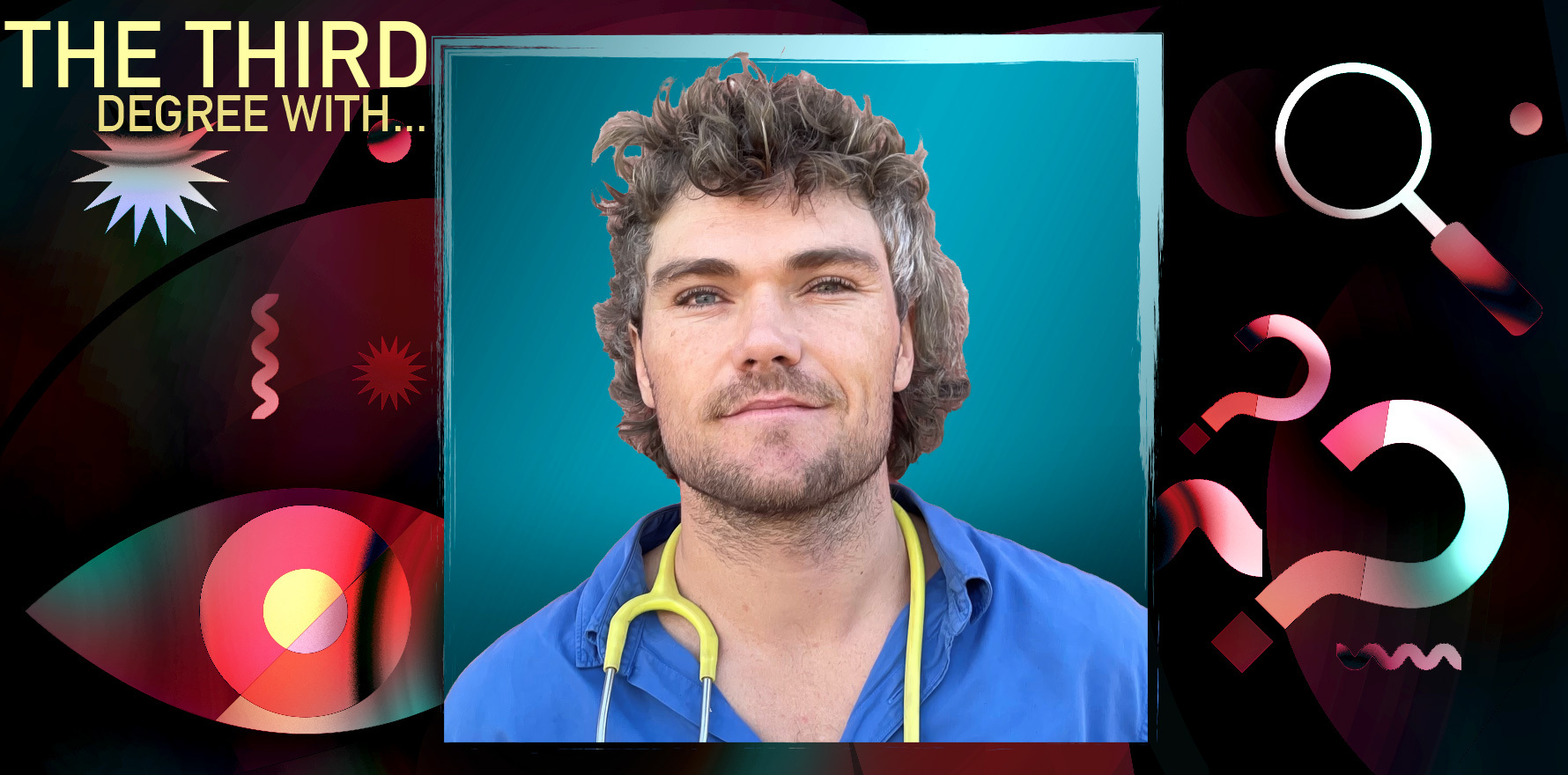
Dr Daniel Manahan, a rural generalist who has been based in the heart of Queensland’s granite belt for more than 30 years, received this year’s ACCRM-RDAA Peter Graham ‘Cohuna’ Award.
The award recognises members who have fiercely advocated for and delivered the highest-quality rural generalist medical services to their communities.
Dr Manahan dialled in for a chat with The Medical Republic to discuss his love of country, faith and the art of rural generalism.
TMR: You’ve worked in Stanthorpe, the Darling Downs, and the Pacific Islands, including a fifth-year elective placement in Tonga, and served on the ROCKET+SHIP Pacific board. What were your experiences in these regions, and why did they leave a lasting impression?
Dr Manahan: The experience in Tonga was a really precious moment.
I worked in three of the island groups there as a student, and it really opened my eyes up to what life was like in the Pacific Island countries.
I was a mere medical student, and they were very, very welcoming and happy to receive whatever services I could offer.
I was welcomed into people’s homes and families in a really beautiful way, which is typical of Pacific Island nations.
One day, I had hoped I’d get back there, and it wasn’t till about 20-odd years later that I found myself back in Tonga, which was wonderful.
TMR: Did your experience in Tonga inspire your pursuit of rural generalism?
Dr Manahan: I wouldn’t say it was the catalyst for a career in rural generalism.
During my medical student years, I spent a lot of time in Rockhampton, and when I graduated, I was part of a small band of interns who travelled there for their first year.
After that, I ended up in Central Queensland, then went to Goondiwindi, and it was really the experience of rural medicine in the Emerald region and Goondiwindi that cemented my interest and desire to pursue rural generalism.
TMR: What led you to settle down in Stanthorpe in 1996?
Dr Manahan: When my wife [a registered midwife] and I became engaged, we discussed where we might live one day, and Jacinta said to me, “I’ll go anywhere with you, as long as it’s not [redacted southeast Queensland town].”
I ended up getting two jobs – the first in Goondiwindi, and then I saw an advertisement for Stanthorpe, so I applied for that as well.
We did a road trip, and it wasn’t until we drove into Stanthorpe with Jacinta and myself – and we brought Jacinta’s mum, Gloria, along the way – that I realised I’d actually walked into what you could call a bit of a trap, really.
Gloria looked up as we drove into Stanthorpe and said, “You see that little room up there? That’s where I went to school, and that’s where my classroom was”.
I really didn’t do my homework. Gloria was a Stanthorpe, Wallangarra, and Tenterfield region girl.
Then we drove into Goondiwindi, and [Jacinta] wasn’t particularly impressed.
In the end, we chose Stanthorpe, and we have no regrets. It’s been a wonderful experience living there for the last 30 years, and we still do.
Related
TMR: Your approach to your practice imbues a sense of thoughtfulness and fun, including karaoke challenges and black ties on ward rounds. Why is it important that you approach your work this way?
Dr Manahan: There’s now data to show that having fun at work is good for patients and good for you.
I think I’ve always known that, but it was really refreshing to see research showing that fun and joy in life and work are good for your blood pressure, cholesterol, and heart disease risk, as well as for patients’ health.
So, we do try and mix it up, have a bit of fun, as I’m sure doctors all over Australia are doing in their practices from time to time.
I love the 19th of September every year – International Talk Like a Pirate Day.
I’ve got a wooden leg, a hook, an eye patch, and a parrot. Depending on the day, the year, and what I’m doing, I might get into full clobber.
I also do St Paddy’s Day. We often get a little bit green on that day.
At Carbal Medical Services [an Aboriginal Medical Service] in Warwick, we had a kids’ day, and all the staff got dressed up as superheroes.
I was one of many superheroes that day, and someone was good enough to bring along an outfit, so I ended up as the Incredible Hulk.
TMR: You served as the foundational medical advisor for ACRRM’s Queensland rural generalist pathway, launched in 2007. What did that experience teach you, and what advice do you have for aspiring rural generalists?
Dr Manahan: If you have a good product and committed people who believe in it, you can really make anything happen.
There are many of us across the state who were established rural doctors who knew that developing a training program for the rural generalist clinician was just the right thing to do.
A series of people coming together, political goodwill, and some sentinel events across the state that were tragic, all aligned at once, and the pathway was a very successful initiative when it got started.
There are more opportunities than ever to become a rural doctor, and having a pathway that guides you into that vocation is a big plus.
But there are many other factors. Medical student programs that now send our medical students to rural locations are strongly associated with their returning as doctors and making lives in those rural areas.
The area that I’m in, we have the Griffith LongLook program. We have students come out for a full year, and our community is strewn with those same doctors who have returned.
They’ve married, started their families, started their own businesses, and are now, in time, GPs and rural generalists in our town.
I really believe that early engagement as a medical student and exposure to career options are important for opening doors and opening people’s eyes to a career in rural health.
TMR: Rural health is often underfunded, and it’s where policy and health inequity are felt most deeply. What are the top three changes you would still like to see made in rural and remote health?
We should continue supporting medical student initiatives to enable them to train in rural areas, including full 12-month rural internships. I think that’s a very important start.
Secondly, I think we should be talking this job up as one of the greatest on the planet. This is not a terrible, sad job that somebody accidentally falls into.
We chose this job because we love living rurally, and we know the work we get to do is deeply satisfying, and that the people we get to serve as our patients are wonderful to be with.
We get to hear the most amazing stories from our patients and provide what we call cradle-to-grave service.
I’ve delivered babies I’ve seen grow up, and now they’re having babies I’m delivering. You can’t begin to imagine how satisfying it is for me, as a rural generalist.
It’s not all been easy, but on the whole, the teams I’ve worked with – in general practice, in hospitals, in maternity, and in aeromedical services who come out to transport our very sick patients to tertiary hospitals – are wonderful people who strive to do nothing but their best for patients.
Being a part, a little cog in each of those spaces is just a wonderful privilege.
Thirdly, we spend a lot of time looking at the challenges for Aboriginal and Torres Strait Islanders, and I’d love to see us start putting more focus on the wonderfully positive culture that the Aboriginal and Torres Strait Islander communities bring to us.
Let’s talk up the amazing culture that is our First Nations culture in this country. [It’s] certainly something I’ve been able to enjoy in various places I’ve worked through life and in places I’ve also visited.
TMR: Your faith and family play a major role in your life. How does your faith and sense of community intersect with your approach to medicine?
I’ve been blessed with the faith that helps me understand I probably couldn’t have done this alone without walking this journey with God, and I often say to myself, “Well, why would I ever want to do this alone?”
It’s a great journey to walk with faith, and God has a sense of humour. Some of the things we see over time really cement that fact.
My family has been absolutely magic to walk on my journey with me. My wife has had to put up with many things over the years – late-night teleconferences.
[Jacinta’s] been wired up with me in various fatigue studies to EEG machines and response metres, and it turns out when I get called in, she’s more fatigued than I am.The kids have managed to weather the storm. My daughter Lily is now a junior doctor up in Caboolture.
She gave a presentation in Korea years ago, before she got into medicine, entitled “What about me? Being the child of rural clinicians”.
It was a great privilege for me to have my daughter Lily come and spend a term with me in Stanthorpe.
The other three kids have all gone down different pathways. My daughter Grace said to me, “I’m going to do a Health Careers for the Bush program”.
When she came home, she said, “It was the best thing I’ve ever done. I now know I never, ever want to do anything in health again.”
So she went off and has become a lawyer.
I have a son [Matthew] who’s a performing artist and another [Ben] who’s a carpenter, and they’re all off doing their own things.
Having been a rural doctor, I often hear people talk about terrible hours, but one advantage is that despite working long hours, I was able to attend most of the kids’ functions over the years, whether it was cross-country events, athletics, or swimming.
TMR: Lastly, for a more light-hearted question. We heard you enjoy a little theatre. Where did your love of the performing arts come from, and is there one performance you wish you could watch for the first time again?
Dr Manahan: I have a great-great-great-auntie named Anna Manahan, who has a star on the pavement outside the Dublin Theatre.
She was in a television series in Ireland for years and years and years, and now look, I never met Anna Manahan, but suffice to say, there’s a bit of repartee in my family tree along the way.
I do love a good role as the villain, so I managed to play Edmund the Bastard in King Lear.
I was joyously able to portray the ineffective Bishop Lawrence Shields in the Mary McKillop movie, who was notorious for excommunicating Australia’s first saint, Mary McKillop, and then reinstating her just before he died.
I’d love to watch Les Mis with my son performing in it. That would make me very happy.
This interview has been edited for length and clarity.
The post What it takes to be a rural generalist appeared first on Medical Republic.




Add Comment