


Associate Professor Vikram Palit, paediatric respiratory physician, health tech founder, and the new Associate Professor of Paediatrics and Child Health at Western Sydney University, sat down with the medical education curriculum he was about to teach and found himself profoundly unsettled.
He had worked as a doctor and still does. He had taught digital health at UNSW, ANU and UCL. He had built a successful and fast-growing health technology company. Along the way he had worked with leading clinical thinkers and technologists.
But suddenly he found himself feeling out of his depth.
AI seems to be rapidly dating all the normal rules of the game.
Two recent papers he read helped him frame his worry.
“Deskilling” we all know. It’s the erosion of an established skill through disuse and in professional practice it introduces a risk most people discuss when they talk about AI and clinical practice.
An experienced clinician leans on AI too much and a decision-making capability they once had starts to wane. Notably though, the foundation is there… it is just losing focus.
This early concern among AI clinical thinkers is an important problem for the governance fraternity, but it’s nothing like the problem that could occur if “never-skilling” enters the fray.
“Never-skilling” is not the loss of a skill, it is the absence of skill because it was never built.
The way Professor Palit fears this could happen is if AI does the reasoning during the years when the reasoning was the point of the exercise.
A medical student who gets the right answer from an AI tool before they have had to work through the question themselves may learn the answer without learning the thinking that produces it. Remove the difficulty and you’ll likely remove the learning, even when what comes back is correct.
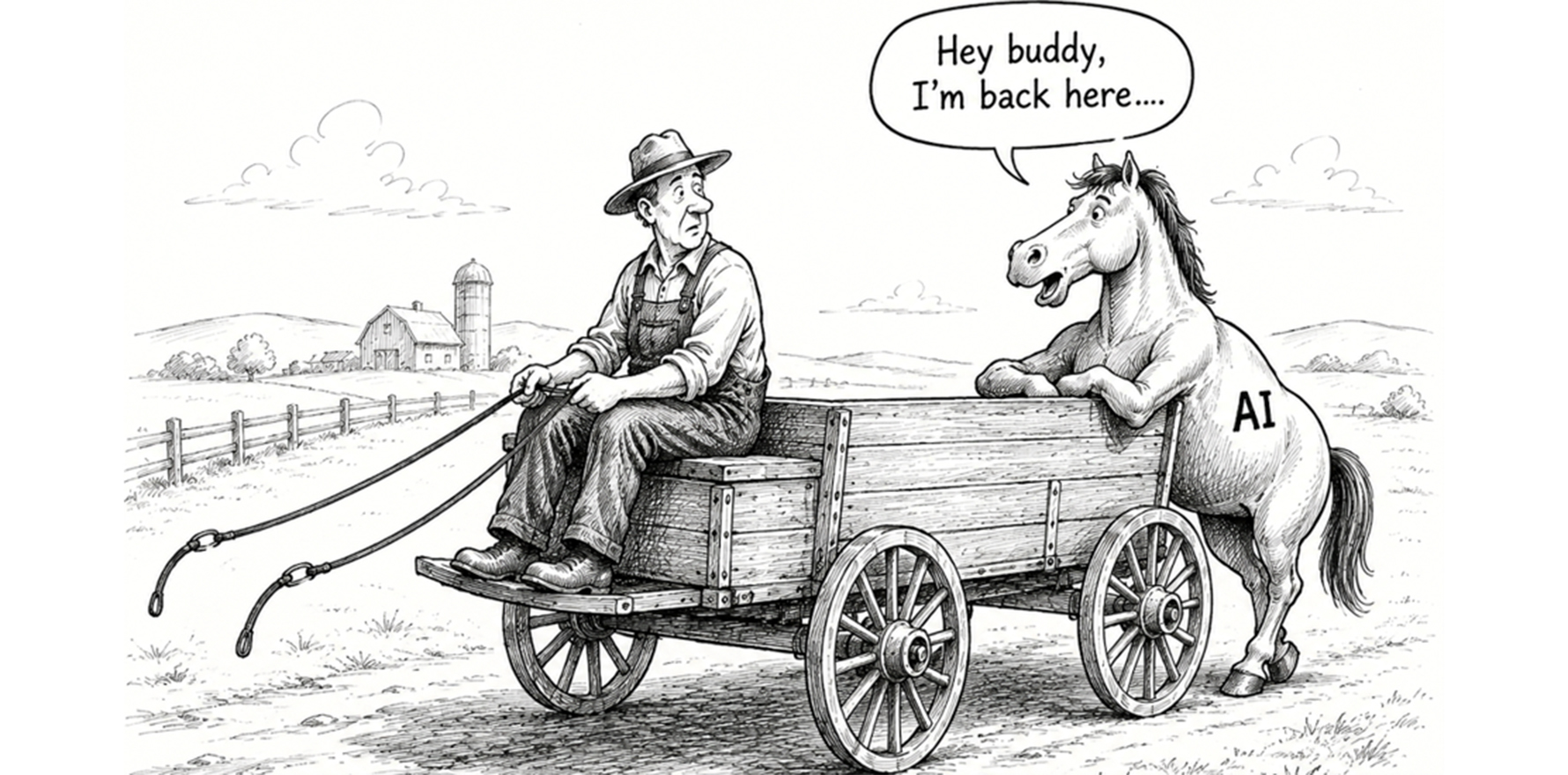
Professor Palit’s framing of this is: “a copilot is only useful if you have first learned to be a pilot”.
The authors of the Nature Medicine paper put it the same way. Their concern is not AI itself but where and how AI is introduced in the learning process.
What Palit is seeing in practice
In his paper posted on LinkedIn HERE, Professor Palit describes four cases that have worried him in the context of what is going on with AI learning and governance so far:
- A medical student who named the diagnosis correctly from a PBL case but had nothing when asked what else it could be.
- An intern who could recite the systematic approach to a chest X-ray perfectly but could not identify a consolidation when the film went up.
- A registrar whose outpatient letter ran to several immaculate pages but contained no answer to the only two questions that mattered: what do we think is happening with this child, and why.
The clearest case for Professor Palit involved vancomycin dosing for a complex paediatric patient with renal impairment.
The AI evidence tool returned three pathways, laid out cleanly, like a menu.
According to Professor Palit, this looks like a choice to a junior doctor.
But to an experienced clinician there are not three options, there is only one (a fourth option) which is to call the infectious diseases team. The correct answer was not even on the list.
Professor Palit points out that the AI tool wasn’t actually wrong. Every pathway it offered was defensible in the right patient. What it could not do was tell you which patient was in front of you, or that the answer you needed was absent from its output.
“Recognising the difference,” Professor Palit writes, “is a judgement that sits with the experienced clinician, and if that person is still learning, or was never taught to look, nothing else in the system catches it.”
Related
JAMA argument doesn’t resolve the problem
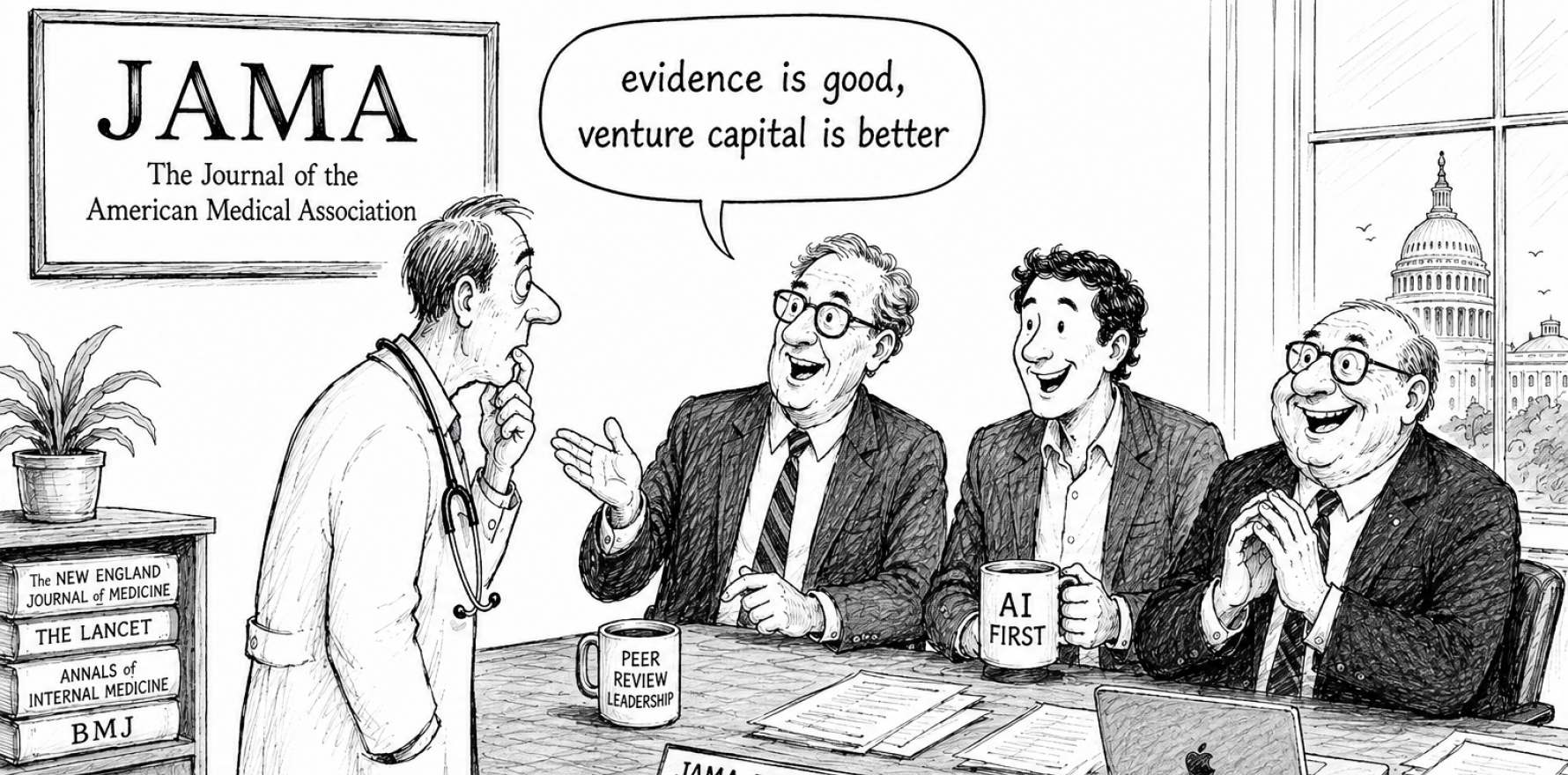
Some researchers, and several clinical AI companies, argue that if AI systems become good enough, the baseline clinical reasoning that doctors spend years building may simply become less, or even not, necessary.
It’s a “why learn to navigate by stars if GPS exists” argument.
In the second paper Professor Palit cites, from Google Research, the AMIE video consultation system, tested across 300 consultations with trained patient actors, was rated on par with practising GPs on history taking, diagnostic accuracy and management, and rated higher on eliciting physical signs.
Professor Palit thinks this raises a pivotal question: squeezed from both ends – the analytical foundation potentially not forming in trainees, and the interpersonal skills increasingly replicable by AI – what is actually left that is exclusively the doctor’s?
Professor Palit’s answer is “quite a lot, but it is narrower and more demanding than the job most of us trained into. Judgement about this particular patient, in this family, with this history and these constraints, is ours. Knowing the correct answer is not on the menu is ours”.
“Carrying the responsibility for the decision is ours. What has changed is their standing. These used to be the things that accumulated around the work of diagnosing and managing,” he writes.
“They are increasingly becoming the job description itself. And every one of them rests on exactly the foundation that may not be forming in the people coming through.”
The Australian GP training gap
The adoption of AI tools in Australian general practice is running well ahead of any formal training in how to use them.
A Healthed and Medical Republic survey of 1535 Australian GPs in May 2026 found 18.7% were using AI scribes routinely – more than double the roughly 8% recorded 18 months earlier.
Among those using scribes, 37% were using them in 80 to 100% of their consultations. These tools are embedded in daily clinical practice for a significant and growing cohort of Australian GPs.
Education isn’t keeping up. It hasn’t even started on the process of how it keeps up.
The Australian Digital Health Agency’s Digital Health Train the Trainer Toolkit, released in February 2026, reported that 60% of senior health educators had never taught digital health.
The Australian Alliance for AI in Healthcare’s national policy roadmap, published in July, makes workforce training Priority Area 5 of 8, and explicitly notes that adoption is running ahead of education.
No National Board mandates AI training.
No accreditation body certifies AI competence for clinicians.
The Australian Commission on Safety and Quality in Health Care’s AI Clinical Use Guide, published last year, handles this with a single instruction: “Educate yourself on how AI tools operate, either through your organisation or through external avenues.”
That is the duty landing on practising GPs personally, as an individual clinician, with no prescribed curriculum for professional training and no defined standard.
The accountability for what happens when an AI tool produces an output a GP can act on, whether or not you were trained to interrogate it the right way, rests at this point of time with the GP.
What this means for GPs using AI now
Professor Palit isn’t arguing for tools down for GPs already using AI scribes and evidence tools, as dangerous as this all seems to him now.
For GPs who trained before these tools existed, the concern is “deskilling” through disuse, which is real but in many ways manageable with not much CPD work, or simple thought reminders like this article.
But the concern is something more fundamental for the medical students and junior doctors currently in training.
Professor Palit is suggesting that the “sequence” matters a lot in this instance.
The tool arriving before the reasoning is built is a key problem that needs some hard thinking now he says.
It is one that neither the RACGP, AHPRA, the universities nor the government have yet solved in any systematic way, and it does not appear to even be on the drawing board of these key education and training institutions.
Dr Tony Girgis, a GP who commented on Professor Palit’s LinkedIn post, offered what may be the most practical near-term answer:
“Nobody learned to read an ECG from the machine’s printout. The interpretation strip was folded over, in teaching and in the exam, and you got the machine’s opinion only after you’d committed to your own. That sequence is the whole answer to never-skilling, but it needs discipline.”
There’s quite a bit currently missing from the Australian approach to AI in clinical training and continuing education.
The tools are already in the room. Practising GPs need to be quickly reminded of the issue of deskilling and how to watch out for it.
The sequence question for students and doctors first in training that Professor Palit is raising in his paper is the much bigger problem in the longer term that we don’t seem to have considered yet.
Using an AI scribe is easy. Knowing when its output is wrong, incomplete, or missing the option that wasn’t on the list requires exactly the kind of reasoning that the tools are good at mimicking but cannot actually perform.
Assoc Prof Palit Paper on LinkedIn:
https://www.linkedin.com/pulse/copilot-only-useful-you-know-how-fly-a-prof-vikram-palit-j8hqc/
Nature Medicine — never-skilling paper:
https://doi.org/10.1038/s41591-026-04438-y
Google Research — AMIE video consultation paper:
https://research.google/blog/advancing-amie-towards-expert-level-audio-visual-clinical-consultations/
The post The GP AI learning dilemma: no one actually learns how to fly appeared first on Medical Republic.





Add Comment