


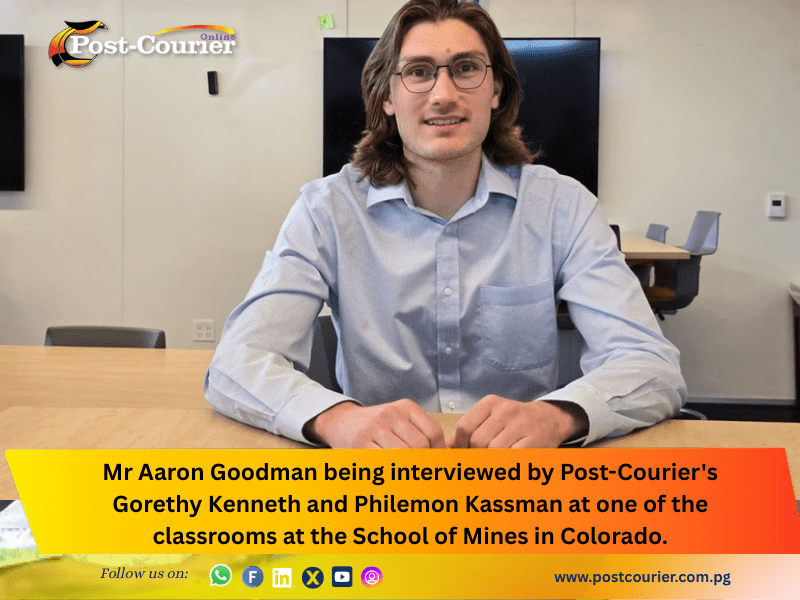


Gorethy Kenneth and Philemon Kassman in Denver, USA
MINING waste in Papua New Guinea, including tailings at sites like Lihir, could contain recoverable copper, nickel, and battery metals now deemed critical by the US, but commercial recovery faces scale and cost barriers, a US professor researcher said.
Aaron Goodman, a geochemist at Colorado School of Mines, works on extracting critical minerals from mine waste and impacted water. He said the first question is always characterization. “Not only how much is there, but what are the forms that it’s in, what specific minerals is it held in?” Some elements like rare earths can be locked in “very resistant minerals” that are hard to extract.
But copper, nickel, tellurium, and antimony are “often in more readily recoverable phases,” Goodman said. “It is very possible that waste rock in that region could be a source of critical minerals.” He offered to test PNG samples: “Send us some samples, and we’ll tell you.”
The bigger challenge is economics. Lab methods can recover metals at bench scale, but “when you look at the economic analysis… oftentimes the math doesn’t work out,” Goodman said. That’s why Mines has experts in mineral economics and a whole Institute for Extractive Metallurgy to scale technologies.
The post PNG mine tailings could be critical minerals source, but scale and economics are hurdles appeared first on Post Courier.






Add Comment