





OPENing up pain education to all
Melissa Trudinger
PAIN EDUCATION The APA has recently made the Online Pain Education Network’s Clinical Pain Management Training Program a prerequisite for its foundation pain physiotherapy courses.
The Online Pain Education Network, or OPEN, provides pain management education to clinicians and health professionals, through a series of 15 online modules – the OPEN Clinical Pain Management Training Program – that lay the foundations for clinicians who work with people living with pain.
A key aim of OPEN is to give clinicians a common language and framework with which to talk to their patients and each other.
It has been deliberately designed to be agnostic to profession, providing all health professionals – including physiotherapists, GPs, nurses and medical specialists – with a psychologically informed, patient-centred approach.
In the year since it was launched, the OPEN Clinical Pain Management Training Program has been accredited with the Australian College of Rural and Remote Medicine and the Royal Australian College of General Practitioners.
OPEN, which is a nonprofit organisation, has been developing partnerships with a wide range of professional organisations – including the APA – to raise awareness of the program and encourage all health professionals to complete the course.
While physiotherapists and nurses have been the biggest users of OPEN to date, it is being used by exercise physiologists, occupational therapists, GPs, pharmacists, psychologists, primary health networks, local health districts and even organisations like Australia Post and WorkSafe Victoria.
It has recently been made a prerequisite for the APA’s Pain Physiotherapy Levels 1 and 2, replacing the Better Pain Management modules developed by the Australian and New Zealand College of Anaesthetists Faculty of Pain Medicine.

Pain national group chair Zoe Harper recommends that all physiotherapists do the OPEN pain education training.
However, pain physiotherapist and chair of the APA’s Pain national group Zoë Harper (left) MACP says that all physiotherapists will benefit from taking the course.
‘The predominant reason that most people go and see a physio is because something hurts.
‘OPEN is essentially trying to get every healthcare provider out there to have the same standardised level of understanding about pain from a biopsychosocial framework so that they can have different conversations and ask different questions and offer different treatments.
‘Hopefully, as a whole we can lessen the amount of chronic pain and lessen the burden of pain overall.’
Zoë says making the OPEN program a prerequisite for the pain courses means that everyone comes into them with a good foundational understanding of pain science.
‘On the day of the course, we can focus much more on the discussions and facilitated learning rather than being lecture and content heavy.’
The course is suitable for any physiotherapist, not just those with a special interest in pain.
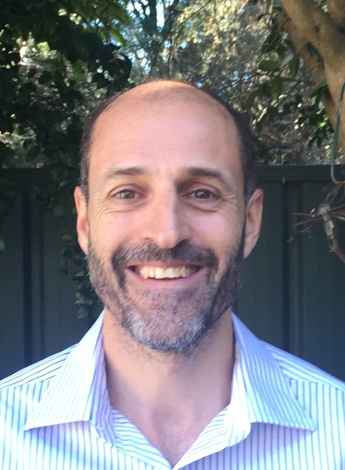
Tim Austin was part of the team that developed the OPEN pain education training modules.
Tim Austin (left) FACP, a Specialist Pain Physiotherapist (as awarded by the Australian College of Physiotherapists in 2021) who was part of the team that developed the OPEN pain training program, says that in his opinion, it should be a prerequisite for every physiotherapist.
‘This is not pie in the sky.
‘This is quite realistic as we really feel that every discipline within physio and within the APA can legitimately have OPEN as part of their pathway.
‘I can’t think of a group for which it wouldn’t be useful.’
The program, which costs just $280 for the full 15 modules, can be completed over four short awards online, which total 20 hours CPD, although clinicians are encouraged to implement the skills in their own practice as they learn.
OPEN provides over 40 downloadable resources, which can be used in clinical practice immediately.
‘It’s based on learning principles to consolidate learning and link it closely to practice,’ says psychologist and director of pain education at the University of Sydney’s Pain Management Research Institute Professor Michael Nicholas (left).
Michael was part of the consortium that led the development of OPEN, which was funded by the Australian Government’s National Strategic Action Plan for Pain Management.
The cross-disciplinary team of pain specialists included physiotherapists, pain medicine specialists, psychologists, nurses and GPs, drawn from the University of Sydney’s Pain Management Research Institute, Curtin University and elsewhere.
Physiotherapists including Tim, Professor Helen Slater FACP, Dr Duncan Sanders MACP and Professor Peter O’Sullivan FACP played a key role in the development of the program, while many other physiotherapists were involved in reviewing and evaluating the program content.
A very important aspect of the training program is that its content has been based on research led by Helen – the ‘Listen to me, learn from me’ framework , a person-centred approach co-developed with people living with chronic pain, carers and clinicians.
It translates contemporary pain science into practical clinical skills that can be applied straight away. Tim says OPEN has struck a chord with health professionals who complete the course.
‘As soon as anybody sees this content, they love it.
‘It teaches people the basics of helping patients to understand their pain and its impact but it goes beyond that and helps them with skills – the skills of pacing and of understanding how psychosocial factors are relevant – and helps them talk to people living with pain about their thoughts and how pain is impacting their life.
These are the things clinicians struggle with.
‘They know depression, anxiety and stress are all important but they often don’t really know what to do with that.
‘What we’re finding is that when people go through the modules of OPEN, they feel more competent and confident to implement these skills depending on their patients’ needs.’

Professor Michael Nicholas says the OPEN modules teach clinicians about the psychosocial aspects of pain management. .
While OPEN will update the course as needed, Michael says most of its content has been available to practitioners for a long time but many have not had structured training in implementing the skills and working in interdisciplinary ways.
‘You can talk about new theories about pain but at the end of the day, if you’re a person in pain, you’ve got to exercise.
‘You’ve got to move.
‘You’ve got to deal with sleep problems.
‘You’ve got to deal with mood problems.
‘You’ve got to get off heavy drugs.
‘OPEN will help you to help your patients with all of those things.
‘So, we believe it’s going to stand the test of time because all these issues are universal experiences for people living with pain, regardless of culture or language.’
Tim agrees, noting that while many of the concepts presented, such as the importance of exercise and sleep in pain self-management, have been best practice for many years, it’s the psychological aspects of helping the patient understand and implement these concepts that many health professionals struggle to master.
‘This is the best education that’s ever been in this space for psychologically informed practice.
‘That’s what it’s really about – getting all healthcare professions to understand the psychology of people who live with pain and their own psychology of treating people with it.
‘Then it provides all healthcare professionals with the skills to deal with those issues.
‘These are key skills that none of us grow up knowing – we’ve got to learn them and practise them.’
>> Visit openpaintraining.com/apa to enrol.







Add Comment