




As Parliamentary debate continues over whether people should be able to access voluntary assisted dying (VAD) through telehealth, one advocate has urged the Federal Government to “catch up with the rest of Australia”.
“Updating the Criminal Code to allow telehealth in VAD is straightforward, inexpensive and long overdue,” says Go Gentle Australia chief executive Dr Linda Swan.
Jason Staines reports on the latest developments in this protracted debate.
Jason Staines writes:
Debate over whether voluntary assisted dying (VAD) should be available through telehealth has moved to the Senate after the Government this week blocked an attempt to bring the issue to a vote in the Lower House.
The move comes weeks after Labor’s national conference endorsed removing Commonwealth barriers that prevent lawful VAD care from being delivered through telehealth, while also supporting a conscience vote on VAD issues.
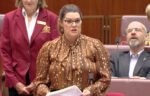
But while the conference decision increased pressure on the Government to act, the next stage of the debate will now take place in the Senate, where Greens Senator Sarah Hanson-Young has introduced a bill seeking to change the law so that VAD can be accessed via telehealth.
The reform would remove “an outdated and harmful barrier” to access for medically supported voluntary assisted dying, she said.
“As someone who grew up in a regional area, I know all too well how difficult it is to get in to see a regular doctor let alone access specialist care. Giving people the opportunity to use telehealth to help inform and provide advice and care when people need it the most is the right thing to do,” she said.
“This is an issue crippling many families in regional Australia, leaving them without even the right to discuss what type of medical care they wish to choose.
“Australia has the strictest safeguards around using Voluntary Assisted Dying, and these safeguards will continue whether a patient sees the doctor in person or via telehealth. The issue here is a number of Australians are being left to suffer in pain unnecessarily because the law is out-of-date and needs a simple but important fix.”
Go Gentle Australia welcomed the introduction of the Greens bill, arguing the proposed change would improve access without weakening existing safeguards.
Chief executive Dr Linda Swan said the current arrangements were leaving some terminally ill Australians, particularly those in rural and regional communities, facing unnecessary barriers.
“Allowing telehealth for VAD assessments is a simple, safe and humane reform,” she said. “Telehealth is already a core part of palliative care, and it is used responsibly in assisted dying frameworks around the world. Australia’s outdated federal ban is the barrier, not the safeguard, and momentum to change it must continue.”
Swan said progress would require the Government to recognise the issue had been prioritised by Labor members and supported by a broad range of experts.
“The Federal Government must now catch up with the rest of Australia,” she said. “Updating the Criminal Code to allow telehealth in VAD is straightforward, inexpensive and long overdue.”
After Labor’s conference
At Labor’s 50th National Conference in Adelaide last month, delegates supported a commitment to remove federal barriers to accessing end-of-life care via telehealth for people seeking voluntary assisted dying.
The issue was the clearest area of health policy progress from the conference, with advocates arguing that a relatively narrow legislative amendment could resolve uncertainty created by Commonwealth criminal law.
The current barrier stems from provisions in the Commonwealth Criminal Code originally introduced to address online suicide-related activity. Following a 2023 Federal Court decision, those provisions have been interpreted as applying to lawful VAD communications because they refer to the use of a “carriage service” to counsel or incite suicide.
The result is that doctors cannot use phone, email, internet or video communications for aspects of VAD care without potentially breaching Commonwealth law.
The Australian Medical Association (AMA) has also backed removing the Commonwealth barrier, arguing the issue is one of equitable access rather than changing the safeguards around VAD.
In a column published this week, AMA federal president Dr Danielle McMullen said that while VAD being legal across Australia would not necessarily mean access was equal, barriers remained.
“Unfortunately, where people live, or how physically unwell they are, can have a severely adverse impact on their ability to access VAD,” she wrote.
McMullen said the AMA was not proposing that the entire VAD process should be conducted through telehealth, but argued telehealth should be available “as an adjunct to usual medical practice, where telehealth services serve to supplement, and not replace, clinically necessary physical attendances”.
“What we want to see is fair and equitable access to care, and the removal of criminal sanctions for doctors and other health practitioners using clinically appropriate telehealth as part of a legal process,” she wrote.
Following the ALP conference decision, independent MP Kate Chaney attempted to bring her private member’s bill before the House of Representatives for debate and a vote. However, the attempt was unsuccessful, with the Government and Opposition combining to defeat the motion 74–12.
Safeguards
Health Minister Mark Butler told Parliament that the Government would determine how Labor’s platform commitments were implemented, not the cross-bench.
He said questions about appropriate safeguards remained central to the Government’s position. The experience of telehealth has been “quite mixed”, Butler said, and there had been many cases where it had not been used appropriately.
He said some newer telehealth models raised concerns about clinical appropriateness.
“I am not convinced that the current telehealth arrangements are particularly well-suited to VAD right now,” he said. “They have not been appropriate for a whole range of ways in which new business models have been developed to use telehealth in a way that I don’t think is clinically appropriate.”
In 2021, while in Opposition, Butler said the Morrison Government needed to act to ensure state VAD laws were not “thwarted by the threat of prosecution under Commonwealth communications laws”, according to a report in The Conversation this week.
After the election, he said discussions had already taken place about possible reform and “we’re looking at ways in which we can move forward on it”.
Prime Minister Anthony Albanese has also expressed support for VAD but has said he remains unconvinced that telehealth is appropriate. He has argued that face-to-face consultations are important protections for vulnerable people and that changes could risk undermining confidence in the system.
Access and equity
Proponents of changes to the law argue the proposal would not alter existing VAD eligibility requirements or remove state and territory safeguards.
Instead, they say it would allow people who already meet those requirements to access parts of the process without unnecessary barriers created by geography. The equity argument has been a central part of advocacy for change, particularly for people living in regional and remote areas.
Without telehealth options, patients may face long travel distances to access trained practitioners, while workforce shortages can make it difficult for rural communities to access specialist services.
Advocates argue the proposed reform is not about making VAD less regulated, but about ensuring that people who are eligible for VAD are not disadvantaged because of where they live.
Opponents, meanwhile, argue that the way consultations occur is itself an important safeguard, particularly given the seriousness and sensitivity of end-of-life decisions.
Greens Senator Sarah Hanson-Young has now introduced the Criminal Code Amendment (Equal Access to Voluntary Assisted Dying) Bill 2026 into the Senate. Her speech can be read here from page 30.
She made a strong call to parliamentary colleagues, from across the Chamber and of all parties, “to act with compassion, empathy and care” and to change a “ridiculous” law that means when health professionals engage in actions and activities that are part of their duty of care, they could be declared a criminal.
“It is time to fix what is a fundamentally unfair, unjust and cruel law, and allow all Australians to have a choice for their end of life care,” she told the Senate on Thursday.
“It is time to give all those whose pain and suffering is already robbing them of a quality of life, the freedom to choose how they wish to spend their last days, with their loved ones, making memories. Not forcing people to endure even more unnecessary pain because a law that was never intended to cause harm and suffering is stopping a patient speaking to their doctor.
“Every Australian deserves dignity in their final days, regardless of where they live.This Parliament has the chance to relieve some of that suffering and it is cruel and inhumane not to.”
While the Government is arguing that implementation questions require further consideration, the issue is straightforward for reform advocates: the legalisation of VAD has already occurred, and the remaining question is whether access to the system should depend on geography.
When the Senate resumes next week, many health advocates will be watching the next stage of the debate and the prospects for the Greens bill.
See Croakey’s archive of articles on voluntary assisted dying






Add Comment