


Introduction by Croakey: As we reported recently, the planet’s latest annual health check found that seven of nine planetary boundaries — scientifically defined guardrails that ensure the Earth’s health — have now been breached, and urgent efforts are needed to protect and restore nature.
The Potsdam Institute for Climate Impact Research said its Planetary Health Check 2026 shows the impacts of transgressing planetary boundaries are increasingly clear all around us, and that “we have pushed Earth outside of its safe operating space – meaning that we are turning Earth from a safe home into one full of hazards that threaten people across the world”.
“Results published in the last year show that climate change is progressing faster than previously expected, causing unprecedented heatwaves on land and in the ocean and fuelling destructive extreme weather events,” says the report.
“Tropical coral reefs have experienced their most severe mass bleaching event to date, a shutdown of the main Atlantic overturning circulation is now considered a credible risk even under low- to medium-emission scenarios, and major Antarctic ice masses may have already begun their slide into the ocean.”
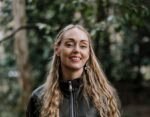
Crystal Arnold, a Gundungurra woman, lecturer, and researcher in the School of Social Sciences at the University of Wollongong, says that beneath the report’s graphs, data, and warnings lies a deeper invitation: to remember that our wellbeing cannot be separated from the wellbeing of Mother Earth.
The report also highlights the importance of recognising Indigenous knowledge as “essential guidance for navigating this moment”. “Around the world, Indigenous peoples continue to demonstrate that care, reciprocity, and responsibility are practical governance systems,” she writes below.
Crystal Arnold writes:
As a Gundungurra woman, I read the Planetary Health Check 2026 as a story of severed relationships. A story of what happens when we forget that water, soil, forests, oceans, animals, plants, and people are kin held within the same living body.
The report tells us that Mother Earth is carrying deep wounds. Seven of the nine sacred limits that sustain life’s balance have now been crossed, revealing how far we have drifted from the relationships that once kept her healthy, abundant, and in harmony.
The nine limits speak strongly to me. Nine moons to bring life into being. Nine is a space between becoming and arrival. The report warns that seven of nine planetary boundaries have already been crossed, and I find myself wondering what waits beyond the ninth.
Possibly the loss of many of the relationships, rhythms, and life-supporting systems that have long cared for Mother Earth and her peoples. If a birth is coming, it may not be the Mother who must be reborn.
It may be us who must be reborn. Our values, our relationships, our responsibilities to the living world. Country, an Aboriginal and Torres Strait Islander word for a living place that includes land, waters, skies, plants, animals, people, Ancestors, and spirit, has long been teaching us that every ending carries the possibility of renewal. But renewal requires listening, and responding, before the final threshold is reached.
For many Aboriginal and Torres Strait Islander people, this report is confirmation of what Country has been whispering, singing, and at times crying out for generations. Country speaks through drought and flood, through thinning soils and rivers that no longer carry the same songs.
She speaks through the fading buzz of bees, the absence of medicinal plants, and through the weeds that rise to cover wounded ground, revealing the places where balance has been lost. She speaks through warming oceans and whitening reefs, through forests burdened by heat and fire.
And she speaks through absence, perhaps her most powerful language of all: the empty spaces where species once flourished, where relationships once thrived, and where life was once abundant.
In every loss is a message. In every disturbance is a call. Mother Earth is telling a story of relationships forgotten and asking whether we are ready to remember.

An invitation
The Planetary Health Check 2026 warns that biodiversity loss, climate change, freshwater disruption, land clearing, nutrient pollution, and new materials such as plastics and synthetic chemicals are not isolated crises. They are symptoms of a deeper imbalance.
This understanding aligns with Indigenous knowledge systems, where health is seen in oneness. There is no human health separate from ecological health. No river health separate from community wellbeing. No future separated from responsibility.
The report is particularly concerned about the weakening of Mother Earth’s natural capacity to stall climate change. Forests, wetlands, soils, and oceans have quietly absorbed much of the damage humans have created, but those systems are tiring.
As someone who has spent years speaking to and learning from the soil, plants, River, and those who care for Country, I see this as relational exhaustion. We have spent centuries taking and very little time listening.
Our Elder trees have long been our Grandparents and teachers, offering shade, breath, shelter, medicine, and wisdom. They have stood through countless seasons caring for life around them.
Yet today we leave them to carry the weight of a changing climate and ecological decline alone. We would never ask our own grandmothers to bear such a burden, and perhaps this is the lesson before us: to truly see trees as kin, we must stand beside them as they have always stood beside us.
And perhaps this is Mother Earth’s invitation to return to reciprocity and back to relationship.
In my research, the plants we often call weeds have invited me to see that disturbance is not only destruction. Sometimes a weed emerges because soil is crying out for healing.
An “invasive” plant may be telling us that something deeper has gone wrong beneath the surface. Opportunity plants, as my Elders have shared with me, reveal imbalance while simultaneously offering pathways back toward it.
The Planetary Health Check 2026 similarly asks us not only to measure damage but to understand why it is occurring. The crisis is not just carbon. It is relationship.
Modern environmental governance often approaches nature through separation, reduction, and control. We divide issues into climate policy, biodiversity policy, water policy, pollution policy.
But Country does not recognise these boundaries. Country understands that climate is water, water is soil, soil is plants, plants are insects, insects are food, and food is culture. Everything exists through reciprocal relationships.
Towards relationship, reciprocity and healing
The report’s repeated emphasis on interconnected Earth systems feels strikingly familiar. Our communities have long understood that the health of each part depends on the health of the whole.
As such, the challenge before us is not just to decarbonise economies or restore ecosystems. It is to remember our place within the living systems we depend upon.
This remembering requires humility.
It requires recognising Indigenous knowledge as essential guidance for navigating this moment. The report itself acknowledges the importance of Indigenous stewardship, noting that Indigenous communities have long cared for lands in ways that sustain biodiversity, resilience, and ecological integrity.
Around the world, Indigenous peoples continue to demonstrate that care, reciprocity, and responsibility are practical governance systems.
A planetary health response worthy of its name must therefore move beyond management and toward relationship. Beyond extraction and toward reciprocity. Beyond ownership and toward custodianship.
The scent of a flower draws a bee. The bee carries pollen. The flower forms seed. Life continues. This is a lesson from Mother Earth. She teaches us that nothing exists without relationship.
The Planetary Health Check 2026 offers a scientific diagnosis of a planet in distress. However, beneath the graphs, data, and warnings lies a deeper invitation: to remember that our wellbeing cannot be separated from the wellbeing of Mother Earth.
She continues to offer such lessons in the scent of a flower, the buzz of a bee, the flow of rivers, and the quiet work of seeds becoming life. Even in this time of uncertainty, there is hope.
Healing remains possible if we choose to return to relationship, reciprocity, and care. The question is whether we are ready to take responsibility, to listen, to remember, and to return together to wholeness, to healing.
Author details
Crystal Arnold is a Gundungurra woman, lecturer, and researcher in the School of Social Sciences at the University of Wollongong. Her work explores Indigenous knowledge systems, Country, environmental justice, and more-than-human relationships, with a particular focus on healing Country, invasive plant management, and reciprocal relationships between people and the living world.
See Croakey’s archives of articles on the cultural determinants of health, and on the environmental determinants of health





Add Comment