






Introduction by Croakey: The Women in Leadership session at the Royal Australian and New Zealand College of Radiologists Annual Scientific Meeting has become a much anticipated yearly check-in, and this year’s session at #RANZCR2026 in Ōtautahi Christchurch did not disappoint.
Marie McInerney attended the panel event for the Croakey Conference News Service, to hear how the College is going with progress towards gender equity and glean some advice from a diverse and supportive group of woman at different stages of their professional leadership journeys.
She reports below on the need for flexibility in training, being brave to support the workforce, accessing mentoring, building connections and trust, and a few other choice tips that every clinician should read – regardless of gender.
And, as this is Croakey’s final report from #RANZCR2026, we bring you some conference statistics and news, and an update on the the ever-changing field of AI in clinical practice.
Marie McInerney writes:
Radiology and cancer care specialists in senior roles have been urged to recognise that this is “their time to be brave” in support of the workforce, and to take on structural problems in medicine that make life and work so hard in the earlier years of specialist training, particularly for women.
Dr Sharyn MacDonald, a senior radiologist with Health New Zealand, told the recent Royal Australian and New Zealand College of Radiologists Annual Scientific Meeting (#RANZCR2026)in Ōtautahi Christchurch that medicine “has an awful lot to learn about how to design and do learning better”.
Asked during a Women in Leadership session at the conference what could be done to address the drop-off in mid-career progression for women in both radiation and radiation oncology, she said it was an important question, and not only for women.
“Medicine basically wants all of your time – the paid work time and the non-paid work time,” she said.
“We also often make, particularly leadership, roles almost untenable in terms of their scale and size…and I think that puts women off along the way, that they see some of these roles as being overwhelmingly too large, too complex,” she said.
MacDonald suggested a re-design so leadership roles can “come in much more palatable, bite-sized chunks”, an approach that she also urged for the radiology and the broader medical profession. She said doctors were “so driven” during the training and examination stages that students and trainees became boxed in, forgetting that the longest phase of working life comes after training is completed.
The mid-career stage is often “messy”, she said, and filled with all sorts of changes and challenges for men and women. These could be helped by professional opportunities that are not going to require a lot of time commitment outside of work, which was already “hugely challenging given the pressure on clinical services”.
Being able to access mentoring and support was also important for those in senior roles, as well as “looking after people, making sure you give them the opportunity to find and do something that’s going to bring them satisfaction at work, which will ultimately help them have joy at work,” she said.
“I think work should be more fun than it is sometimes.”
Dr Sharon MacDonald with Professor Christine Glastonbury. Image: RANZCR B Side creative
Paying it forward
The keynote speaker at the session, Professor Christine Glastonbury, talked about challenges in the various phases of radiology practice, and told senior radiation professionals that it was “your time to be brave”.
That means speaking out when people say things inappropriately, when people treat other people inappropriately, when hostile work environments are created, said Glastonbury, a leading San-Francisco based neuroradiologist and academic who is Australian.
“You need to be brave and call that out. And you also just need to make things better, for everybody, men and women, it doesn’t need to be this hard sometimes.”
Glastonbury, who is president of the Roentgen Ray Society (ARRS), a peak radiological body in the US, said she thinks medicine has done itself a disservice over the years, pushing people down, hazing, wasting a whole lot of energy that could be used in other really productive ways.
“I’m not talking revolution here, but I am talking about things that I think are important. And it’s not a personal agenda. It’s how do I make the world that I’m in a little better?”
Better together
Glastonbury’s words were in keeping with the ethos of the gathering: RANZCR’s 76th Annual Scientific Meeting, hosted under the theme Better Together. He waka eke noa. It brought together more than 1,300 fellows, trainees, junior doctors and allied health professionals — the largest meeting RANZCR has held in Aotearoa New Zealand.
College President Dr Rajiv Rattan said the theme reflected how high quality care is delivered today.
“He waka eke noa (we are all in this together) speaks to something every radiologist and radiation oncologist knows from experience,” he said, opening the event.
“No patient’s care rests with one person. The best outcomes are delivered by multidisciplinary teams that share their expertise, respect one another’s judgement and work towards a common purpose.
“Our professions are facing rising demand, a stretched specialist workforce and rapid technological change. None of those challenges will be solved by one specialty, one hospital or one country alone. They will be solved by working together, with a shared commitment to the patients and communities we serve.”
The three-day program featured more than 100 sessions, 22 workshops and more than 100 speakers (including 45 from overseas), across three dedicated steams: clinical radiology, radiation oncology and interventional radiology and neuroradiology.
Dr Rajiv Rattan addresses RANZCR2026. Image: RANZCR B Side creative
Women and leadership
A regular Women in Leadership session was placed on the RANZCR annual conference agenda in 2022 in response to concerns that in the previous year there were no women on the RANZCR Board, despite women then making up 31 percent of the Australian and New Zealand radiology workforce, and 35 percent of radiology trainees.
In 2026, women occupy 44 percent of board positions.
The session convenors, Associate Professor Emmeline Lee and Dr Dushiyanthi Rasanathan, said the proportion of female clinical radiology trainees in Australia and New Zealand still sits at 35 percent, but radiation oncology is showing the way ahead, having now reached 49 percent.
They urged colleagues to “think about the pipeline”, where women are represented in “smaller and smaller numbers as we go up the leadership scale”. For example, among 56 RANZCR presidents, only two have been women.
Women still make up just 25 percent of the clinical radiology faculty council, while radiation oncology is again doing a little better at 31 percent, and women make up 37 percent of RANZCR examiners.
The session heard that RANZCR would be launching a new research grant of up to $A30,000 in 2027 to support research that advances diversity, equity and inclusion in healthcare.
Session convenors Associate Professor Emmeline Lee, Dr Dushiyanthi Rasanathan. Image: RANZCR B Side creative
Gender-based barriers
Speakers at the session included radiation oncologists and clinical radiologists across a diversity of ages and career progressions, as well as places of work.
They highlighted barriers in their careers that are often perpetuated by people in senior roles, sometimes simply because ‘that’s what I went through, so you should too’.
There are barriers, of course, for men but women have some particular battles, given they are still more likely to be juggling parenthood duties and trying to work part-time, the session heard.
“I remember being told when I went part-time, ‘oh that’s fantastic, because we’ll get full time work out of you but you won’t cost as much’,” said Dr Melissa James, clinical director of radiation oncology at Christchurch Hospital and clinical senior lecturer at the University of Otago.
She hoped that approach no longer existed but said more thought was needed on what part-time work really looks like, and how to design flexible roles that will be fulfilling, so that people can achieve the career advancement they want, without trying to compress a full workload into shorter hours “because that’s just a recipe for burnout”.
“We need to think about how we roster, how we roster people to MDMs [multi-disciplinary meetings], how we provide opportunities for learning and development that fit in with flexible times, how we ensure perhaps job sharing and good handover systems.”
Picking your battles
Professor Supriya Chopra, a radiation oncologist and academic from Mumbai, who is chair of the research committee for Federation of Asian Radiation Oncologists, spoke from personal experience.
She talked about her early career years in India when her two children were young.
To reduce the pressure, she chose not to travel for her work, because “travel costs a lot of time”. That left her able to focus on her family and professional life at home.
She concentrated on initiating clinical trials and, when her children were older, she was “ready to go out to the world”.
Her unflinching advice was that there’s no such thing as work-life balance: “Sometimes you have to choose one thing over the other.”
Dr Melissa James and Professor Supriya Chopra. Image: RANZCR B Side creative
Finding support
Two other panelists talked about beginning their careers in surgical training before either struggling to go on with it or having an “epiphany” about radiology.
Dr Hannah Scowcroft, a third-year Christchurch clinical radiology trainee, said she realised she wanted to switch from surgery to radiology but was reluctant to make the move because she didn’t want to be a “huge disappointment” to people who had mentored and supported her in surgery.
When she approached one mentor, far from being disappointed or upset, he asked: “What do you need? Do you need me to call someone? Do you need me to write your reference?”
It was a revelation for her that people “genuinely want to see you do well, and not just for their benefit”, as well as the importance of finding people “who believe in you more than you believe in yourself”, she said.
Dr Erika Stark, a radiology registrar at Christchurch Hospital, also benefited from a mentor who had a passion “for raising up the next generation”.
That mentor, knowing she was struggling with surgery, had shown her how radiation oncology would suit her better, because it had lots of patient interactions, emerging and sophisticated technology and the potential for involvement in research.
“She said ‘I’ll meet with you and support you’. And support me she did.”
Dr Erika Stark and Dr Hannah Scowcroft. Image: RANZCR B Side creative
Building trust
The need for better representation of women is not confined to Australia and New Zealand, as last year’s RANZCR women in leadership session showed, and as Glastonbury has testified.
She was involved in recently published research from the United States, which showed that, while female authorship in general radiology journals has increased over the past decade, persistent disparities remain, particularly in senior authorship positions and across geographic regions.
“Female senior authorship is associated with female first authorship, underscoring the importance of women in leadership roles for promoting gender equity in academic radiology,” she and her colleagues wrote in Academic Radiology.
As Croakey reported last week from #RANZCR2026, Glastonbury told the conference about a pivotal event in her career in the United States, when she was sued for malpractice.
She was cleared, but having her professional judgement, expertise and reputation tested mid-career taught her some lessons.
Her first advice to junior members of her faculty is not to write papers or get grants, but to build trust with the clinicians who refer patients to them, and with their colleagues.
This was important to clinical practice but also in a crisis, “because you’re going to need them to be there for you, ” she said.
Her advice for people moving up in the profession was:
When someone is offering you a job or a position or an opportunity, do your homework on it.
Find who your allies are, who are the people who are going to become part of your network.
Learn from your critics – because “many of us don’t know how we come across at times”.
Also be aware that you know a lot more than you think you know and you’re “going to learn a tonne more”.
Watch this interview
AI potential and pitfalls
The conference also heard about the potential and pitfalls of artificial intelligence.
Radiologists were unnerved, a decade ago, when Nobel Prize laureate Dr Geoffrey Hinton, known as the “the Godfather of AI“, famously declared that AI would soon kill the radiology profession.
He has since backtracked on the prediction, and radiologists like Glastonbury point out that radiologists have more work than ever and “really are central to the entire practice of medicine”.
“Anywhere you go in the world now, radiologists are overwhelmed with the volume [of work]”, she told Croakey.
“There are backlogs of people who’ve been scanned that haven’t had their scans read, and people waiting to be scanned that can’t get in,” she said.
AI is, nonetheless, changing the profession, offering opportunities and challenges, as RANZCR’s dedicated AI conference in Sydney earlier this year discussed — see Croakey’s extensive coverage.
Glastonbury said she saw no reason to fear AI, saying it will help make radiology more streamlined. A big advantage will be helping to triage the workflow – for example, with brain bleeds or with pulmonary emboli on chest CTs – offering better ways to “pull the one [scan] from the bottom of the pile that actually has an abnormality that needs to be viewed now, not in five days’ time”.
Keeping up
The biggest issue though, as many have warned, may be the pace at which AI is developing.
Dr Daniel Stahlhoven is a neuroradiologist at Wellington Regional Hospital and member of RANZCR’s AI committee, which plans to review its Position Statement on the regulation of AI in medicine, just four years after it was published, he told the conference.
He raised the emerging AI capacity known as agentic AI, which is defined as a broader systems framework that orchestrates multiple AI agents to solve complex, multi-step tasks with limited human supervision.
Slide shown by Dr Daniel Stahlhoven
Agentic AI: Slide shown by Dr Daniel Stahlhoven
One recent journal article has said agentic AI can autonomously coordinate entire clinical workflows across the entire radiology life cycle, through initial image analysis, specialised tool deployment, and preliminary report generation.
“However, successful clinical deployment requires systematic consideration of complexity thresholds, economic sustainability, cybersecurity frameworks, bias mitigation strategies, and appropriate governance structures,” the article warns.
Stahlhoven said that giving AI a level of autonomy can make radiology easier, but radiologists “have to be in charge of possibly stopping the model or the agent if something goes wrong, as well as having an oversight on where a model could make a mistake that’s crucial for the continuous workflow”.
It was critical then, he said, that radiologists were involved, not just by regulators but by AI developers, in designing the “guardrails” to avoid error and risks.
Slide shown by Dr Daniel Stahlhoven
Stahlhoven later told Croakey that AI is being introduced in many areas of radiology, particularly in image lesion detection and in the drafting or improvement of reports.
“However, at the moment, to my knowledge, this is always being read over and authorised by a human, and that’s an important thing…where we should keep the so-called ‘human in the loop’.”
In an AI session that updated participants on #Intelligence2026, Stahlhoven spoke about the recent OpenAI breach of the Medicare website in Australia, observing that the incursion might have led to criminal sanctions in past decades, but, in 2026, just resulted in a corporate apology.
Slide shown by Dr Daniel Stahlhoven
Watch this interview
Human-centred
One of the convenors of the dedicated AI conference held earlier this year was Associate Professor Hyun Soo Ko, a radiologist and clinical researcher at the Peter MacCallum Cancer Centre in Melbourne. She also spoke to the session about the takeaways from #Intelligence26.
She has co-authored a piece in the September 2026 issue of the Journal of the American College of Radiology recommending that radiology education in AI should be grounded in human-centred principles, “ensuring that AI strengthens rather than diminishes radiology’s role and impact”.
The authors say radiologists should individually develop “foundational AI literacy focused on patient safety, ethics, and critical appraisal, including the ability to supervise, and where necessary, override AI outputs”.
Radiology departments and healthcare organisations, they say, must recognise that safe AI deployment is “a sociotechnical effort”.
They write that professional bodies and societies, such as the Society for Imaging Informatics in Medicine, European Society of Medical Imaging Informatics, and RANZCR, which have begun to develop competency frameworks and accredit clinically relevant curricula, “must reinforce meaningful human supervision, with clear lines of accountability”.
Access to the article is free until 22 December 2026.
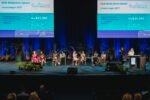
• Caption details for feature image, from L: Associate Professor Emmeline Lee, Dr Dushiyanthi Rasanathan, Dr Melissa James, Professor Supriya Chopra, Dr Erika Stark, Dr Hannah Scowcroft, Dr Sharyn MacDonald, Dr Christine Glastonbury, Dr Jane McEniery and Dr Gina Hesselberg. Image: RANZCR B Side Creative.
Some”socials”
Bookmark this link to follow Croakey Conference News Service’s coverage of #RANZCR2026






Add Comment