




Introduction by Croakey: As National NAIDOC Week celebrates the history, culture and achievements of Aboriginal and Torres Strait Islander peoples, the theme this year – 50 Years of Deadly – is a tribute to “the Elders who stood firm, the organisers who made space, the artists who turned resistance into expression, and the communities who keep showing up, year after year”.
This NAIDOC Week is also about recognising “who we are today. Grounded in culture. Strong in our identity. Leading change across every field, from health and education to media, business, and the arts. We’re telling our own stories, in our own way, on our own terms”.
Below, Dr Annalyse Crane, a Gamilaroi woman, GP, practice owner and a director of the Australian Indigenous Doctors’ Association, reflects on the leadership of First Nations doctors, in reporting on the First Nations Leadership for Clinicians program, delivered earlier this year by the Royal Australasian College of Medical Administrators (RACMA).
“First Nations leadership in medicine is one lever for closing persistent health inequities, shaped as they are by the social determinants of health and the ongoing effects of racism and colonisation,” she writes.
Annalyse Crane writes:
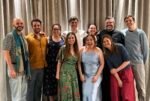
When our group gathered in Naarm/Melbourne for the first session of a medical leadership program earlier this year, we sat in a yarning circle led by Dr Abe Ropitini, Executive Director, Population Health with the Victorian Aboriginal Community Controlled Health Organisation (VACCHO).
We received an Acknowledgement of Country as well as a Māori language welcome. There was calm. I felt an immediate sense of ‘we’re safe, we’re heard and we’re here’. For me, the value of the program was realised in that first hour.
That program is the First Nations Leadership for Clinicians Program, and ours was the first cohort. More than three years in the making, it was delivered by the Royal Australasian College of Medical Administrators (RACMA) with funding through the Australian Government’s Specialist Training Program.
Guided by RACMA’s Senior Advisor First Nations & Advocacy, Nadene Edmonds, and drawing on Aboriginal and Torres Strait Islander medical leaders as faculty, every session was delivered through a First Nations lens.
Many First Nations doctors move into leadership early and carry responsibility in our health services. This program gives that leadership a foundation: practical skills in governance and strategy, a grounding in cultural governance and the confidence to shape decisions in healthcare.
Completing it opens a pathway to Associate Fellowship of RACMA (AFRACMA), formal recognition of advanced leadership.
Cultural safety by design
The way the program was put together is what made the learning possible.
As Dr Narawi Foley Boscott, a proud Butchulla/Badtjala woman and First Nations Health Lead at the Federation University NewMed School of Medicine put it: “Creating that culturally safe space is critical for learning.”
Nadene Edmonds’ advocacy and design of the program ensured that every aspect was culturally safe and culturally anchored for connection and learning. The day-one yarning circle led by Dr Abe Ropitini grounded the group and shaped everything that followed.
“The yarning with Abe was such a highlight,” Foley Boscott said. “Cultural safety is critical, and that also means letting the right people have the power to design and deliver these programs.
“The strength of designing a program around connection and culture is that it makes the rest of the learning possible.”

Shared understanding
For some participants, the group itself became the heart of the experience.
Dr Shannon Price, a paediatric intensive care fellow from Gamilaroi Country (Northern New South Wales) and working in Naarm/Melbourne, remembers arriving late to the first session and stepping into a lift with an old friend who, as it turned out, had enrolled too.
“It’s the best group I’ve ever worked with,” he said. “And I had actually prepared myself for it to be quite hard work and depleting. The shared understanding meant that much less needed spelling out…we just don’t have to explain so much,” he said.
First Nations doctors often carry an additional load at work, explaining themselves, representing community and holding cultural knowledge for others. In this group, that was not asked of us.
Foley Boscott also reconnected with people she had worked with earlier in her career, and found she learned as much from her peers as from the presenters. “I’ve found that some of the stories shared from each other including leadership, challenges, ideas and successes have stuck with me at times more than the course content itself, demonstrating the strength of the First Nations cohort,” she said.
We come from different specialties, different stages of training and different Country, but we are held together by a collective goal of improving health for our communities.
The presenters of the sessions also offered their contact details and an open door for the future, and the group keeps in touch through our WhatsApp group. I know these are relationships and networks that will last.
Developing leadership skills
Medical leadership is its own discipline – not one covered in clinical training.
Price found that the program really opened his understanding and skills in leadership.
“As a clinician, I had not been exposed to many of the themes that we’ve touched on in this program,” he said. “Many of the specialist skills that medical leaders bring were named and demonstrated.”

Foley Boscott valued the frameworks and learning around governance, strategy, finance, and said the course challenged her to think in different ways while drawing on her clinical experiences and cultural knowledge.
For me (Annalyse), governance was the breakthrough. For Aboriginal leaders, cultural governance comes first, and business and leadership governance follow.
I have also come to see leadership much more clearly. Just because you are a doctor does not make you a leader. Anyone can lead, but they have to want to.
Leading from culture
What sets this program apart is that it lets us lead as ourselves. Through it I kept asking a question that turns the usual dynamic around: not only what RACMA could teach us, but what our cohort could teach RACMA.
Our answer begins with culture. We have our own ways of knowing and being, and a style of leadership that puts culture first.
Price felt that intent throughout. “This feels Indigenous-led, it feels authentic,” he said.
“RACMA made a really genuine commitment to our group. RACMA Senior First Nations Advisor Nadene Edmonds is the backbone of the program, designing it and advocating to do it the right way. In addition, Cultural facilitator Dr Marshall Watson AFRACMA, a psychiatrist, mentored the group throughout and held cultural ground for the participants.”
From my point of view, it also shapes what I hope comes next. In time, my hope is that more programs like this are led and taught by First Nations people, for First Nations people.
There is a depth of leadership across our profession waiting to be drawn on, people with real potential who have not yet been tapped on the shoulder at the right time. For many of them, that time is now.
Pathways that fit our lives
Leadership is most useful when it fits the lives we lead. Many of us are working away from Country, carrying a strong pull home, and balancing community and family alongside demanding careers.
I am a Gamilaroi woman, my family’s Country is around Moree, and I live and work on Dharawal land in southern Sydney.
I run my own general practices and want a path that does not require a return to full-time hospital work. Foley Boscott currently works in medical education, working toward change at a systems level. Price is moving into a consultant role in the public hospital system and came to the program to understand that system more deeply and help it work better, both for him personally and more broadly.
We would value flexible routes into health system leadership, including for doctors whose work sits outside hospitals.
We would like to see programs like this reach doctors earlier, including those not yet on a training program.
Aboriginal and Torres Strait Islander doctors already face long roads into specialty training. RACMA can be a bridge across the student, trainee and fellow journey, which can be fragmented for communities spread across Country, and a way to keep talented people connected and supported.
Leadership that reflects community
When First Nations doctors hold leadership and governance roles, the decisions that shape care reflect our communities. That representation is still rare and it changes outcomes.
First Nations leadership in medicine is one lever for closing persistent health inequities, shaped as they are by the social determinants of health and the ongoing effects of racism and colonisation. Supporting First Nations doctors into leadership contributes directly to Closing the Gap.
RACMA’s own position is plain. In its Diversity, Equity and Inclusion statement, the College affirms that culturally safe practice is both core leadership practice and core clinical practice – improving communication, reducing harm and strengthening patient outcomes. Growing First Nations leaders is how it is turning that statement into something real.
To build on what this program has started, governments can continue and expand the funding behind culturally designed training, and colleges and health services can give First Nations people genuine authority over how leadership is taught, with cultural safety as the starting point.
For now, I am looking forward to graduating alongside my fellow group members at the RACMA conference in Naarm/Melbourne in October, and to seeing how our leadership unfolds.
We are grateful to all the faculty who guided each session through a First Nations lens, and to Nadene Edmonds, Ashleigh Milliken and Margaret Kerr at RACMA for their amazing work in the program.
Our thanks also go to the Australian Indigenous Doctors’ Association for help with recruitment, and to the Australian Government’s Specialist Training Program for the funding that made it possible.

Author details
Dr Annalyse Crane is a GP, practice owner and director of the Australian Indigenous Doctors’ Association, and took part in the First Nations Leadership for Clinicians program. She is a Gamilaroi woman, her family’s Country is around Moree, and she lives and works on Dharawal land in southern Sydney.

See Croakey’s archive of articles on the cultural determinants of health





Add Comment