






Disruptions to global helium supplies could pose a growing risk to medical imaging services, with geopolitical instability, rising costs and power outages exposing the dependence of conventional MRI scanners on the finite resource, Philips global chief medical officer for diagnosis and treatment Dr Atul Gupta has warned.
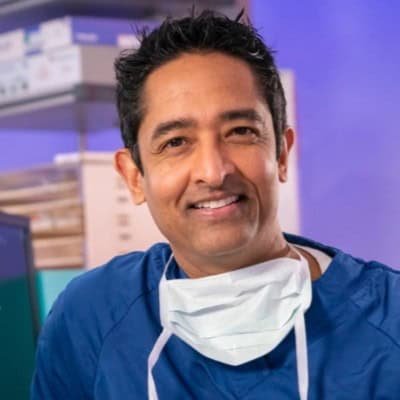
Dr Atul Gupta.
Speaking to Pulse+IT at the AusBiotech conference on the Gold Coast, Dr Gupta said the shortage had implications for healthcare systems well beyond the immediate cost of helium, particularly in their ability to maintain MRI services and expand access to imaging in remote areas.
Helium is used to cool the superconducting magnets in MRI scanners, with conventional systems typically containing around 1500 litres of liquid helium.
Global supplies have been disrupted this year following Iranian attacks on Qatar’s gas infrastructure and restrictions on shipping through the Strait of Hormuz. Qatar has historically accounted for roughly one-third of global helium production.
Dr Gupta said the disruption highlighted the vulnerability of an essential healthcare resource to events outside the control of hospitals and health systems.
“We have this finite supply. It’s a non-renewable resource. So if you just look at sustainability on the planet, there’s only so much Helium available,” he said, noting that the disruption in Qatar, together with the supply chain difficulties experienced during the COVID-19 pandemic, highlighted the risks of relying on a resource produced in a relatively small number of countries.
“Prices skyrocket. This is not going to go away any time soon,” Dr Gupta said.
Philips has developed an alternative MRI magnet technology called BlueSeal, which uses around seven litres of liquid helium, sealed within the system during manufacturing, compared with around 200 times that in a conventional scanner.
The system provides ‘helium-free’ operations, because it does not require routine helium refills or a conventional quench pipe, although helium remains part of the technology.
Increasing access
Speaking during his keynote, Scaling care to billions: AI, access and the race against time, Dr Gupta said the reduction in helium requirements also allowed scanners to be installed in locations where conventional MRI infrastructure would be difficult or expensive to accommodate.
“We can increase access, not just within a hospital, but now we can put MRIs in shopping malls and mobile trucks. We can put them on remote islands, vertical cities. We can put them in earthquake zones.”
He said greater flexibility in scanner placement was particularly important for communities that currently faced long journeys to access diagnostic imaging.
In an interview with Pulse+IT, Dr Gupta also pointed to the widespread electricity blackout in Spain and Portugal in April 2025 as an example of the operational risks associated with conventional MRI systems.
He said the disruption had left some scanners requiring extensive work to restore services, including sourcing replacement helium where it had been lost.
Dr Gupta said some conventional scanners had taken around a month to return to service, with restoration costs of approximately €150,000 per scanner.
Philips has noted that the blackout affected hundreds of MRI systems across the Iberian Peninsula, including around 50 of its BlueSeal scanners. It reported that nearly all the affected BlueSeal systems were restored within 48 hours, substantially faster than conventional systems.
A quench occurs when an MRI magnet loses its superconducting state, potentially causing a large volume of liquid helium to rapidly turn into gas and be vented from the system.
Dr Gupta said the ability to restore imaging equipment after major disruptions was becoming an increasingly important consideration for healthcare providers.
“As we live in a world with geopolitics, I think we’re going to see more hacking events, power grid issues. Being able to maintain that level of care, in addition to the sustainability piece, in addition to the business of the increases in costs that are coming and the instability with the availability of helium – I think all of these things are underreported.”
Philips said more than 2500 BlueSeal MRI systems had been installed globally, with the technology also being used in mobile imaging services.
Dr Gupta said reducing helium dependence offered healthcare organisations an opportunity to address several challenges at once – including access to imaging, operating costs, environmental sustainability and the resilience of diagnostic services during disruptions.






Add Comment