

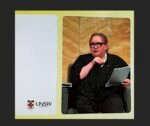


Many lessons have been learnt from the defeat of the 2023 Voice referendum, and these will be put to effective use in future campaigning for another such referendum, according to the Co-Chairs of the Uluru Dialogue, Professor Megan Davis AC and Pat Anderson AO.
Community engagement and other strategies for tackling disinformation are vital, they told the recent National Allyship Summit 2026, which brought together allies committed to advancing the work of the Uluru Dialogue and building a stronger, more effective allyship movement.
Marie McInerney writes:
The Co-Chairs of the Uluru Dialogue are committed to a new referendum to establish a constitutionally enshrined Voice to Parliament, born of a renewed people’s movement that they hope will be powered by demographic, political and civil change.
Constitutional lawyer Professor Megan Davis AC told the recent National Allyship Summit she still feels crushed by the devastating No vote at the 2023 referendum but that working at Harvard University over the past three years had given her hope a constitutionally embedded Voice could still be achieved.
While the Voice was quickly “considered dead in the Australian media”, Harvard colleagues would ask her, ‘So what’s next? When do you guys go again?’, she told the summit, hosted by Allies for Uluru on Bidjigal/Bedegal Country at the University of NSW in Sydney, in partnership with the Uluru Dialogue.
Her American colleagues had, she said, a completely different attitude and approach to law reform and organising. “They very quickly said that ‘a loss is just one loss on the way to a win’.”
Indigenous health leader Pat Anderson AO, also Co-Chair of the Uluru Dialogues, and an Alyawarre woman and former chair of the Lowitja Institute, declared her ongoing commitment to Voice.
“We’re not done yet, folks,” she said in a video address to the summit. “We’ve got to pick this up again and run with it because it’s really important, as you all know. It seems to me that we’ve got to learn from what happened, and change our approach and see some results to drive better outcomes for all.”
Davis said Prime Minister Anthony Albanese had taken constitutional recognition “completely off the table” in the wake of the defeat.
But that did not determine its future, she said, because it must be “a people’s movement”, put back on the table by Aboriginal and Torres Strait Islander people and supported by allies.
“You just keep moving. You don’t quit,” she said.
Davis gave a detailed breakdown on research and focus group findings about the referendum defeat in a wide-ranging keynote speech to the summit. Leading journalist and author George Megalogenis also spoke, delivering insights from his latest book about Australia’s changing population and recent demographic ‘shocks’ (see this previous report at Croakey.)
Those shifts mean the Australian population is now majority migrants and their children, with professional women now the largest segment of the workforce, replacing blue-collar men. These trends auger well for a future Voice referendum, the summit heard.
However, concerns were also raised about weak federal leadership and poor state and territory compliance on Closing the Gap, lack of courage from civil society to challenge governments that fund them, the rise of Pauline Hanson and the populist right, enduring racism, and a polity, media and electorate that doesn’t dig into history or facts.
Tackling disinformation
Davis also described the 2023 referendum as “the ballot where disinformation, post Trumpian, post-truth disinformation arrived in Australia and started to affect the integrity of Australia’s electoral system”.
She said legacy support for the Voice did not “withstand” the disinformation campaign led by Advance Australia, which — like One Nation and key New Zealand political groups and candidates — has been funded and supported by “super cashed up” far right agents such as the Atlas Network, which are rolling out their influence “across Western liberal democracies”, she said.
That’s why the work of community mobilising, engagement and solidarity is important, “because you need to inoculate your agenda from that acute end of politics”, she said.
Davis, a Cobble Cobble woman, is the Pro Vice-Chancellor Society at UNSW, and holds the Balnaves Chair in Constitutional Law and the Whitlam Fraser Harvard Chair in Australian Studies at Harvard University and is a Visiting Professor at Harvard Law School.
She talked about many reasons ventured by experts and analysts for the referendum loss, including a broad tendency to blame the Yes campaign, even though it lacked resources and had been blind-sided by the Prime Minister’s announcement on election night that he would hold a referendum.
Others, with “zero evidence”, ascribed the outcome to technical reasons around the wording of the constitutional amendment or to voters saying they didn’t want race in the constitution, “despite the fact that race is already in the Constitution”, she said.
Davis said much political consensus, including from the Federal Government, landed on the No vote being a “judicious decision of the Australian people”.
Few, she said, took seriously the powerful role of disinformation that “rained down” on the Yes campaign through racist dog whistles and conspiracy theories, such as that Australians would lose ownership of their homes, that a Voice would allow the United Nations to take over Australia, that the Australian Electoral Commission would tamper with their votes.
She said one of the most viewed tweets from the No campaign was linked to COVID-era conspiracy theories in response to the endorsement of the Voice by pharmaceutical giant Pfizer Australia.
Pfizer announced in May 2023 that it supported the Voice, underpinned by constitutional recognition of Aboriginal and Torres Strait Islanders as the First People of Australia. “We believe the Voice will enable better health outcomes for First Nations communities in Australia and provide a route to help inform policy decisions that impact their lives,” it said on social media. Similar statements were made by more than 220 health sector organisations, as documented by Croakey.
Davis said the Yes campaign and other supporters were told by political scientists that the Voice campaign wasn’t subject to disinformation, that it was “just normal political contestation”. “They won’t be saying that about the next federal election,” she warned.
The Yes campaign was also convinced by expert pollsters and others to “take the high road” against lies being spread: their advice was ‘don’t respond, don’t give it energy, don’t give it oxygen’. But that “created a vacuum where disinformation thrived”, she said.
Davis said the disinformation in the referendum campaign too often gets left out of analyses by progressive think tanks or civil society groups in Australia, which she said have admitted to not wanting to annoy the Government and because the Coalition doesn’t want to know.
That’s an “extraordinary” position to take, she said, because it ensures “an asymmetrical definition of disinformation in Australia” that allows political elites to dictate what is and isn’t disinformation.
“How on earth can you be arguing that civics education is an antidote to disinformation when your criteria for disinformation excludes First Nations in the referendum? It makes zero sense.”

Questions and concerns
Davis is also highly critical of the Federal Government and Prime Minister Anthony Albanese over their roles in the referendum campaign.
She says the vote should have held in the second term of the Albanese Government, giving advocates time to work more with the Australian people and to host a constitutional convention to better explore and explain the legal issues. The final drafting for the question should have been unveiled at a legal forum not at the Garma festival, she said.
As cost-of-living issues began to bite, further eroding interest in and support for the Voice, the Labor Party didn’t provide the anticipated support, and “ran it dead”, she said.
Davis said Labor also presided over a narrative that “this was a black ask just for black people”, that the Voice only affected Aboriginal and Torres Strait Islander people – rather than how the Uluru Statement could speak to “who we are as Australians”.
“This was meant to be a nation-building moment that brought the nation together, but that’s not how it played out,” she said.
A survey conducted by Australian National University immediately following the referendum found that No voters were more likely to be male, older, speaking a language other than English at home, with low levels of education, living outside of capital cities, and living in low-income households.
The Uluru Dialogue has dug in deeper in the years since, Davis said, particularly into the thinking of No voters.
Focus groups showed that many were shocked to learn that nearly 90 percent of Aboriginal and Torres Strait Islander people had supported the Voice, having accepted the wrongful claims that most did not support it.
Few knew where the Voice proposal came from: they knew nothing about the deliberative Regional Dialogues where First Nations people considered options for constitutional recognition, or about the high profile expert panel that led work from 2010. Many had bought into the false messaging that the Voice proposal was about ‘symbolism’ when that had been firmly ruled out years earlier.
Tellingly, she said, many of the No voter views contradict each other.
The ANU survey showed, even after the referendum, that 87 percent of Australians thought it important for First Nations people to have a say in matters that affect them. At the same time, many wrongly felt that ‘special rights’ for Aboriginal and Torres Strait Islander peoples are unfair, that the reason for Aboriginal and Torres Strait Islander disadvantage is a lack of effort.
In focus groups, few had heard about the Uluru Statement from Heart, much less that its signatories had offered it as a gift to the Australian people rather than a message to politicians or governments.
When the statement was read to focus groups, many were “quite moved by it”, she said. Some asked: ‘why didn’t they tell us? Why didn’t we know?’.
It’s an important question that speaks to the failure of media, politicians and voters to educate themselves about the proposal, Davis said. She recalled her surprise at how many people in a focus group said, ‘I didn’t know anything about it until I went to vote’.
And this at “the tail end of a 13-year process that was bipartisan, multi-party support”.
Davis talked about risks in public discourse on Aboriginal and Torres Strait Islander issues as Australia moves further in memory and public discourse from the complex insights of the Mabo High Court decision on terra nullius, and where most non-Indigenous Australians say they have never met an Aboriginal or Torres Strait Islander person.
Interestingly, she said, the focus groups recorded relatively high knowledge about the Stolen Generations and the landmark Bringing them home report, but little about the three asks of the Uluru Statement: Voice, Treaty, Truth.
On Treaty, there was “next to no knowledge”, including in a Victorian focus group. Victoria became the first jurisdiction in Australia last year to negotiate a state-wide treaty with First Nations, but it is under threat at the upcoming state election.
Speaking about truth telling is even more difficult, Davis said, as it “becomes really controversial really quickly”.
Lessons for advocates and allies
Davis said the focus group findings provide lessons for advocates and allies about “understanding the kind of bubble we might live in….and the places we’re going to have to go to if we’re going to do this again”.

Also speaking at the summit, Geoff Scott, a Wiradjuri man who was Executive Officer to the Referendum Council, urged well-placed allies to use their power and influence as “critical insiders” – “close enough to (First Nations) community to have their confidence but close enough to government or the decision-makers to have influence, to get change.”
Allies at the summit described their efforts to continue the work of the Uluru Statement: some were still trying to find a way, but many were more involved than before the Voice campaign.
Actions included supporting Aboriginal and Torres Strait Islander groups financially, hosting books clubs that read and discuss First Nations books, working with First Nations groups to increase the use of traditional or language names, and defending Treaty in Victoria.
Davis said failures by states and territories to meet Closing the Gap targets and priority reforms shows clearly why the Voice was needed, particularly in the absence of Federal Government action.
The New South Wales Aboriginal Land Council (NSWALC) recently announced its withdrawal from the NSW Closing the Gap framework “following ongoing failures by the NSW Government to deliver genuine partnership, shared decision-making and accountability”.
Northern Territory land councils have called on the Federal Government to hold the NT Government to account for failing to spend allocated federal monies in ways that tangibly improve Aboriginal peoples’ lives, urging “real consequences” for the NT’s “abysmal progress” on Closing the Gap.
Davis said these developments underscore why the Voice was needed, and how federal action is crucial, including in over-riding or shaping state and territory laws, such as Queensland and Northern Territory punitive justice measures.
“They have the financial power and the constitutional power to influence the states and territories, but they choose not to,” she said, describing Labor’s argument that it supports for the principle of non-interference in state and territory matters due to the harms of the NT Intervention as “ludicrous”.
See Croakey’s archive of articles on the Voice referendum, and our Voice portal.





Add Comment