



First-line management of TMDs
Brendan Bugeja
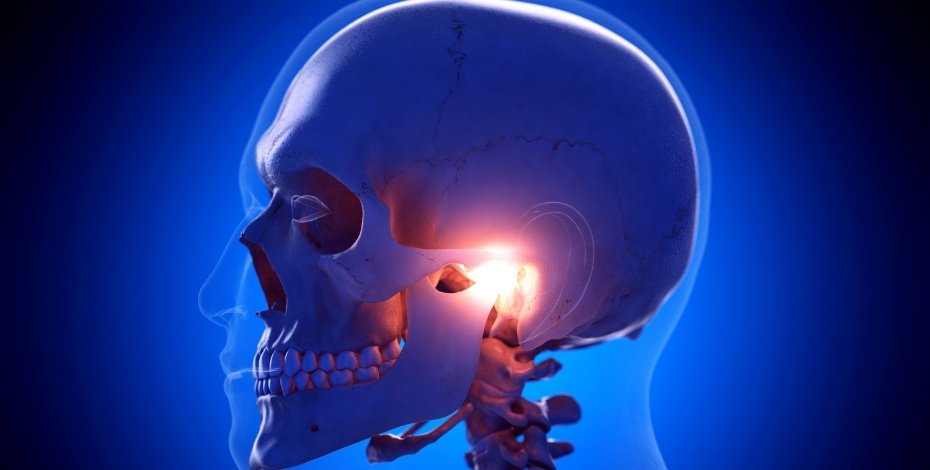
Researchers are looking at the factors infl uencing the community’s use of physiotherapy services for management of temporomandibular disorders.
Dr Alana Dinsdale APAM started working clinically in 2012, predominantly in the musculoskeletal space, but didn’t initially think about getting into research.
However, after treating many patients with neck problems, and particularly temporomandibular disorders (TMDs), she realised there was a gap in the research for TMDs from a physiotherapy rehabilitation perspective.
‘The more I looked into TMD, the more questions I had.
‘It became increasingly obvious that we’re lagging behind in terms of evidence about what we should be assessing and treating in this space compared to other areas of the body that have been more thoroughly researched.
‘Since I completed my PhD in 2023, a lot of my research has centred on TMDs, while I’ve continued to work clinically in private practice for a few hours a week.
‘I love the mix of research and clinical work: it provides a massive benefit by driving questions that are meaningful and are going to have an impact on clinical practice.’
Alana, fellow researchers from the University of Queensland and a co-design team with patients and clinicians investigated the factors that influence whether a person accesses physiotherapy services as firstline management for TMD.
Using qualitative methods, they explored how individuals with TMD perceive the role of physiotherapy in TMD management, how this influences their care-seeking behaviours and what other factors influence their behaviour in seeking and receiving TMD care from a physiotherapist.
The research team interviewed 14 participants using the COM-B framework, which looks at intrinsic and extrinsic factors that influence behaviour.
In the acronym, C stands for capability, including psychological capability (eg, knowledge, psychological skills and stamina) and physical capability (eg, physical strength, skills and stamina); O represents opportunity, comprising physical opportunity (such as time, geographical location and resources) and social opportunity (eg, social factors such as cultural norms and social cues); and M stands for motivation, including reflective motivation (eg, individuals’ beliefs, values, goals and reflections) and automatic motivation (such as habits, emotional responses and inhibitions).
For this study, B – the behaviour of interest – referred to the use of physiotherapy services as first-line management for individuals seeking care for TMD.
The researchers found that participants were often unaware of the treatment options for TMD, with many believing it was a mouth or dental condition (and not musculoskeletal).
This then influenced who they turned to for help as they did not know that physiotherapy could assist with managing it.
‘A couple of things I thought were interesting were what people thought TMD was and what they thought was going on with their jaw.
‘They knew they were experiencing facial pain or clunking or ear pain but actually figuring out what was going on and who they needed to see was another matter.
‘A lot of them conceptualised their jaw problem solely as a dental issue, which meant they were presenting to dentists rather than going to a physiotherapist at the start of their management.
‘When the issue was perceived as something that required a more “structural” fix, they were also unlikely to present to a physiotherapist as their first option.
‘Instead, they tended to go to their GP for imaging and/or referral to a surgeon.
‘In contrast, first-line management recommendations for TMD comprise reversible, conservative interventions like advice and education, exercise, manual therapy and self-management strategies.
‘An increasing number of physiotherapists within this space are doing additional training because conservative interventions such as manual therapy have a good place in early management of symptoms, whether it be reducing pain or improving range of motion.
‘Exercise prescription is also important and largely comes back to what is causing or feeding into the TMD presentation: is the person experiencing weakness? Feelings of instability? Stress? Do they tend to clench or grind their jaw?
‘This information will help us figure out where we need to focus our early management.’
The next stage of the research is currently underway and involves co-designing a suite of resources to improve management pathways for those seeking care.
These resources are developed by and for patients with TMD and first-contact health professionals involved in providing help.
Once finalised, the resources, which include information about how physiotherapy can help people with TMD, will be disseminated in the community to improve TMD awareness and early care.
Click here to read the research.






Add Comment