




Evidence mounts against shock wave therapy for tendinopathy
Melissa Trudinger
RESEARCH IN FOCUS While shock wave therapy is commonly used to treat Achilles tendinopathies, the evidence doesn’t support its use. Professor Peter Malliaras talks about his recent research.
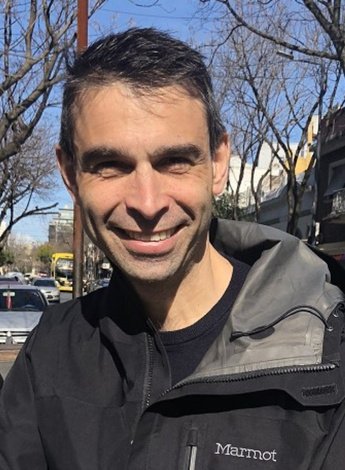
In 2025, researchers led by Professor Peter Malliaras FACP (left), a lecturer at Monash University and a Specialist Research Physiotherapist (as awarded by the Australian College of Physiotherapists in 2023) specialising in tendinopathies, published a clinical trial showing that the addition of radial shock wave therapy (SWT) to a program of exercise and education in people with insertional Achilles tendinopathy did not lead to improvements in pain, function or other outcomes (Alsulaimani et al 2025).
Now Peter and his team have backed this result up with a systematic review, including this and other studies, showing that – for Achilles tendinopathy at least and based on current clinical trials data – there is no evidence that SWT helps (Korakakis et al 2026).
‘Shock wave therapy is very commonly used in physiotherapy for tendinopathy and we wanted to look into its efficacy because there is quite a bit of contradictory evidence out there.
‘I think the issue is that most of the studies have been small and biased – up until probably the past few years, when some of the larger studies have been coming out.
‘We were keen to bring some certainty to the question of whether this intervention actually works.’
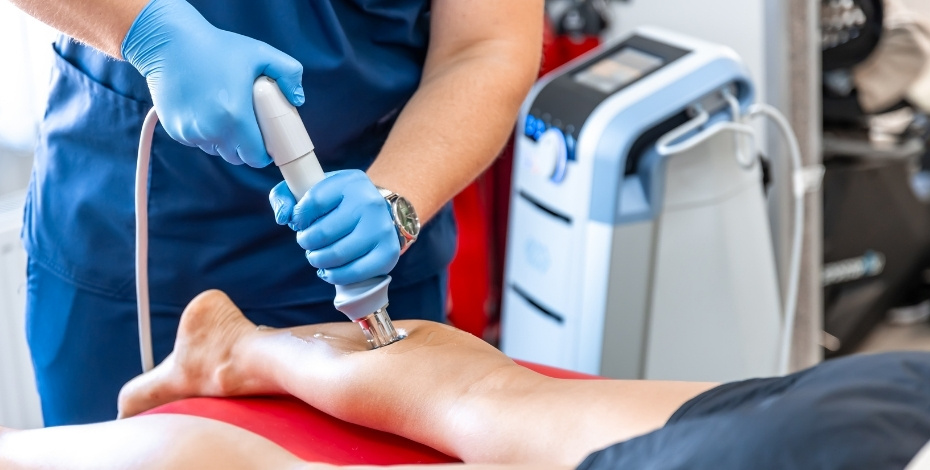
The Monash team’s randomised controlled trial compared radial SWT with sham SWT – using a device that looked, sounded and felt like a shock wave device but didn’t actually produce shock waves that penetrated the skin – in patients with insertional Achilles tendinopathy.
The use of the sham device ensured that both the patients and the clinicians delivering the treatment stayed blinded.
All 76 participants in the trial received exercise and education, while half of them received SWT and the other half the sham treatment.
The results clearly showed that both groups improved a similar amount, suggesting that there was no benefit to using SWT in addition to exercise and education.
The researchers then completed a systematic review of the literature for studies evaluating the use of SWT for Achilles tendinopathy, narrowing the existing literature down to just nine randomised controlled trials of SWT for insertional and/or mid-portion Achilles tendinopathy.
Their conclusion was that there was no clinically meaningful benefit of SWT in pain and disability for Achilles tendinopathy, with evidence ranging from very low to moderate certainty.
‘I think the evidence is starting to be very, very clear if you look at good quality studies that are done well and are without bias – and that’s a very important factor because bias in studies is really common and it’s also very hard to detect sometimes.’
Peter notes that many of the studies they considered for the systematic review were underpowered – they had too few participants to get a statistically meaningful result – or were biased through not having adequate blinding of the control.
‘When researchers do trials, they should always ask the participants, “Did you think that you were in the real group or did you think you were in the placebo group?”
‘A lot of trials, unfortunately, don’t ask that question so even though they’re reporting that yes, this is a placebo or sham controlled trial, we don’t know how good the blinding in those trials was so we can’t really judge how good the trial is and that’s a real shame.’
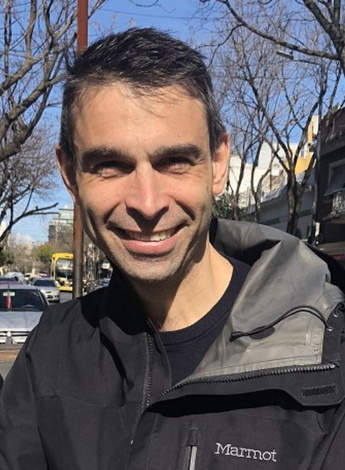
Peter Malliaras says many of the studies evaluating the effectiveness of shockwave therapy have been too small.
The results of Peter’s studies have been controversial but he stands by them, noting that the evidence holds up for both focused and radial SWT modalities.
While there is more certainty about the evidence in insertional Achilles tendinopathy, he believes that the studies haven’t yet caught up to show what’s happening in midportion Achilles tendinopathy.
‘There’s so much controversy in this area and so many strongly held beliefs because a lot of people use shock wave in practice.
‘This is really ruffling feathers in terms of the findings.’
Driving the controversy is the widespread use of SWT.
Many clinics have invested time and money in buying the equipment and training their staff on the use of SWT for a variety of conditions (for some, like plantar heel pain, there may be more evidence supporting its use, although it is still contradictory, says Peter) and they may charge their patients extra for the treatment.
What do these results mean for clinicians – should they be offering SWT or not?
The answer is not straightforward, according to Peter.
Achilles tendinopathy is not just about activity and loading, but about understanding the patient and the best way to manage their condition.
Adjuncts like SWT may be useful tools for short-term pain relief.
‘One of the strongest counterarguments to what we’ve done is that people might say they achieve very good pain outcomes using shock wave therapy with their patients and that’s fair enough.
‘We can’t deny that that happens – there is that placebo and sham effect, which is quite strong.
‘If you’re harnessing that to allow someone to move more and be more physically active, which is probably going to help them recover, that may not be a bad thing.
‘However, we’ve got to think about where we draw the line in terms of treatments that are just placebo or primarily working based on placebo mechanisms.
‘Shock wave is a grey area because it’s not harmful – there’s no harm that comes with shock wave – but it is expensive and there is cost passed on to the patient.
‘Can we be doing something else that is also going to help their pain in the short term but not passing on that cost to the patient?’
Peter is keen to see more high-quality studies looking at SWT but acknowledges that a lack of funding to conduct bigger trials is a barrier.
‘We need to get together as a research community and start doing big, randomised controlled trials that are more likely to answer the questions we have and that requires funding and collaboration.
‘I think we know what we need to do but getting it done is quite tricky.’
His team at Monash is leading an international effort to come up with meaningful research priorities in tendinopathies.
‘The end goal – and I think every researcher goes into research thinking that’s the goal for us – is patient benefit.’
Quick links:
- References






Add Comment