





Introduction by Croakey: The recent NSW Budget failed to do enough to address key areas of need, including mental health, drug and alcohol support, early intervention, and affordable housing, according to analyses recently reported by Croakey.
Cara Varian, CEO of the New South Wales Council of Social Service, subsequently underscored these concerns in a speech to the recent NCOSS Post-Budget Breakfast at NSW Parliament House, published below.
With more than a million people in NSW now living below the poverty line, she called for greater investment in early intervention and prevention “because we know that every dollar spent up front in care saves multiples in dealing with crisis”.
While her presentation focused on the NSW situation, many of the issues raised will no doubt resonate more widely.
“We spend more than one million dollars a year locking a young person up, while the programs that would keep them out of prison and support them through school, in the community and into work remain chronically underfunded,” she told the audience.
Cara Varian writes:
For many people, their first choice of drink of the day is tea or coffee. However, many years ago, the drink of choice on Macquarie Street was rum.
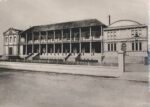
NSW Parliament was formerly a general hospital and a passion project of Governor Lachlan Macquarie, except for the problem of having no money to pay for it. This is a familiar problem for the social service sector.
Macquarie struck a deal with a couple of merchants. In exchange for a monopoly on rum importation to the colony, they built his hospital, which then became known as the ‘rum hospital’.
He commissioned a former prisoner, Francis Greenway, to oversee the design of the building. This rehabilitation also gave us iconic public buildings like Hyde Park Barracks and St James’ Church.
The hospital was where Lucy Osburn, who trained at Florence Nightingale’s School of Nursing, first instigated new practices around preventive care.
And in 1856 this hospital, built to care for the sick, became the place where our elected representatives shaped the future of the State.
The challenges of rising inequality and need may seem novel and difficult for us today, but the walls of NSW Parliament have heard them plenty of times before.

More needed
This year’s Budget came at an inflection point for NSW; buffeted by a global energy crisis outside of our control that is driving up fuel and food prices, hitting those most vulnerable the hardest.
Almost half of the households that are living in poverty are skipping meals, and people are compromising their dignity out of necessity – going without essential medical and dental check-ups, or without basic hygiene products.
These conditions put more pressure on the Government to respond. A slowing economy is a double bind. It drives up the need for help, just as it shrinks the budget to meet it.
It is fair to say the Budget handed down by the Treasurer … recognises some of these contradictions, such as the boost in frontline services for family and domestic violence, increased health funding as well as a formal commitment for Thriving Kids.
But there is so much more that needs to be done. More than a million people in NSW are now living below the poverty line.
It is time to build a mechanism for greater investment in early intervention and prevention, because we know that every dollar spent up front in care saves multiples in dealing with crisis.
We spend more than one million dollars a year locking a young person up, while the programs that would keep them out of prison and support them through school, in the community and into work remain chronically underfunded.
We must support community connection and a vibrant multicultural Australia – yet across the state, Neighbourhood Centres lack the core funding needed to be open five days a week.
More than 70,000 households are on the social housing waitlist, but social housing and specialist homelessness services are not yet funded to a level that will allow them to meet the rising demand.
Significant work is still required to improve the outcomes of the child protection and out-of-home care systems.
Meaningful action is needed to Close the Gap more quickly.
Additional funding is required for mental health services, alcohol and other drug services and improved access to regional healthcare if we are to truly build an equitable state.
We know this is a hard ask. We know the money is tight. And while we may not have the rum merchants to underwrite it, the people of this State and this sector will ask you to find a way to fund the services that build a better NSW.
This isn’t about individual services or statistics; it’s about the people of NSW we serve, and you serve. People born without the advantages that many of us in this room have. People whose lives have taken an unexpected turn. People who have experienced harm or neglect. People who share our humanity.
NSW Parliament – funded on the proceeds of crime, designed by a freed convict, the workplace of nurses and doctors and generations of people’s representatives – is exactly the place where those long shut out of power should finally be heard.
See Croakey’s archive of articles on the social determinants of health






Add Comment