

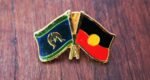


Health and medical organisations joined the celebration of Aboriginal and Torres Strait Islander children on 4 August; this year the theme of National Aboriginal and Torres Strait Islander Children’s Day was ‘Living Our Truth, honouring the power of truth-telling, the sharing of knowledge across generations and the importance of telling our stories’.
The annual celebration is led by SNAICC – National Voice for our Children, the national Aboriginal and Torres Strait Islander peak body representing children, young people and families, which said the day was “an opportunity for all Australians to recognise and celebrate the strength, pride and potential of Aboriginal and Torres Strait Islander children”.
SNAICC said this year’s theme “recognises the importance of truth-telling as a foundation for identity, belonging and cultural strength, and honours the role of Elders and community in passing knowledge to the next generation”.
“This year, we celebrate children as the next generation of leaders; confident, proud and ready to carry forward the strong voices, stories and knowledge of Aboriginal and Torres Strait Islander families and communities.”
SNAICC said that on Children’s Day, early learning services, schools, libraries, sporting clubs, organisations and communities across the country take the lead in their own celebrations in ways that reflect local knowledge, priorities, culture and activities.
These celebrations take many forms, including storytelling, cultural learning, art exhibitions, sports days and community gatherings that create spaces where children are seen, heard and celebrated for who they are.
The Victorian Aboriginal Community Controlled Health Organisation (VACCHO) published an article by Sheree Lowe, the Executive Director at The Balit Durn Durn Centre and Centre of Excellence for Aboriginal Families Wellbeing, and a Djab Wurrung and Gunditjmara woman with strong ties to Southwest Victoria.
She wrote about Aboriginal children growing up in Victoria in one of the most significant periods of change since colonisation, as the first generation to grow up in the State’s Treaty era.
“After all, Treaty is about far more than legal agreements or institutional reform. At its heart, Treaty is about people, and most importantly, it is about our children, and our future generations,” she said.
“The true measure of any Treaty will not be found in the number of agreements reached or milestones achieved. It will be measured by whether it truly improves the lives of future generations.
“Will Aboriginal children grow up healthier? Will their identity and connection to their Culture be strong? Will they have every opportunity to learn, thrive and lead? Will they inherit systems that recognise their strengths rather than focus on their disadvantage? These are the questions that really matter.”
Lowe wrote that Aboriginal children possess extraordinary strengths: “They inherit the oldest continuing culture on Earth. They are surrounded by families, Elders and communities who pass on knowledge, stories and traditions – keeping them strong and keeping them connected to who they are”.
If Treaty is truly about creating a better future, then Aboriginal children must remain at the centre of every conversation, Lowe said. “Each piece of reform should ask one simple question: how will this improve the life of an Aboriginal child and their family?”
In a social media post, the Guunu-maana (Heal) Aboriginal and Torres Strait Islander Health Program at the George Institute for Global Health said “we are proud to walk alongside communities to support Aboriginal and Torres Strait Islander children to thrive through culturally safe, community-led research and programs”.
Danila Dilba Health Services in the Northern Territory said in a post: “Our children are our legacy. They live our truth every day through story, culture, language, and their connection to Country. By nurturing and supporting our young ones, we help keep our cultures strong for generations to come.”
The Children’s Commissioner NT said: “Through our conversations with children and young people across the Northern Territory, we see firsthand the strength, resilience and leadership of Aboriginal and Torres Strait Islander children.
“Their insights and aspirations, grounded in culture, family and community, remind us of the important contributions children and young people make today and every day in our community. Today, we celebrate Aboriginal and Torres Strait Islander children and young people across the Territory and recognise them as the leaders of tomorrow.”
Healing our Way said the date of 4 August carries deep significance for many Stolen Generations survivors. For children who were removed from their families and did not know their birthday, 4 August was sometimes used as a shared birthday.
See more comments and reflections below.


 Read:
Read: 


See Croakey’s archive of articles on the cultural determinants of health






Add Comment