

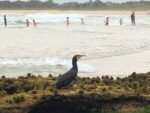


Despite many years of planning and preparation for an avian influenza outbreak, questions are being raised about Australia’s responses to the unfolding outbreak, which is expected to have disastrous consequences on many fronts, reports Marie McInerney.
Marie McInerney writes:
Waves of grief, anxiety and distress are likely to spread across Australia in response to the unfolding bird flu outbreak, which is expected to be more catastrophic for wildlife than the 2019-20 bushfires, potentially killing many millions of birds and mammals and pushing endangered species into extinction.
The highly pathogenic H5 bird flu (H5N1 clade 2.3.4.4b) is expected to devastate bird populations across Australia, posing risks for iconic species like the emu, cockatoos, galahs and native parrots, as well as important totems and traditional food sources for First Nations people like the mutton bird, magpie geese and the cassowary.
Experts also fear the virus will spread to mammals, as it has to devastating effect in other countries, posing a deadly risk to penguins, sea lions, seals, pelicans, cormorants, quolls, and the Tasmanian devil, which is already struggling for its existence.
As well as the implications for ecological and mental health, the outbreak is expected to have economic, trade, and food security impacts if it affects commercial food production, particularly poultry farming, and sparks widespread culling of hens and imposition of quarantine zones around production centres.
Epidemiologist Professor Raina MacIntyre warned this week that the virus is going to have a “massive economic impact” if it gets into commercial food production and “could impact on food security”, particularly if eggs and chicken, cheaper sources of protein, become unavailable or more expensive.
The pending disaster is raising many questions, including whether Australia could or should vaccinate at risk animals, as Aotearoa New Zealand is doing, and whether greater protection can be provided for people who work in at-risk roles, including poultry producers, vulnerable migrant workers, and wildlife carers.
While many experts and stakeholders are steeling themselves for a grim and unavoidable scenario, they hope the crisis will drive longer-term management of the cumulative pressures on wildlife and biodiversity, including climate change, habitat loss, and invasive species.
Australia can’t continue to rely on “start and stop” responses, as it has in the past with crises like the recent toxic algal bloom off the South Australian coast, El Nino impacts, extreme heat events, and more frequent and ferocious bushfires, says Patrick O’Leary, CEO of Country Needs People, which supports Indigenous Rangers and Indigenous Protected Areas across Australia.
“We’ve got to get away from this idea that there’s immediate response [to a crisis] and then we go back to normal,” O’Leary said.
The latest update on bird flu numbers from CSIRO’s Australian Centre for Disease Preparedness (ACDP) confirmed today further positive detections in South Australia.
As of 3pm AEST today, Australia has 175 confirmed detections of H5 bird flu in wild birds: 10 in Western Australia; 119 in South Australia; 2 in New South Wales; 1 in Queensland (QLD); and 43 in Victoria (VIC).
An expert blog, the Avian Flu Diary reported today that, “while not unexpected, overnight CSIRO has reported the first Australian land bird – a magpie from Victoria – has been confirmed infected …[the] first non-seabird report since the virus was confirmed in June”.
The Federal Department of Agriculture, Fisheries and Forestry, which is leading the bird flu response in Australia, said there remain no detections in poultry farms, many of which have locked down to safeguard flocks since the first case was confirmed in June.
Victoria’s Chief Veterinary Officer has introduced a temporary poultry housing requirement in higher-risk areas following further detections of H5 bird flu in wild birds.
For an initial 14 days, poultry owners with 50 or more birds in metropolitan Melbourne, coastal areas and some neighbouring areas must house their birds to reduce contact with wild birds. Free-range egg farmers who move their hens indoors to protect them from H5 bird flu can continue to label and sell their eggs as free range.
Agriculture, Fisheries and Forestry Minister Julie Collins said earlier this week it will be impossible to avoid significant wildlife losses. “We’ve done everything we can, but we cannot stop a very virulent, very contagious disease in this bird flu,” she told journalists.
While many of the avian deaths will take place away from public view, many iconic vulnerable populations and places are at risk, such as the pelicans and waterbirds in South Australia’s Coorong, on Ngarrindjeri Country, where the much loved Storm Boy movie was filmed.
The Murray Darling Conservation Alliance is warning that the Murray Darling Basin, Australia’s food basket, “is set to be the epicentre for bird flu impacts because it is the feeding and breeding heartland for so many migratory and wetland bird species”.
“Without emergency coordinated action to improve the resilience of wetlands and bird habitat, the consequences for waterbird populations across the Basin could be catastrophic,” it says.
Human health
The evidence suggests this is not a direct human health crisis. But that’s not to say there is no risk for humans, with around 100 H5N1 cases reported globally since late 2020, mostly in farming communities in the United States and Cambodia.
NSW Health has issued a risk summary to GPs and Aboriginal Medical Services, advising them to consider avian influenza in patients who present with influenza-like illness and who have had contact with unwell birds or animals.
The Australian Centre for Disease Control (CDC)’s National Plan for the surveillance of Avian Influenza for Human Health, was released in June 2026, with no apparent fanfare.
While emphasising that risks to humans are currently minimal, the plan notes that the H5 variant has shown “an unusual capacity to infect and spread among multiple mammalian species, including dairy cows in the United States, raising concerns about its ability to adapt to and spread among non-avian species”.
The plan’s development reflects the virus’ capacity to “rapidly mutate, which underscores the ongoing threat that [avian influenza] poses to both non-avian species, including humans”, it says.
The plan identifies groups at higher risk of exposure:
- high-risk occupational groups, including poultry and wildlife workers
- high-risk contacts of human avian influenza cases
- migrant workers who may face vulnerable financial positions and/or migratory barriers with regards to personal protections and health literacy.
The plan also says Aboriginal and Torres Strait Islander peoples may have an increased risk of infection with bird flu viruses, “from undertaking customary activities on Country, and environmental exposures with wildlife, wild birds and water bodies contaminated by infected birds”.
The new agency, established last year to address many of the gaps and failures in Australia’s handling of COVID-19, has not released a public statement on bird flu since it confirmed, on 10 July, that a non-migratory tern had tested positive from the H5 strain.
Croakey submitted a number of detailed questions to the CDC this week about its role and responsibilities now that infections are set to rise exponentially, but, apart from a link to its plan, received a general statement in response.
The CDC said: “Health services, public health organisations and advocates all have an important role in supporting preparedness, public awareness and the delivery of evidence-based information.
“Continued collaboration between governments, health agencies, researchers, industry and communities will remain important as Australia monitors the situation and manages the impacts of H5 bird flu on wildlife, ecosystems and public health.”
Some questions on vaccination stockpiles were answered separately by the Health Department, which told Croakey it was monitoring community mental health needs and promoting awareness of available mental health services through established health networks.
See Croakey’s questions and the responses received at the bottom of this article.
One Health
Former Chief Medical Officer and public health physician Professor Paul Kelly, who helped lead Australia’s response to COVID-19, also urges a long-term approach to this crisis.
Kelly said the bird flu outbreak is further evidence the health sector must lead a One Health approach – which sees the health of humans, animals and the environment as interdependent and intrinsically linked – given the escalation of “spillover events” from animals to humans, including COVID, Ebola and the Hantavirus.
He quoted a warning from World Health Organization Director-General Dr Tedros Adhanom Ghebreyesus that we must not allow the “cycle of panic and neglect to repeat”.
Kelly said Aboriginal and Torres Strait Islander people have long known their health was deeply connected to that of their environment, including all birds and animals. “Ignoring that, as we’ve done for way too long, is at our peril.”
Kelly, who was interim head of the Australian Centre for Disease Control (CDC), believes Australia was and is “pretty well prepared” for this outbreak, if not able to stop it.
He welcomed that government departments have been conducting briefings with key stakeholders, and providing clear communications asking Australians to be the eyes and ears on the ground, to record and report sick or dead birds – “though not to touch”.
Having One Health principles embedded in the newly established Australian CDC is leading to better communication between the animal health sector and the human health sector, Kelly believes.
Nevertheless, he expects images and reports about mass die-offs of birds, culling of poultry, and threats to the existence of beloved species will raise mental health issues for many people.
Kelly can feel this himself, with early reports about the bird flu bringing back the high anxiety of the COVID-19 pandemic and the 2019-20 bushfires.
“I get a little anxious about remembering those times,” he said, noting that it was desperately sad for many people to see the huge devastation of wildlife during the bushfires.
“This is going to be a way bigger event than that,” he said.
Vaccination questions
Who, what and when to vaccinate look set to be the next big questions in the outbreak.
Dr Jane Younger, a senior lecturer in marine and Antarctic studies at the University of Tasmania, has called for targeted vaccination of Australia’s threatened birds, and the urgent development of a strategy for seals and sea lions, “rather than waiting until thousands are dead”.
She says that Australia has a national policy that allows emergency vaccination of rare, protected and valuable birds, including animals in zoos, sanctuaries, breeding programs and some managed wild populations.
Pilot vaccinations are underway, but the Government has not revealed which threatened species will receive wider vaccination, where, or when, she wrote at The Conversation.
While pilots are “important groundwork”, this was not comparable with New Zealand’s ambitious and proactive approach to vaccinate five of the country’s rarest birds before the arrival of H5N1, she said.
Professor Raina MacIntyre is not convinced about the efficacy of vaccines. She told the ABC this week that the poultry industry in France was so severely affected by the bird flu virus that it turned to vaccines, but they were “only partially effective”.
While there are no human vaccines for the current bird flu strain, MacIntyre says there are H5 vaccines which may provide partial protection. Finland became the first country to offer such a vaccine to farm workers but it is not currently available in Australia.
In response to Croakey’s questions to the Australian CDC, the Department of Health, Disability and Ageing advised that the Australian Government maintains a strategic stockpile of pre-pandemic influenza vaccines and antivirals in the National Medical Stockpile to support an early response to avian influenza and other pandemic threats.
“Any deployment would be targeted to priority groups, such as people at higher risk of exposure, and guided by the Chief Medical Officer, the Australian Centre for Disease Control and the Australian Health Protection Committee, in partnership with states and territories,” a spokesperson said in a statement.
The statement said that, in 2024 the Government committed $22.1 million to strengthen preparedness for avian influenza, including ready-to-go pre-pandemic influenza vaccines, with broader 2026-27 Budget investment supporting the ongoing maintenance of strategic stockpiles.
“Specific stockpile quantities are not released publicly, but Australia has arrangements in place to support an immediate, targeted response,” it said.
The spokesperson said Australia also has onshore capability to rapidly manufacture pandemic influenza vaccines through its 10-year, $1 billion agreement with CSL Seqirus, reducing reliance on overseas supply chains during a global pandemic.
Under the agreement, CSL Seqirus must maintain the capability, facilities, workforce and supplies needed to rapidly manufacture strain-matched whole-of-population vaccines if the situation escalates.
“The strategic stockpile of pre-pandemic influenza vaccines provides time for CSL Seqirus to scale up manufacturing into full pandemic response mode so broader population-level vaccines can be made available if needed,” they said.
Species at risk
The Federal Environment Department this week published a comprehensive list of birds and animals at risk under the bird flu outbreak.
It shows five bird species are at extreme risk – the Christmas Island frigate bird, Houtman albatross, Herald petrel, imperial shag on Heard Island and imperial shag on Macquarie Island.
The marine mammals most at risk are the sea lion, fur seal and elephant seal, while the Tasmanian devil and eastern quoll, both of which scavenge on dead or sick animals, are the highest risk species on land, she said.
The Invasive Species Council welcomed the publication, which it dubbed “the list of doom”, but said it would have been more helpful earlier.
People across Australia have been working to try and secure the futures of iconic native wildlife, to protect these vulnerable ecosystems and landscapes, always knowing that bird flu would inevitably arrive in Australia, the Council’s advocacy director, Reece Pianta, told Croakey.
“What we needed was clear identification about where the greatest risk would fall, the habitats, the colonies, the environments, [and] the species that were most at risk, because these places need to prepare,” he said.
Pianta welcomed the recent $25 million top up by the Federal Government to the earlier $113 million invested in preparedness, and acknowledged that stakeholders are being offered “pretty high level of consultation and engagement” from government departments.
But Pianta and other groups are calling for an immediate $200 million for removal of other threats, particularly from invasive predators like rodents, cats and foxes as well as invasive weeds, and to create ‘predator-free’ refuges on targeted islands to “give our wildlife some chance of bouncing back”.
“What is clear to us is that there does need to be an escalation of the preparedness,” Pianta said. “Bird flu is here. It is spreading. We’re up against the clock here.”
Indigenous Rangers
Gumbaynggirr, Bundjalung and Gamilaraay man Nathan Brennan is a Senior Partner Support at Country Needs People, which has backed the call for urgent $200 million funding. He says Indigenous Rangers need more support to do their work on the bird flu frontline.
“Country is Culture – our connection to Country is everything. When Country is sick, we are sick,” he said in a statement.
“Many of these species listed as [at] high risk of bird flu are culturally significant to our people across Australia,” he said. “From brolgas to mutton birds, magpie geese, cassowaries, swans, wedgetail eagles, pelicans and many more.”
Patrick O’Leary says the Federal Government is delivering on its commitment to double the number of Indigenous Rangers from 1,900 to 3,800 by the end of the decade, with 193 new ranger groups created since 2024, as part of an expanded Indigenous Rangers Program.
His concern is whether the Environment Department has enough staff or know-how to support Rangers to deliver “complex, ongoing, on-Country projects at scale”.
“Do they understand the operational need? Do they understand the costs of delivering land and sea management in remote areas? Do they understand the pressures on a community-based organisation to be able to manage across both the technical and cultural complexities of delivering contemporary land and sea management?” he asked.

Coordination matters
Professor Adrian Esterman, a biostatistician and epidemiologist at Adelaide University told Croakey that federal, state and territory governments appear to be doing everything they can, putting plans in place and investing considerable funding.
His big hope this time around, compared to COVID, is that Australia takes a truly coordinated national approach – agreeing on the same length of time for quarantines on farms, on policies around culling, and other key responses, compared to the “absolutely ridiculous” different definitions and policies across Australia with COVID.
But he says many questions are now being raised about the detail, including how big a backlog there is on testing reported deaths, which might mean the toll is already much higher than reported. Another question is around what role vaccinations can and will play.
Esterman also questioned whether a pandemic plan, detailing the events that will prompt escalating action, in the case of human transmission, is complete and will be made public.
Questions and answers
These were the questions Croakey submitted to the Australian CDC this week:
- Is there a published bird flu pandemic plan that details responses and how and when they will escalate? Is it publicly available? If not, why not? Who has carriage?
- How are you targeting communication: who are the priority groups, and are you planning stronger communications to the general public especially when deaths rise? What are the concerns and measures planned for mental health support, particularly given the grief that many will feel about a latest crisis affecting Australian birds and wildlife?
- Is vaccine available for animals in Australia, and if so, for which groups – threatened birds, seals and sea lions, zoo animals, breeding animals? Is it currently being trialled – if so, where?
- How many pre-pandemic vaccines have been stockpiled that might provide protection to people at much higher risk of getting the virus, eg poultry producers, cullers, vets, wildlife carers, even duck shooters? What’s the plan for distribution? Are there enough stockpiled?
- Are authorities working closely with Indigenous organisations and communities to manage risks, particularly to communities that maintain traditional connections around hunting?
- How are authorities addressing the wider food security issues?
- What are the short and long term health impacts, on humans and wider ecosystems, of this outbreak?
- Do we have enough One Health expertise in Australia; if not, how do we address this?
- In what ways is having an Australian CDC benefiting responses to this outbreak, versus others in the past?
- What role do health services and public health advocates play at this time and going forward?
- Are there regular meetings of the responsible authorities being held and if so, when are these, how often and who is involved?
- How well are authorities coping with reports via the emergency number regarding sick or dead birds? Is there a backlog of investigations of reports, how big is it and how long will it take to get through them? Is that a worry, particularly as reports are likely to escalate?
- What are the plans for disposing of dead birds and mammals? What are the issues involved?
Read responses from the Australian CDC and Department of Health, Disability and Ageing here.
Further reading and resources
- Australian Centre for Disease Control: https://www.cdc.gov.au/diseases/bird-flu-avian-influenza
- Agriculture Department: https://www.agriculture.gov.au/campaigns/birdflu
- WA Government: Avian influenza in poultry
- The Conversation: What’s the risk of humans getting sick from bird flu? (This article highlights the risks to farm workers in the US, the importance of pasteurisation of milk, and the benefits of the seasonal flu vaccine, as reducing the burden of seasonal flu may help reduce opportunities for H5N1 to mutate and become more infectious to humans).
- Viruses on the Wing, site by Dr Michelle Wille, Senior Research Fellow & Outreach Coordinator, WHO Collaborating Centre for Reference and Research on Influenza, Department of Microbiology and Immunology, Peter Doherty Institute for Infection and Immunity
- Birdlife Australia
Previously at Croakey: With many species and ecosystems at risk, what can help stop the spread of bird flu?
Support and services
Lifeline: 13 11 14 or text 0477 13 11 14 for 24/7 crisis support and suicide prevention services
13YARN: 13 92 76
1800Respect: 1800 737 732
The Centre of Best Practice in Aboriginal and Torres Strait Islander Suicide Prevention (CBPATSISP)
Suicide Call Back Service: 1300 659 467
Kids Helpline: 1800 55 1800
MensLine Australia: 1300 78 99 78
Beyond Blue: 1300 22 4636
QLIFE: 1800 184 527
StandBy Support After Suicide: 1300 727 247
headspace: 1800 650 890





Add Comment