


Beyond the clinic
Chloe Pigneguy
AWARD Catherine O’Leary OAM’s King’s Birthday honour recognises a career shaped by physiotherapy, volunteering
and the belief that small acts of care can change someone’s circumstances. Marina Williams reports.
Catherine O’Leary APAM OAM was between jobs when a small advertisement in InMotion caught her attention.
The Asylum Seeker Resource Centre (ASRC) in Melbourne was seeking volunteer physiotherapists.
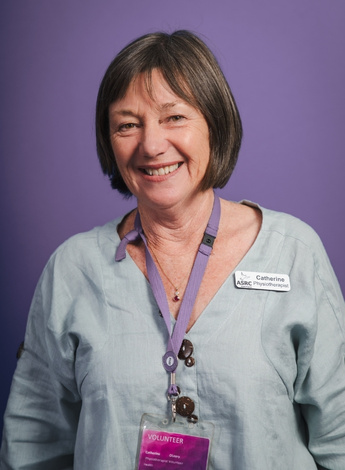
Catherine made the call, completed the induction and committed her Tuesdays to the centre.
When she took on a paid role the following week, that day remained unavailable.
Fifteen years later, that commitment sits at the heart of Catherine’s 2026 King’s Birthday honour.
She was awarded a Medal of the Order of Australia in the General Division for service to the community through a range of roles.
‘Serving as a volunteer physiotherapist for 15 years at ASRC is my most notable contribution to our community.’
The role was not part of a long-held plan.
When she answered the advertisement, she knew little about the circumstances of people seeking asylum.
‘I wasn’t looking for a volunteer position and I knew not a great deal about asylum seekers. I’ve learned a lot.’ Much of that learning has been about how physiotherapy fits within people’s broader needs.
At the ASRC, people who use the centre’s services are referred to as members.
They may be dealing with legal, financial and social pressures outside Catherine’s physiotherapy role but she is clear about where she can help.
‘My job is not to help members get a visa. My job is to help them get fit, so when they are able to work in whatever capacity they can, they’re fit to do so.’
At the centre, Catherine sees a wide range of physical issues, from everyday injuries to pain shaped by torture, uncertainty, depression and prolonged stress.
‘I wasn’t looking for a volunteer position and I knew not a great deal about asylum seekers. I’ve learned a lot.’
Catherine O’Leary OAM
‘I see everything from someone who has come with injuries because they’re a victim of torture through to someone who has tripped over and sprained their ankle and everything in between.’
For some people seeking asylum, access to physiotherapy elsewhere is limited by the absence of Medicare, work rights or income.
Even brief care can help ease pain, improve fitness or support someone to manage a chronic condition.
‘Just being able to see someone, even if it’s just for a couple of sessions, can make a huge difference to their life.’ Sometimes the milestones are small but memorable.
Catherine recalls one member who had received work rights and returned to tell her he had paid tax for the first time.
‘He told me he paid $7 in tax that week and he was so proud.
He said, “I feel like I’ve made a contribution to Australia.”’
Catherine decided on physiotherapy at 15 after work experience with a physiotherapist in Geelong.
‘I loved it. I thought, yes, this is it. All these years later, I’m still here.’ She studied at the Lincoln Institute of Health Sciences and was in the final cohort to receive a Lincoln degree.
After graduating in 1986, she began in rehabilitation at Mount Royal Hospital in Melbourne, later worked in NHS locum roles in the UK in the 1990s and returned to private practice in Melbourne in 1999.
That clinical background has helped shape Catherine’s volunteer work.
The ASRC setting, however, has asked her to keep adapting.
An examination that might feel routine in private practice is not always appropriate at a first appointment.
‘In a private practice job, if someone had a sore back, for example, it’s quite common for the physiotherapist to ask them to take off their shirt.
That’s not something that I do on a first visit, unless people offer to.’
Some people have cultural reasons for keeping covered. Others have past experiences that make examination confronting. Catherine has learned to adapt to the person in front of her and build trust gradually.
The work can be demanding but the ASRC health unit is nurse-led, with doctors, nurses, counsellors, legal workers and other staff nearby. ‘There’s always someone to debrief with at the end of the day if it’s been a difficult day.’
Her physiotherapy skills have also been used in other volunteer settings, including the Black Saturday bushfires in 2009 and eight years with the Trinity Grammar School kayaking squad.
Through St Hilary’s Anglican Church, Catherine has helped with weddings, funerals and its annual HOPE Food Drive, which distributes donated food through local food banks.
‘I have enjoyed the community engagement with that and building relationships with people in the community.’
Across these commitments, Catherine has returned to the same practical idea: using the skills and time she has to respond where there is need. At the ASRC, relationship building is as important as the clinical work.
Conversations about food, fashion, sport and the places people have come from can help create ease in the room. Step counts offer a simple way to talk about movement and activity.
‘It’s an economical and easy way of getting an objective measure as to whether people are getting out of the house or not.’
Before a recent hiking trip to the Overland Track in Tasmania, some members began asking Catherine about her own training. She says it became ‘a nice diversion’ and another way to talk about walking, fitness and small, achievable changes.
For Catherine, those conversations are not separate from the physiotherapy. They help build the trust that allows her to talk with people about movement, pain and what they can do while much else in their lives remains uncertain.
A member of the APA since she was a physiotherapy student, Catherine remains part of the APA Musculoskeletal national group and sees membership as another way of contributing to the profession.
The King’s Birthday honour still feels unexpected, particularly when she thinks of the many ASRC volunteers and staff who dedicate their time to improving the lives of others.
She encourages other physiotherapists to consider volunteer roles where their circumstances allow.
‘It can be the most rewarding day of the week. It can also be the most challenging.
The personal gain from being able to change someone’s circumstances, whether personal or physical, no matter how small, makes my Tuesdays special.’





Add Comment