

Introduction by Croakey: An urgent need for Stolen Generations survivors to have access to culturally safe, holistic and trauma‑informed healthcare, aged care and social services has been highlighted in a new report.
The Australian Institute of Health and Welfare recently released data for 2022-2023 for Stolen Generations survivors and descendants in a report commissioned by The Healing Foundation.
While there are many limitations and gaps in the data, the AIHW says the results “point to priority areas for policy and program response”, noting that survivors have markedly higher rates of disability, psychological distress, and financial insecurity.
The report calls for strong access to quality mental health and social and emotional wellbeing services for Stolen Generations survivors, for efforts to focus on closing “the gap within the gap”, and for financial security for all older Indigenous Australians.
It estimates there were 23,300 Stolen Generations survivors aged 50 and over in 2022-23, although this figure should not be seen as definitive.
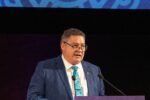
Below, Healing Foundation Chair Professor Steve Larkin, a Kungarakan man from Darwin, says the report provides an impetus for governments to finally address the needs of the Stolen Generations, as we approach the 30th anniversary of the landmark Bringing them home report.
Steve Larkin writes:
Updated data revealing the deep harm that Stolen Generations survivors still experience in Australia offers a galvanising opportunity for governments to finally address the landmark Bringing them home report delivered nearly 30 years ago.
The Australian Institute of Health and Welfare’s (AIHW) latest national analysis of Stolen Generations survivors aged 50 and over confirms there have been no substantial improvements in their health and wellbeing over the past five years.
Survivors and their descendants continue to face significantly poorer health, wellbeing and socioeconomic outcomes than other Aboriginal and Torres Strait Islander people who were not removed, even more so compared with non-Indigenous Australians.
Stolen Generations survivors are a top priority group for action, having been affected by Australia’s harshest and most racist policies.
The evidence is indisputable: they experience a ‘gap within a gap’ when it comes to health and wellbeing. Small actions could realise significant benefit.
Meeting survivors’ needs and rights would help honour and heal their experiences and accelerate whole-of-community gains. To do that, survivors and descendants must first be visible (in reporting, programs and funding) for real progress on closing both gaps.
Latest analysis
For the first time, the AIHW data on Stolen Generations survivors, released on 8 September, comes with a companion report on their descendants.
This recognises the nature and scale of intergenerational impacts inflicted by forced removal from families, communities, culture and Country.
There are approximately 23,300 Stolen Generations survivors still with us, representing about one in seven Aboriginal and Torres Strait Islander people aged 50 and over, and around 200,000 descendants aged over 18 – half of us.
The AIHW has found that:
- Survivors are 2.7 times more likely than other Indigenous adults (50 years+) to have severe disability, and 1.9 times more likely to be experiencing high psychological distress.
- Descendants are 1.3 times more likely to report high psychological distress than other Indigenous adults and 1.5 times more likely to have had trouble accessing government services.
- Gaps widen significantly when compared to non-Indigenous Australians and run across every measure: kidney disease was six times more likely in survivors, diabetes 2.8 times.
- For descendants, severe disability was a 2.6 times higher likelihood, incidence of kidney disease and diabetes were 4.5 times and three times higher respectively.
Importantly, the data doesn’t paint the whole picture – for example, the survey did not include people living in aged care homes, and many others are missing. Population data does not fully reflect the strength and resilience of survivors.
What is clear is an ongoing lack of accountability and action on longstanding evidence.
Solutions exist
The good news is that survivors and Stolen Generations organisations have already identified many solutions.
The 2008 National Apology was an act of healing in itself, and investment in Link-Up services (a community designed and led response) has led to many survivors reuniting with family.
Action had stalled, but now, thankfully, many different threads in public policy, community advocacy and survivor courage are converging that offer hope and justice for survivors and descendants, and our detailed roadmap – From Sorry to Action: A plan to act on Bringing them home – outlines tangible action for governments, stakeholders and providers.
Recent welcome moves from the Federal Government include exempting Stolen Generations redress payments from the residential aged care means test and the decision to appoint a permanent First Nations Aged Care Commissioner.
We hope that social and emotional wellbeing measures will be embedded and monitored in the updated National Mental Health and Suicide Prevention Plan, and that chronic care and mental health plans will be broadened to support better access for Stolen Generations survivors.
The AIHW data supports calls for specific actions for survivors, such as trauma-aware services, in the 2021 Royal Commission into Aged Care and Safety and the 2025 Interim First Nations Aged Care Commissioner’s reports.
The unique role that Stolen Generations organisations undertake in healing, connection, reunions, advocacy and service navigation, is increasingly recognised, by governments, health sector and other institutions such as archival services.

Political will
Political will is needed to deliver systemic change for survivors.
Only a woeful six percent of the 83 recommendations of the 1997 Bringing them home report have been implemented: a critical systems failure.
There is no nationally consistent health or aged care entitlement recognising the ongoing impacts of forced removal on the Stolen Generations.
We frequently hear from survivors about the mountains of red tape they have to navigate to access services, about services and workforces that don’t understand culturally safe, trauma-informed care, especially as survivors age.
A Stolen Generations Access and Prioritisation Card is one of many tangible actions outlined in The Healing Foundation’s Action Plan to address the needs of Stolen Generations survivors and descendants.
Above all else is the need for a systemic, long-term commitment from governments. To continue adhoc approaches without the big picture simply belies the evidence.
Stolen Generations survivors want the same things as all Australians: to live healthy and fulfilling lives and to see better outcomes for their children, families and communities.
But there is a narrowing window for action, as they grow older with complex and intersecting health, wellbeing and care needs.
The imminent 30th anniversary of the Bringing them home report on 26 May 2027 will shine a national and international spotlight on the failure of governments to act.
As we head towards that milestone, we are seeking the best from governments and Ministers.
What might targeted, strategic and systemic action mean for the Stolen Generations?

Author details
Professor Steve Larkin is a Kungarakan man from Darwin in the Northern Territory. He is a Stolen Generations descendant and has this month retired as Pro Vice Chancellor of the Office of Academic and Student Engagement at the University of Adelaide.
A former social worker, Steve has worked in urban, rural, and remote Aboriginal communities with state and federal governments, the Australian Medical Association and the National Aboriginal Community Controlled Health Organisation in the areas of social health, substance misuse, and men and prisoners’ health.
Steve holds a Doctor of Philosophy (PhD) from QUT, a Masters in Social Science from Charles Sturt University, and a Bachelor of Social Work from University of Queensland. He also holds appointments on a number of other Boards, including as Chair of The Healing Foundation.
See Croakey’s archive of articles on cultural safety




Add Comment