



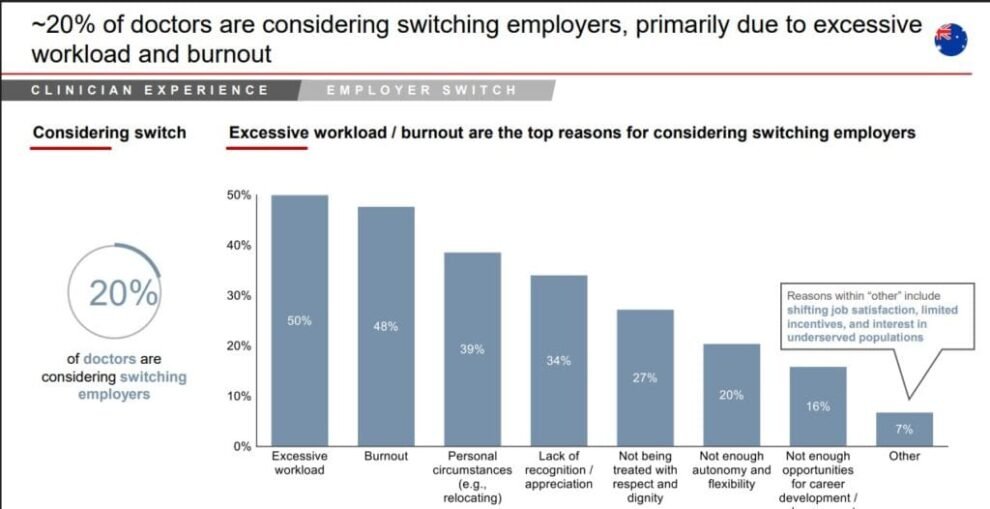

One in five doctors in Asia-Pacific are considering changing employers as excessive workloads, burnout and a lack of recognition continue to strain the healthcare workforce, according to Bain & Company’s latest Front Line of Healthcare report.
The consultancy’s survey of 600 doctors and 6300 consumers found rising patient expectations conflict with workforce pressures, while healthcare organisations struggle to keep pace with consumers’ growing interest in AI and new models of care.
The report authors conclude, “Across the region, consumer expectations are rising faster than healthcare systems can respond, and clinicians are burned out. AI offers a solution that both patients and physicians want, yet most organisations aren’t ready to scale it.
“Technology-driven advantages cannot scale without the workforce. Organisations that earn clinician trust and position doctors as co-architects of the transformation will earn patient trust as well. Satisfied patients stay with their providers and use more services—creating a compound competitive advantage.”
Bain & Company’s 2026 Asia-Pacific Front Line of Healthcare Report reveals widening tensions across the healthcare system: “Consumer expectations are rising faster than experience can keep up, clinicians are ready to walk away from overburdened systems, and AI capabilities are outpacing organisational readiness.”
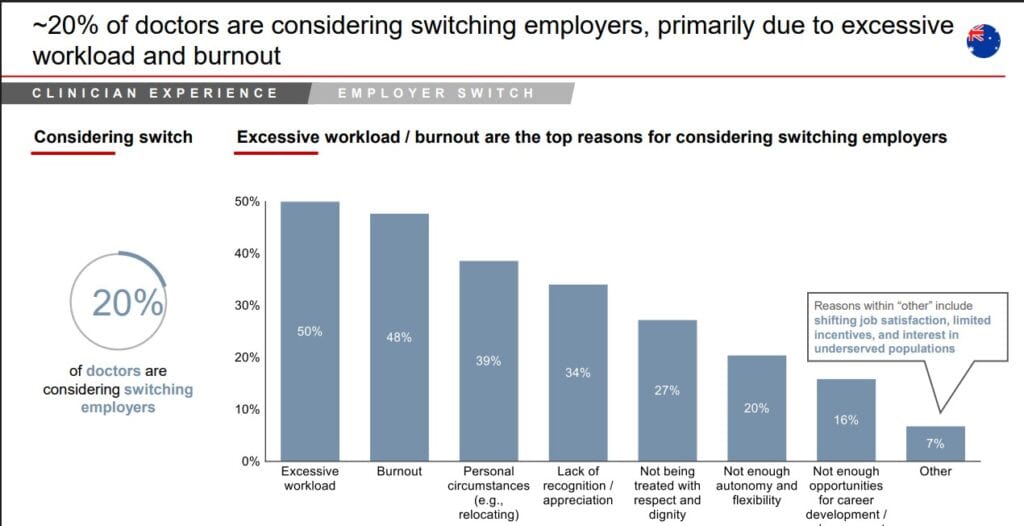
In relation to Australia, some findings include:
- Australia is lagging its Asia peers in support for adoption of AI-enabled healthcare – one in three doctors report that their organisations are not prepared to deploy AI at scale. Just 35% of Australians would feel comfortable with AI analysing medical results and creating a doctor’s report vs more than half of consumers in APAC and the US.
- One in five doctors are actively considering leaving their current employer. In Australia, doctors working in public hospitals are 2x more likely to switch employers than those in private hospitals.
- Care has proliferated beyond hospitals – 73% of consumers access care in at least one alternative setting (e.g. telehealth, a walk-in clinic in pharmacies/ retailers).
The report points to consumers across Asia-Pacific increasingly taking a proactive role in managing their health while expecting more convenience, responsiveness and coordination from the healthcare system.
“Today, 84% of consumers expect greater convenience from the healthcare system, while 71% expect doctors to be more responsive through channels such as phone, WhatsApp or email. Three out of five consumers now also schedule regular checkups and screenings, compared to 47% in 2023,” the report states.






Add Comment