





Artificial intelligence, advanced imaging and remote robotic interventions could help overcome some of the biggest barriers to specialist healthcare in regional Australia – with a sector leader encouraging shifting delivery of complex diagnosis and treatment closer to patients.
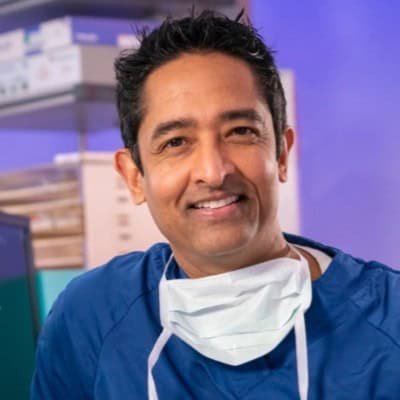
Dr Atul Gupta.
Speaking at the AusBiotech conference on the Gold Coast, Philips global chief medical officer for diagnosis and treatment Dr Atul Gupta said healthcare systems faced growing workforce shortages, increased demand and more disparities in access to specialist treatment.
In his keynote, Scaling care to billions: AI, access and the race against time, Dr Gupta used stroke treatment to show how geography and delays in accessing specialist care could determine patient outcomes – despite major advances in medical technology.
“For decades, the health sector has built expertise inside hospitals and asked patients to travel towards it. At Philips, one of the questions that we spend a lot of time on is, ‘How do we reverse that model? How do we close the literal distance, the gap between what health care can do in a hospital and the people that need it the most?’”
He said the challenge was particularly acute in Australia, where patients in regional and remote communities could be hundreds or thousands of kilometres from a comprehensive stroke centre.
“When it comes to health outcomes, your postcode can literally be more important than your genetic code – and it really shouldn’t be that way.”
Dr Gupta said advances in mechanical thrombectomy – a minimally invasive procedure used to remove blood clots from the brain – had dramatically improved outcomes for selected stroke patients, but access to the treatment remained limited.
He said workforce shortages, the location of specialist centres and delays across diagnostic and referral pathways were preventing many patients from receiving potentially life-changing treatment.
Dr Hal Rice on stage with Dr Atul Gupta at AusBiotech 2026. Image: Reesh Lyon.
Joining Dr Gupta for an on-stage discussion, Gold Coast University Hospital director of neurointervention Professor Hal Rice said his team regularly received patients transferred from as far as 2000 kilometres away.
“Those transfer times, if you think about it, take anywhere from 8 hours to 16 hours. You think about that brain loss.
“We’re losing 2 million neurons every minute. Luckily, we have a lot of neurons, but you don’t want to lose more than you need to. And so these people are really disadvantaged.”
Prof Rice said AI was already making a substantial difference to the time required to assess stroke patients and activate specialist treatment teams.
In an interview with Pulse+IT, he said a stroke CT examination could generate between 3000 and 5000 images – which historically might have required around two hours for detailed review by a skilled clinician.
“AI literally can crunch that data and give a summary of that data within one or two minutes. More importantly, then it can stream to our whole team in a private network, allowing the team to be fully aware, whether it’s 2 o’clock in the morning or 4 o’clock on a Sunday afternoon.”
He said secure mobile access to imaging and diagnostic information also allowed specialists to assess patients and activate their teams remotely, reducing delays in preparing for treatment.
One of the next steps could be the use of robotic systems to perform thrombectomy procedures remotely, with the specialist controlling equipment from a metropolitan centre while the patient remains in a regional hospital.
Prof Rice, who performed a pioneering robotic-assisted thrombectomy at Gold Coast University Hospital in 2020, told Pulse+IT that his team was preparing a clinical trial connecting the Gold Coast with a regional Australian hospital.
He said the team had already conducted hundreds of procedures on 3D-printed anatomical models, including testing remote robotic connections between the Gold Coast and San Francisco.
“We’re right on the cusp of this becoming commonplace. We’re about to start a clinical trial here from Gold Coast into one of the cities in Australia, which is a remote area. And so we’re liaising with the hospital there.”
He said reliable connectivity and redundancy would be essential, with potential communications arrangements combining dedicated broadband connections with 5G or satellite networks.
The proposed model would still require appropriately trained staff at the patient’s bedside to manage anaesthesia, obtain vascular access and support the procedure.
“When I’m driving the robot remotely, I’ve got the easy job. The people who have the hard job are actually at the bedside with the patient,” Prof Rice said.
The clinical potential of remote thrombectomy has also been demonstrated internationally – with a specialist using XCath’s Iris robotic system to perform a thrombectomy on a patient in Panama from a control location more than 200 kilometres away earlier this year, with a local clinical team present.
Robotics, Imaging, AI and Automation
Dr Gupta said robotics formed part of Philips’ broader strategy to combine imaging, AI and automation within interventional procedures.
The company received an award of up to US$33.7 million in August under the US Advanced Research Projects Agency for Health’s Autonomous Interventions and Robotics program, working with Johns Hopkins University and Boston University to develop remote-assisted and increasingly automated endovascular procedures.
Speaking to Pulse+IT, Dr Gupta said the ambition extended beyond allowing a specialist to remotely operate a robotic system.
“My vision for robotics is not just a remote control car, which in and of itself is good – remotely doing the thrombectomy a thousand miles away – but a self-driving car. That’s what we’re building towards, a robot that has the eyes of our interventional system.”
He said future systems could potentially combine real-time imaging, AI and robotic control to undertake selected tasks automatically before handing control back to the specialist.
“It’s not here yet. It’s exploratory, but I do think it’s going to happen very soon in our lifetime.”
AI advances
Dr Gupta said AI was already helping healthcare organisations increase imaging capacity and reduce the burden on overstretched clinical workforces.
Philips’ latest MRI software, for example, is designed to accelerate imaging by up to three times while improving image reconstruction. Dr Gupta said a hospital in Darwin had reported approximately 20 per cent greater MRI throughput following the introduction of AI-enabled scanning.
He also highlighted AI-assisted cardiac ultrasound, where automation is being used to improve the consistency of measurements that can help clinicians identify early signs of heart damage in patients receiving certain cancer treatments.
“We’ve baked in a level of artificial intelligence now to make these scans not only fast, but accurate and reproducible.”
Another emerging application is Philips’ AI-guided ultrasound application developed with support from the Gates Foundation. The application combines AI with handheld ultrasound to help nurses and midwives undertake basic antenatal assessments and identify patients who may require specialist referral.
The technology has been piloted in Kenya and Dr Gupta noted its potential application in remote Australian communities, where access to sonographers and specialist maternity services can be limited.
He said these tools were particularly important because healthcare systems could not rely solely on recruitment to meet rising demand.
“We’re not going to recruit our way out of this mess. We’re not going to invent 11 million health care workers overnight. But the good news is, digital health tools, things like telemedicine, minimally invasive image-guided therapy, AI, even robotics and automation, they’re coming to the rescue, even for people in underserved areas and remote areas.”
Prof Rice said technology alone would not address the problem, with investment in training and the development of specialist workforces equally important.
He pointed to the NeuTex Image-Guided Therapy, Surgical Training and Robotics Centre in the Gold Coast Health and Knowledge Precinct, established with Philips as a technology partner.
Prof Rice said approximately 1000 specialists had attended the centre over four years, including trainees and experienced clinicians from Australia and across the Asia-Pacific region.
The centre uses interventional imaging equipment similar to that used in hospital operating theatres, allowing specialists to practise techniques on realistic anatomical models.
Dr Gupta said the same mix of infrastructure and workforce development was being pursued through Philips’ partnership with Indonesia’s Ministry of Health, which aims to expand access to image-guided treatments across all 38 provinces.
While AI and automation would play an increasingly important role, Dr Gupta said the responsibility for clinical decisions would remain with healthcare professionals.
“We don’t see AI as an independent functioning platform. It’s going to still have oversight by me. It’s not going to replace me. It’s just another tool in my toolbox. It’s going to be an assistant.”
He also cautioned against the technology industry’s emphasis on developing and deploying products as quickly as possible.
“As you know, in the world of startups, you have a mantra, move fast and break things. Move fast and break things doesn’t work when you have a patient on the table getting an angioplasty or a thrombectomy.”






Add Comment