





Introduction by Croakey: This week has seen a strong convergence of interests across the Federal Liberal Opposition, Greens and crossbench MPs on important measures to protect the health and safety of children and young people.
As the Federal Government comes under wide-ranging political pressure to take stronger action to regulate gambling and digital platforms, public health experts are also pushing the Government to act on protecting Australian children and adolescents from junk food promotion.
And they’re also advocating for tougher regulation of the marketing of infant formula and toddler milks, reports Marie McInerney.
Marie McInerney writes:
Public health advocates have further opportunities to try to strengthen the Federal Government’s watered down gambling reforms, which have come under attack from many quarters – including the Liberals, Greens and crossbenchers,and health organisations, including the Australian Medical Association.
This follows the referral this week of the Government’s Interactive Gambling Amendment (Gambling Reform) Bill 2026 and National Self-exclusion Register (Cost Recovery Levy) Amendment Bill 2026 to a Senate inquiry, which is due to report by 17 August. No terms of reference have yet been published.
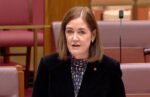
The Liberals and Greens are also pushing the Federal Government to scrutinise and strengthen upgrades to Australia’s under-16s social media ban, with Opposition spokesperson for Communications and Digital Safety Senator Sarah Henderson saying the proposed amendments are too weak to rein in big tech platforms.
Speaking on ABC Radio National on Friday, Henderson said the Liberals had joined with the Greens to refer the Government’s long awaited gambling reform bill to a Senate committee because the current bill is “undercooked”, following three years by Labor of “delay, deflection, and deception in relation to gambling reform”.
Legislation introduced this week would limit gambling ads on TV to no more than three per hour between 6am and 8.30pm and ban them during live sport within those hours. It would also stop celebrity promotion of gambling and remove gambling ads from stadiums and players’ uniforms.
However, anti-gambling advocates and others remain bitterly disappointed that the Government has not implemented a total ban on gambling advertising, as recommended by the late Labor MP Peta Murphy.
“This package from the Albanese Government will not protect Australians, especially children, from the harms of gambling advertising,” Independent ACT Senator David Pocock said in a statement.
“Faced with a once-in-a-generation opportunity to break the nexus between gambling and sport and stop Australians being the world’s biggest losers on gambling, the Prime Minister has squibbed it,” Pocock said. “The PM has put vested interests ahead of what’s best for the Australian people and has failed future generations.”
Asked what changes the Opposition wanted, Henderson told the ABC she would not prejudge or undermine the work of the Senate, saying it was complicated legislation and Senators now have “a lot of work to do to interrogate the bill”.
“The devil is in the detail,” she said.

Social media scrutiny
The Federal Government has also introduced amendments to its legislation banning access to social media platforms for under 16s, concerned that tech giants are failing to take reasonable steps to enforce the globally watched ban.
The amendments include fines of up to $1.65 million for tech companies that refuse to hand over documents related to their enforcement of the ban.
However, the Liberal Party has again combined with the Greens to refer them for scrutiny by the Senate, amid concerns they are still not strong enough to address “the insidious psychological manipulation that happens online” for children, Henderson said.
There are many other protections that Australia can take up, she said, such as safety tools embedded in the operating systems of phones and technology that can block live streaming of horrendous child sexual abuse.
“There’s a whole lot of things that can be done, and that’s why I’ve called on Google, Microsoft, and Apple to give their safety tools to parents, which are currently available to corporations and large government departments through enterprise agreements,” she said.
That will mean parents have the choice and control over what their children see online, “not just on social media platforms, but every part of their connection with their device online”.
The Senate inquiry into the Online Safety Amendment (Strengthening Enforcement for the Social Media Minimum Age) Bill 2026 is due to report by 25 August.
Junk food bombardment
This week also saw public health experts urge further action on the commercial determinants of health, calling on the Albanese Government to clamp down on junk food advertising to children and adolescents and to also take a rare opportunity to curtail aggressive marketing of infant formula and so-called ‘toddler milk’.
A joint statement, backed by independent federal MPs Dr Sophie Scamps and Dr Monique Ryan and Labor MP Dr Mike Freelander, calls on the Government to urgently respond to the Feasibility study on options to limit unhealthy food marketing to children that it commissioned from the University of Wollongong.
The study, released in May, draws on scientific evidence and findings from stakeholder consultation, including with parents and carers, First Nations people, peak health bodies and state and territory governments. Its recommendations include:
- mandatory, comprehensive restrictions on unhealthy food marketing to children
- independent monitoring and enforcement rather than voluntary self-regulation
- applying regulations to all major media and settings, including television, streaming, digital platforms including social media, retail environments and outdoor advertising
- restricting marketing in community settings, including children’s sport and other sponsorships
- limiting the use of bright packaging, cartoon characters, special offers and other child-directed promotional techniques.
Importantly, the feasibility study calls for a commitment to “prioritise children’s health over commercial interests in all policy decisions”.
As well as the MPs, signatories include the Public Health Association Australia, Australian Medical Association (AMA), Food for Health Alliance, Dietitians Australia, Diabetes Australi, Cancer Council, Victorian Aboriginal Community Controlled Health Organisation (VACCHO), Australian Dental Association, the George Institute, Royal Australian College of Physicians, Royal Australian College of GPs, the University of Wollongong, and the Deakin Institute for Health Transformation.
The statement says Australian children are being “exposed to unprecedented levels of aggressive and targeted marketing by unhealthy food and beverage companies”.
“This relentless advertising normalises the consumption of highly processed foods and sugary drinks and undermines the efforts of parents, carers, educators and health professionals to support healthy eating habits,” it says.
“You only need to watch some adverts about the FIFA World Cup to see how junk food companies are targeting children through popular sporting events,” said Cancer Council CEO Jacinta Reddan.
“It’s time to blow the whistle on junk food marketing to protect children’s health.”
Undermining parental choices
Also, as Croakey has previously reported, the Federal Government is currently considering, for the first time in 30 years, how better to regulate marketing of infant formula.
It is also currently drafting the country’s first food security strategy, Feeding Australia — another policy initiative regarded as a once-in-a-generation opportunity to improve the nutrition and long-term health of all Australian children.
Infant nutrition experts are calling for marketing restrictions on formulae and toddler milk that extend beyond manufacturers to supermarkets and pharmacies, and for action to protect health professionals and the health system from industry interactions that can influence clinical advice and parenting feeding decisions.
In its submission to the infant formula inquiry, the Infant and Toddler Food Research Alliance said sponsorship of professional development by infant formula companies “is not appropriate in any circumstance”, creating real and perceived conflicts of interest that can influence clinical advice and undermine breastfeeding.
Members of the alliance told a Australian Prevention Partnership Centre webinar this week that the Marketing in Australia of Infant Formula Manufacturers and Importers Agreement, a voluntary industry arrangement with no sanctions for breaches and which officially expired last year, has provided inadequate protections for decades.
They also highlighted growing concerns at the promotion and takeup of so-called ‘toddler milk’: an ultra-processed food marketed as a valuable everyday supplement for toddlers but widely criticised as unnecessary at best and harmful at worst.
Toddler milks can contain similar amounts of sugar as soft drinks and chocolate milk and are, worryingly, being fed to about half of Australian toddlers every day, they said.
Public health lawyer Andrea Schmidtke told the webinar about the deluge of online promotion for toddler milk that she gets via social media, just as someone with a professional interest.
“It’s pretty wild,” she said. “Obviously the way the algorithms work, [platforms are targeting] parents when they’re up at night feeding their children….saying that ‘this will help your child sleep better, and they’ll be less fussy and they’ll be calmer’.
“It’s really pushing parents to transition to away from breastfeeding and to use products like [toddler milk] that are really not necessarily what the parent may have otherwise chosen to do.”

Critical window
The Alliance wants restrictions on marketing of toddler milks, not only because of their deficiencies, but because their marketing “functions as a powerful form of indirect infant formula promotion, and that influences and undermines breastfeeding intentions and durations, as well as exclusivity”.
Schmidtke said a range of factors influence breastfeeding, which relate to both the individual and their environment, and it is important to acknowledge that not every mother chooses to or is able to breastfeed.
But the concern is when industry products and promotions seek to displace a parent’s free choice, implying often that formula and toddler milks are better than or equivalent to breast milk, “which they’re not”, she said.
Nicole Bando, a paediatric dietitian and lactation consultant who is a convener of the Dietitians Australia Paediatric and Maternal Health Interest Group, highlighted evidence on how the first 2,000 days of a child’s life – from conception to age five – represent a “unique and critical window to reduce a child’s lifetime risk of disease”.
“Early childhood dietary habits actually lay the foundation for a child’s long-term health, and that includes their growth, their development, their immune system, their weight trajectory, and their risk of chronic disease, including things like type two diabetes, cardiovascular disease, certain cancers, and early dietary habits,” she said.
“So we have this critical window of significant brain development, and that ultimately impacts a child’s ability to learn, their cognition, their memory, and their ability to communicate,” she said. “Nutrition actually influences all of these outcomes.”
Australian babies, toddlers and children, however, are not meeting global or national recommendations on key nutritional measures, including breastfeeding and intakes of fruit, vegetables, discretionary (processed) foods, added sugars and saturated fats, the webinar heard.

Also at the webinar, Dr Jennifer McCann, a senior lecturer at Deakin University’s School of Exercise and Nutrition Sciences, highlighted research projects that have sought to take advantage of the rare policy window that has opened up.
Key amongst them is the three-year Digital Mums project, led by Professor Kathryn Backholer from Deakin’s Centre for Global Preventive Health and Nutrition (GLOBE), which is looking to fill a major data gap in how Australian infant formula companies market breast milk substitutes via digital platforms.
With a particular focus on Indigenous women and on women in Vietnam, which is a major market for the Australian industry, it aims to uncover ways these companies may be contravening national and international regulations, and to develop tools for ongoing monitoring and accountability.
Another project involves a landscape audit to examine the nutritional content and packaging characteristics of toddler milks available in Australia and Aotearoa/New Zealand.
See Croakey’s archive of articles on the commercial determinants of health






Add Comment