



Building knowledge through research
Brendan Bugeja
Explore some of the latest research from the July issue of the Journal of Physiotherapy.
Smallest worthwhile effect of ACL reconstruction
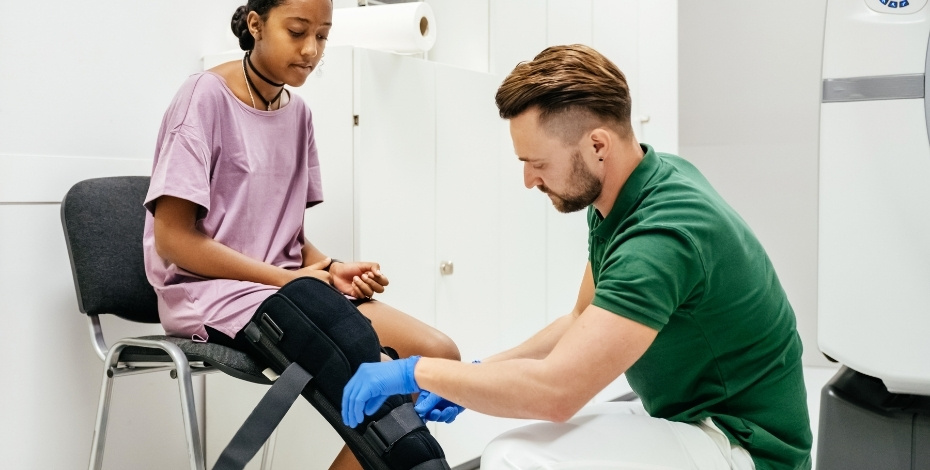
A group of Australian researchers conducted a benefit–harm trade-off study to estimate the smallest worthwhile effect of anterior cruciate ligament reconstruction plus rehabilitation – compared with rehabilitation only – for improving knee function and return to sport. First author Fahd Dibsh agreed to answer some questions about the study.
Surgery after anterior cruciate ligament (ACL) rupture used to be de rigueur but these days it seems that more and more people – including elite athletes – are opting for rehabilitation alone. Is that what the data says?
Athletes who rupture their ACL have traditionally been managed with ACL reconstruction due to its reputation for restoring knee function and facilitating return to pre-injury activities.
However, this pattern of healthcare may not reflect the preferences of people engaged in sport, but rather the clinical recommendations and healthcare system practices that prioritise surgery as the standard of care. In our study, preferences for treatment varied.
Nearly half the athletes in our study strongly preferred ACL reconstruction but 20 per cent slightly or strongly preferred rehabilitation only and 14 per cent had no preference.
While surgery remains the preference for many, there is clearly a substantial group of people open to rehabilitation alone.
The benefits of rehabilitation alone are supported by the KANON and COMPARE trials, which found that rehabilitation alone results in similar or only slightly inferior knee function at two years compared with early ACL reconstruction.
You were interested to know how much benefi t sportspeople would want from adding surgery to rehabilitation (ie, as opposed to rehabilitation alone). What is the value of knowing that?

Fahd Dibsh
The smallest worthwhile effect is an estimate of the minimal gain patients require from an intervention compared to an alternative, while considering the benefits, harms, costs and inconveniences of both options.
No study had applied this method to ACL reconstruction before.
Knowing the minimal gain patients require from ACL reconstruction gives clinicians, patients and policymakers a patient-informed benchmark against which to interpret the results of trials comparing ACL reconstruction with rehabilitation only, rather than relying solely on statistical significance.
In clinical practice, these values could support shared decision-making discussions with patients who are uncertain about whether the potential benefits of ACL reconstruction justify its risks, costs and recovery burden.
How did you go about fi nding that out? What study design did you use?
We conducted a benefit–harm trade-off study via an online survey with 92 people engaged in recreational or competitive sport across Australia.
Participants were presented with an overview of both treatments (ACL reconstruction versus rehabilitation alone), including their key components, potential inconveniences, costs and risks, then completed two scenarios that captured the minimal gain they require from ACL reconstruction.
In the knee function scenario, they were told they would achieve 80 per cent of their full knee function within two years with rehabilitation only and indicated the minimum additional improvement they would require to make surgery worthwhile.
In the return-to-sport scenario, they were told that their chance of returning to their pre-injury sports participation level would be approximately 35 per cent with rehabilitation only and indicated the minimum additional improvement they would require to choose surgery.
How much improvement in knee function did the participants want for surgery to seem worthwhile?
The median smallest worthwhile effect was an additional 12 per cent improvement in knee function compared with rehabilitation only.
What about return to sport? How much greater likelihood of return to sport do participants want to see from surgery to make it worthwhile?
Participants required a 41 per cent increase in their likelihood of returning to their previous level of sport participation to justify undergoing ACL reconstruction.
How do those results compare with the actual amount of benefi t that surgery typically gives?
Comparing our findings with trials evaluating ACL reconstruction versus rehabilitation alone, it is clear that the effects of ACL reconstruction in these trials fall well below what patients consider to be worthwhile.
Both the KANON and COMPARE trials showed little to no difference in knee function and return-to-sport rates when early ACL reconstruction was compared with rehabilitation alone.
This highlights the importance of patient-centred thresholds because a statistically significant difference may not be considered meaningful unless it exceeds what patients themselves consider worthwhile.
>>>Fahd Dibsh is a PhD candidate at the Institute for Musculoskeletal Health, the University of Sydney, supervised by Associate Professor Joshua Zadro. Fahd is a registered nurse with over 20 years of clinical experience and his PhD focuses on improving the management of ACL injuries.
Physiotherapists’ perspectives on WalkBack implementation
A group of researchers from Macquarie University in Sydney investigated the experiences of physiotherapists implementing the WalkBack trial. First author David Yeom agreed to answer some questions here. The WalkBack trial, published in The Lancet, investigated the effectiveness of a progressive, individualised walking and education program designed to prevent low back pain recurrences among people who had recently recovered from an episode.
Can you give us a quick summary of the WalkBack methods?
In the WalkBack trial, participants in the intervention group received six sessions with a trained physiotherapist over six months.
Physiotherapists used health coaching principles to tailor a progressive walking program, help participants overcome barriers to staying active, provide education about low back pain and encourage self-management.
Participants were followed for at least 12 months (and up to three years) to monitor low back pain recurrences and other back pain-related outcomes.
The trial reduced activity-limiting recurrences by 28 per cent, reduced care-seeking recurrences by 43 per cent and was cost-effective compared with no intervention.
If it was so successful, why isn’t it immediately implementable by physiotherapists?

David Yeom APAM
Showing that an intervention works is only the first step. Successfully implementing it in routine care is a known challenge.
Clinical trials are carefully supported environments. Everyday practice is much more complex.
Clinicians work within different funding models, clinic cultures, patient populations and time pressures.
Even relatively simple interventions (such as WalkBack) require clinicians to change established routines and fit new approaches into existing workflows.
Before asking clinicians to adopt something new, it’s important to understand what they see as the practical barriers and, just as importantly, what would make implementation easier.
Tell us about the study you did to investigate the perceived barriers and facilitators to physiotherapists adopting a prevention-based walking and education program (WalkBack) in routine practice for patients with recurrent low back pain.
We interviewed Australian musculoskeletal physiotherapists who had previously delivered the WalkBack program during the trial as well as others who had never been exposed to it (n=20).
We wanted to understand the factors that influence the program’s uptake in clinical practice and identify refinements to the WalkBack program and its training that could support future implementation.
What came out of the results?
One of the most encouraging findings was that clinicians genuinely saw value in the WalkBack program.
They felt it aligned with where the profession is heading: moving beyond simply treating episodes of pain and towards a greater focus on preventing future episodes of low back pain and supporting self-management.
Many also believed that the program’s strong research foundation and endorsement from professional organisations would give clinicians greater confidence to adopt it in practice.
We found that training mattered. Although walking itself is straightforward, delivering the program effectively relies on strong communication skills such as motivational interviewing, collaborative goal setting and supporting behaviour change.
Participants emphasised that these skills were valuable well beyond WalkBack and could strengthen everyday clinical practice.
Anything else?
Participants consistently told us that successful implementation requires more than simply providing clinicians with a treatment protocol to follow.
Practical resources and ready-to-use implementation materials (eg, advertising resources and referral templates) combined with some flexibility in how WalkBack is delivered were viewed as essential for making the program realistic within busy clinics.
Perhaps most importantly, implementation depends on the broader system.
Many clinicians felt that existing funding models don’t adequately support prevention-focused care, making programs like WalkBack more difficult to deliver in routine practice.
Support from practice owners and opportunities for ongoing peer support also emerged as major influences.
Many participants suggested that communities of practice – where clinicians can share experiences, troubleshoot challenges and learn from one another – could be helpful for sustaining implementation over time.
Does this have implications for the implementation of similar clinician-led programs or are the results only applicable to WalkBack?
While our findings come from a specific prevention program for low back pain (WalkBack), many of the implementation challenges we identified and the potential solutions are likely relevant to other clinician-delivered programs.
Our findings suggest that prevention-based care is something clinicians are keen to embrace.
However, successful implementation requires more than an effective intervention.
Training, practical resources, supportive organisations and funding models that value prevention all have an important role to play in translating effective interventions into routine clinical practice.
>>>David (Seong Kyeong) Yeom APAM is a PhD candidate at Macquarie University’s Spinal Pain Research Centre. His research explores the implementation of evidence-based strategies to prevent recurrent low back pain, with the aim of improving access to effective preventive care.
Exercise-based cancer telerehabilitation
Australian researchers compared exercise-based cancer telerehabilitation to a single session of physiotherapy in a randomised controlled trial. First author Dr Amy Dennett answers some questions about the research.
Exercise is widely recommended as best practice to mitigate the negative effects of cancer and improve quality of life and survival. What new angle did you examine with your randomised controlled trial?
At the time of setting up this trial during COVID-19, implementation of group exercise via telehealth was booming.
While the feasibility of telerehabilitation has been established in cancer settings, there was far less evidence about how effective group exercise delivered via telehealth was.
Therefore, we set out to determine the effectiveness of group-based cancer exercise telerehabilitation.
What interventions did you compare and how many people with cancer were enrolled in the study?

Dr Amy Dennett MACP
We looked at a group exercise class delivered live via telehealth to adults diagnosed with cancer.
Exercise was led by a physiotherapist trained in oncology and exercises were individualised to each participant within a small-group format to mimic what would usually be completed at in-person classes.
The group exercise class was supplemented with the provision of a smartwatch and online exercise app.
This was compared with bare-minimum best-practice usual care – a single comprehensive assessment with a physiotherapist and standardised written education and advice.
What was your primary outcome? Did you have many secondary outcomes?
Our primary outcome was health-related quality of life measured using the EORTC QLQ-C30.
Within this measure, we looked at symptoms and function as secondary outcomes.
We also looked at objective physical activity levels, six-minute walk distance and self-efficacy and health service outcomes such as hospital readmissions and health service utilisation.
Did the study go to plan?
We recruited well into the study but the results did not go as we expected.
Our telerehabilitation group did no better than our usual care comparison.
Many of our participants also struggled to attend the group exercise sessions after having their assessment.
What did the trial find out about the effect of adding telerehabilitation?
We found that adding group telerehabilitation did not result in superior outcomes compared to a single session of physiotherapy assessment, education and advice.
What do you think led to those results and what should clinicians and researchers each take away from the findings?
We think there were several reasons why our results did not favour the intervention group.
Adherence to our group exercise sessions was poor due to the pragmatic nature of the trial.
This contrasts with previously reported high attendance in telehealth trials.
In an associated qualitative study, many of our participants found it difficult to attend due to treatment-related issues and feeling unwell, which is not uncommon in real-life rehabilitation.
This was compounded by potential issues with using telehealth to deliver exercise because the ability to supervise and tailor exercise to the appropriate intensity – and give individual feedback without others observing – is more difficult.
There was also limited equipment and the absence of tactile feedback restricted realtime correction of technique.
Therefore, participants may not have been getting the dose of exercise needed to improve outcomes.
Our physiotherapists were also highly skilled so it is plausible that a single session of physiotherapy aligned with best practice was enough to motivate some people to implement lifestyle changes at their own pace without attending structured exercise classes.
One-third of participants in our control group self-reported completing an exercise program independently.
This raises questions about the minimal amount of intervention needed to improve outcomes after cancer.
>>>Dr Amy Dennett MACP is an NHMRC Emerging Leadership Fellow and physiotherapist from La Trobe University focused on advancing evidencebased cancer rehabilitation. Amy is an APA Titled Cancer Physiotherapist. Her work explores innovative approaches to delivering exercise and rehabilitation after cancer to improve access to care.





Add Comment