



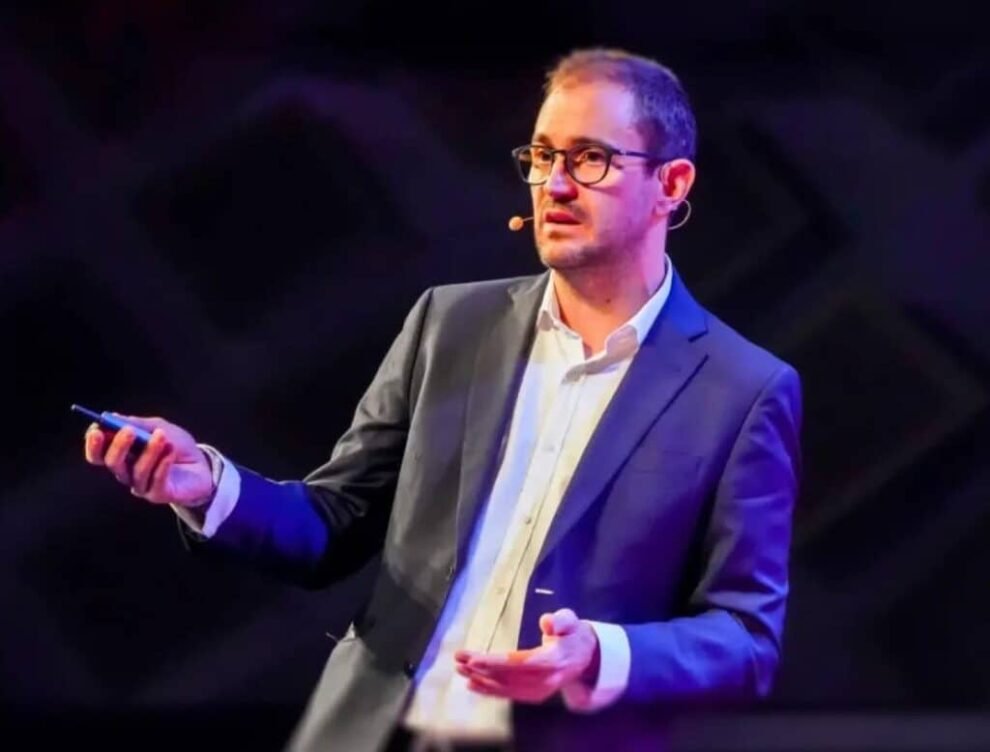

Australia’s recognition of openEHR in its new National Framework for Digital Health Standards reflects a broader shift in digital health from short-term system integration to reusable clinical data, according to openEHR International CEO Dr Jordi Piera-Jiménez.
The Australian Digital Health Agency released the framework in May, saying it was designed to provide practical guidance and align standards development, governance and implementation across government, jurisdictions, health services, industry and partners. The Agency says the framework is intended to support consistency, interoperability and alignment across Australia’s digital health ecosystem.
For openEHR advocates, its inclusion in the framework is significant because it formally recognises the role of vendor-neutral, clinically governed data models in supporting long-term interoperability.
Dr Piera-Jiménez said, “For openEHR, all of this points in one direction. Our specifications, our community, and our adopters have already shown that the lifelong health record is buildable when the underlying data model is shared, vendor-neutral, and clinically governed.
Data architecture
“The next chapter is about making that pattern easier to deploy, easier to fund, and easier to evidence as the substrate for learning health systems, and for the kind of clinical AI that clinicians should actually be able to trust. That is the contribution I want openEHR to make in this period.”
Dr Piera-Jiménez said the future of interoperable care depends on data architecture decisions made well before new care models are implemented.
“Integrated care is not a clinical model bolted onto an IT layer, but a data architecture decision made years earlier, for better or for worse,” Dr Piera-Jiménez said.
“The lifelong electronic health record, the thing that should follow a person across decades and settings, is impossible to build sustainably if every new use case demands yet another integration project.”
Dr Piera-Jiménez has more than 25 years’ experience in digital health, policy and strategy, including work on Catalonia’s electronic medical and social care records, the European Health Data Space and international programs involving the World Health Organization and the OECD.
The Catalan experience also showed that the hard part of open platform implementation was not the technology, but shared governance.
“The technology was the easy part,” he said. “The hard work in Catalonia was building shared governance across providers and vendors so that clinical models meant the same thing on Monday as they did on Friday.”
He said clinical modelling should be treated as a clinical exercise rather than an IT exercise, warning that shortcuts in the design of shared data models can be costly to unwind.
Record ‘achievable’
Dr Piera-Jiménez said openEHR’s specifications, community and adopters had shown that a lifelong health record was achievable when the underlying data model was shared, vendor-neutral and clinically governed.
“The next chapter is about making that pattern easier to deploy, easier to fund, and easier to evidence as the substrate for learning health systems, and for the kind of clinical AI that clinicians should actually be able to trust,” he said.
The openEHR community’s Clinical Knowledge Manager, provided to the international openEHR community by Ocean Health Systems under a pro bono licence, now supports more than 4300 registered users across 124 countries. It hosts around 1000 archetypes at various stages of development and has almost 1800 registered archetype reviewers.
Dr Piera-Jiménez said his priorities for the coming year include organisational maturity, stronger evidence for open platform implementations, broader international reach and a better experience for implementers.
The organisation also plans to build on closer working relationships with HL7, IHE, SNOMED International, the Joint Initiative Council and the European Health Data Space. Dr Piera-Jiménez said those relationships had strengthened under former CEO Rachel Dunscombe, who has moved to HL7 International.
He said openEHR and HL7 FHIR should be seen as complementary standards.
“FHIR has become the lingua franca for health data exchange,” he said. “openEHR provides the persistence and modelling layer that lets the data exchanged through FHIR remain meaningful and queryable over a clinical lifetime.
“SNOMED CT, LOINC and other terminologies supply the semantic anchors. These are complementary roles, not competing ones, and the implementers who actually deliver care systems have understood this for years.
Dr Piera-Jiménez said the next phase for openEHR would focus less on proving architectural convergence and more on governance, funding and evidence.
“How do we govern shared artefacts across organisations without slowing implementers down? How do we sustainably fund the open commons that everyone benefits from but nobody quite owns? And how do we build the empirical base that lets ministries and procurement officers choose open platforms with confidence rather than courage?”
He said the growing interest in AI made the need for semantically rich, longitudinal data more urgent.
“Open, semantically rich, longitudinal data is exactly what trustworthy clinical AI needs, and openEHR has a unique role to play in making sure that future gets built on solid foundations.”






Add Comment