







Introduction by Croakey: We hear so much about the dangerous consequences of extreme heat for human health and wellbeing. But what about the effects on other species, whether livestock, pets or wildlife, and biodiversity more generally?
The Australian Centre for Disease Control is premised upon a One Health approach, recognising the connections between the health of the environment, humans and other species.
Are Croakey readers aware of any efforts to integrate heatwave planning and responses using a One Health approach?
Surely this would only strengthen the argument for urgent emissions reduction, including phase out of fossil fuels, a subject which is apparently too difficult for our Prime Minister to even mention at global climate talks.
The article below raises concerns about extreme heat’s impacts upon cattle, and the implications for this industry in northern Australia, including for workers.
It follows a presentation to the recent Healthy Environments and Lives Network conference (#HEAL2026) showing that people living in and around Tennant Creek already now experience around 143 days a year of temperatures above 35 degrees Celsius. By the 20250s, this is predicted to rise to 170 days per year – an extra 27 days of dangerous heat.
Rachel Taylor writes:
The Sunday roast and the backyard barbecue have long been Australian rituals. The country is one of the world’s biggest consumers of red meat. The average Australian ate about 22 kilos of beef in 2024.
But there’s a question mark looming over the future. Australia is already about 1.5°C warmer than it was in 1910, when national records began. About half of the country’s 30.8 million cows graze the rangelands and paddocks of the tropical and semi-arid north, where they spend every day outdoors.
Cattle are built to make heat, not lose it. As they ferment grass in their complicated stomachs, cows produce a steady stream of internal warmth. They also sweat less effectively than humans can. To offload heat, they pant, seek shade or wait for cool nights.
British breeds from cool European climates are especially bad at shedding heat.
Heat stress is already a problem for cattle in Australia’s north. In our new research, we found dangerous levels of heat will arrive more often.
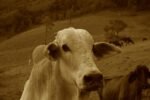
That will pose particular problems for British cattle breeds from the Bos taurus subspecies. Tropical breeds such as Brahmans from the Bos indicus subspecies will be more resilient, but not immune.
Building more shade structures could protect cattle from much of the extra heat.
Dangerous times
We used climate models to compare the 1990–2010 period with the heat levels expected by the 2050s and 2090s under both a low- and high-emissions futures. We mapped these conditions over the whole of northern Australia for both Bos indicus and Bos taurus breeds.
We used the Heat Load Index – which combines temperature, humidity, wind and sunshine – to estimate how much heat cattle are actually accumulating.
This index makes clear how much the breed of cattle matters. British breeds such as Angus and Hereford get into trouble at a heat load index value of 86.
But tropical breeds such as the Brahman can tolerate up to 96 without accumulating more heat than they can shed. Most northern graziers already rely on Brahman or Brahman-cross breeds.
For British breeds, days with dangerous levels of heat rise from 117 days at present to 143 by the 2050s (low emissions) to as high as 195 days a year by the 2090s (high emissions). These figures are averaged across the region.
In parts of the semi-arid interior, these cattle breeds would face dangerous heat on more than 300 days a year.
Brahman cattle cope better, but the number of dangerous heat days will rise from 17 to between 32 (low emissions) and 84 days a year (high emissions).
The effect will differ by region.
At Dalby on Queensland’s Darling Downs, more than half the herd is comprised of British breeds. Dangerous days will climb from about 45 a year currently to 134 by the 2090s under a high-emissions scenario. Even with rapid emissions cuts, this figure will rise to about 70.
In the Barkly region in the Northern Territory’s east, tropical Brahman make up three in four cattle. But dangerous heat is coming for these hardy animals, too. Dangerous days will climb from the current 15 to 106 a year by the 2090s – roughly one day in three, under a high emissions scenario.
How heat affects cattle
Heat stress doesn’t often kill cattle outright. More often, the effects are cumulative – and costly.
Hot cattle eat less to reduce the heat caused by digestion. At an air temperature of 38°C, cows can eat 15–18 percent less feed. This means animals gain weight more slowly, take longer to reach market and become less fertile.
Dangerous heat above the British-breed danger threshold of 86 in the week before slaughter makes it more likely cattle will yield less-valuable “dark-cutting” beef.
After intense heat, cattle need cooler nights to recover. But nights are warming, too, adding to the strain.
Shade is vital.
Cattle can tolerate more ambient heat if they can wait out the hottest hours in good quality shade able to block 70 percent of sunlight.
Good shade would be enough to bring late-century heat exposure under a high emissions scenario roughly back to today’s unshaded levels for five of the six site and breed combinations we tested.
The catch is that providing this level of shade usually requires purpose-built structures, such as shade-cloth, near water points or open-sided sheds. Paddock trees don’t help as much. And no level of shade can avoid humidity and hot nights.
Graziers will have to think carefully about their choice of breed. Some producers are currently bringing more British breeds north, as these animals put on weight faster. Our results suggest this is risky, especially in the hottest regions.
Feedlot operations have already moved to build more shade structures, following a spate of cattle deaths.
Workers at risk
Dangerous heat affects workers, too. Mustering cattle on horseback is hard physical work.
Under a high-emissions scenario, mustering during daytime hours in the Barkly region will become unsafe for 217 days a year, up from 134 at present.
Many Barkly cattle stations already start mustering at dawn to avoid the heat. By the 2090s under high emissions, even dawn musters would be unsafe on more days than full-day work is now.
Northern Australia is no stranger to heat. But at some point, heat becomes intolerable. For the millions of cattle in the north – and the people who muster them – heat will become a defining pressure.
Cattle stations will have to build more shade structures and choose breeds able to handle heat better, as well as moving hard work to cooler hours.
Cutting emissions sharply could make the difference between a manageable problem and a serious blow to Australia’s most valuable farm export.
• This article was first published at The Conversation.
Author details
Dr Rachel Taylor is a Research Fellow in the Centre for Applied Climate Sciences at the University of Southern Queensland working with the Northern Australia Climate Program. Previously she completed her PhD at the Australian National University Fenner School of the Environment & Society, investigating the large-scale climate processes that drive extreme fire weather. She has also worked as a climate change adaptation and mitigation consultant.
Further reading
Stanford University: Meat’s Environmental Impact (November 2025): “From greenhouse gas emissions and deforestation to water use and pollution, meat production plays a significant role in the planet’s changing climate”.
United Nations: Food and Climate Change: Healthy diets for a healthier planet.
See Croakey’s archive of articles on One Health; and on extreme heat







Add Comment