






The first day of COP31 in Türkiye put a determined focus on health, and advocates will be working hard to ensure health is centred in global climate negotiations, with the phase out of fossil fuels an urgent health priority.
Melissa Sweet and Isabelle Zhu-Maguire write:
A global climate leader has challenged countries to ensure their health systems are prepared for the escalating climate crisis.
Every national adaptation plan should be able to answer key health-related questions, such as whether clinics can stay open through a heatwave, and whether those most at risk can get the care they need, according to United Nations Climate Change Executive Secretary Simon Stiell.
Health ministries should be involved in shaping national climate plans, aligning health-sector priorities and monitoring results, he told the Health Day Ministerial Roundtable Meeting at COP31 in Antalya, Türkiye, on 9 November.
“We need country-led programmes to build resilient health facilities, powered by clean power and enough clean water, protected by better surveillance and early warnings, with workers trained for the risks that are already here,” Stiell said.
But he warned that “no health system can be made resilient to an endlessly warming world”, and stressed the urgency of shifting away from fossil fuels.
With a very strong El Niño expected to shape the weather well into 2027, the Director-General of the World Health Organization, Dr Tedros Adhanom Ghebreyesus, told the meeting that the pressure on health systems is likely to grow.
“Everyone in this room knows that the climate crisis is a health crisis,” he said.
Around 3.5 billion people live in places highly vulnerable to climate change, while air pollution, much of it from burning fossil fuels, kills around seven million people every year.
“Heat, floods and drought are filling emergency departments, interrupting essential services and putting health workers themselves at risk,” he said.
A new WHO analysis shows that six priority climate-health actions – including heat–health warning systems and fiscal policies to efficiently price fossil fuels – could save 1.6 million lives a year. Five of them would return around 24 dollars for every dollar invested.
“Few investments open to any government offer that kind of return. That is the case to take to your ministers of finance,” said the WHO chief.
He called for health to be elevated in the COP negotiations: “Health is the human face of climate change. It belongs in the negotiated text.
“It should be an explicit eligibility area for climate finance, and its share should grow as adaptation finance grows.
“Ministers of Health are the first to see what climate change does to their people. You should also be among the first to be heard when climate decisions are made.”
Health at COP
Day one of COP31 was ‘Health Day’. This is now only the fourth COP conference to have a health-themed day.
We have seen several big health announcements on previous health days. At the first COP28 health day, the announcement of the COP28 UAE Declaration on Climate and Health was warmly welcomed by climate-health practitioners and researchers.
This declaration had enormous buy-in for a non-negotiation related COP initiative with 151 signatories. It is a very broad agreement that signifies recognition of the health impacts of climate change and calls for the incorporation of health considerations in the context of relevant Paris Agreement and UNFCCC processes.
On Health Day at COP30 last year the Belém Health Action Plan (BHAP) was launched. This framework, facilitated by the World Health Organisation, was designed to adapt health sectors to climate change and build resilient, low-carbon health systems. It has been endorsed by 40 countries.
At COP31’s Health Day, we saw two health-related launches: The Financing Framework for the BHAP and the Antalya Initiative for Health Resilience (AIR).
The Financing Framework for the BHAP was the culmination of discussion between Brazil Ministry of Health, Wellcome, The Rockefeller Foundation and several multilateral banks and institutions.
It was decided that this financing framework would not include the creation of a new fund for health. Rather the framework encourages countries and multilateral banks to provide greater access to grant-based funding for health adaptation projects. You can watch the recording of this launch on YouTube.
The Antalya Initiative for Health Resilience (AIR) is a new initiative spearheaded by the Türkiye Presidency through its Health Ministry and endorsed by the World Health Organization. The AIR will be a knowledge exchange platform which will allow the sharing of health-related climate adaptation and mitigation solutions to facilitate resilient, climate-responsive, and greener health systems.
Few details have been announced about what the AIR will look like, how it will operate, and who will have access to it. We do know that it will complement the WHO’s Alliance for Transformative Action on Climate and Health (ATACH). The AIR also seems to have been a Turkish endeavour without co-presidency representation from Australia at the launch.
Having the ‘Health Day’ on day one of the COP is an interesting choice. Being the first day, it could be seen that there is a signalling of priority.
But at the same time, the first day of COP is usually highly chaotic with many people just using the day to register and find their way around the conference centre.
Advocates in action
Health and Indigenous leaders, including from Australia and the Pacific, are pressing for health concerns to be high on the COP agenda, with representatives of the Climate and Health Alliance and Doctors for the Environment Australia in attendance.
Global health crises
Médecins Sans Frontières/Doctors Without Borders is also advocating for health to be at the centre of climate action.
“Climate action must be urgently stepped up to reflect the scale of the emergency. The window of opportunity to avoid a potentially catastrophic future is rapidly closing,” Dr Maria Guevara, MSF international medical secretary, said in a statement.
“Every fraction of degree of warming is a matter of life or death for people in many places in the world,” she said.
At COP31, MSF is calling for ambitious action to cut greenhouse gas emissions and provide urgent support to enable the most affected countries to adapt and cope with the increasing health impacts
“For us, climate change is not something in the future. It is already here,” says Yahya Mohamed, who is from Baidoa and is field communications officer for MSF in Somalia.
“We see it in the hospital, in children with malnutrition, and in families who lost everything to the drought and came to Baidoa with nothing. The people of Somalia did very little to cause it, but we are the ones living with the consequences. Decisions made at the COP31 needs to reach places like Baidoa.”
Madagascar has this year experienced back-to-back cyclones, in addition to prolonged droughts and erratic seasons, said MSF. These climatic risks deepen food insecurity, spread diseases such as malaria and severely undermine access to healthcare, leaving those already at risk even more exposed.
In Kiribati in the Pacific, rising sea levels are threatening homes with inundation and contaminating the groundwater table with saltwater. This reduces people’s access to quality drinking water which increases the risk of diarrhoeal diseases, while the lack of clean water also impacts hygiene, prompting the spread of skin and eye infections.
The climate impacts facing many of the communities MSF supports are also predicted to be exacerbated by El Niño, increasing the risk of health and humanitarian crises.
“The declaration of El Niño as a Grade 3 emergency and the growing calls to formally recognise climate change as a global health emergency all point to the same reality: this is not a looming threat, but an emergency that is already unfolding and must be addressed,” said Guevara.
Phase out fossil fuels
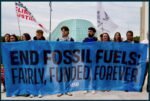
On 16 November, some countries involved with the Santa Marta coalition are expected to announce commitments to phase out fossil fuels, following pledges made already by Germany, France, and The Netherlands.
This is the first COP since it became clear that the world will exceed the goal of keeping global temperature increases to 1.5°C.
“We are entering uncharted and dangerous territory,” according to Dr Sandro Demaio and Dr Saia Ma’u Piukala, from the WHO’s Western Pacific Region office in the Philippines.
“How far temperatures rise beyond 1.5°C, how long they remain there, and whether they can return below that threshold are critical questions for human health,” they wrote recently in the BMJ.
“COP31 must build on the commitment to transition away from fossil fuels established through the first global stocktake. To deliver on COP31’s ambition as ‘an implementation COP’, governments need credible roadmaps with milestones, delivery mechanisms, and financing.
“COP31 must mark the point at which the contradiction between adaptation efforts and ongoing fossil fuel use ends. The era of clean energy and electrification is here, people’s health and wellbeing now depend on the speed and scale of its implementation.”
• Isabelle Zhu-Maguire will report for Croakey from COP31.
Recommended reading
Health Policy Watch: ‘Declarations Do Not Protect People’: COP31 Opens Under Pressure to Deliver Results Over Words
Health Policy Watch: WHO’s Trillion-Dollar Climate-Health Case Rests on Taxing Fossil Fuels
Dr Peter Sainsbury: Environment: ‘Lose Tuvalu, lose our world. Save the Pacific, save our world’






Add Comment