







Introduction by Croakey: Australians’ access to news and information – including emergency broadcasting during climate-related disasters, for example – is shaped by a complex web of commercial interests whose impacts may not be apparent to many stakeholders across the health sector.
For health services and organisations that rely upon local broadcasters for the transmission of important news and updates, the article below by Jon Bisset, CEO of the Community Broadcasting Association of Australia, provides important insights into the global forces shaping our local media environment, raising particular concerns for regional, rural and remote communities.
Bisset’s analysis is also illuminating for readers with an interest in better understanding the intersections between the digital determinants and the commercial determinants of health.
It is timely ahead of the regional launch this Thursday in Adelaide of The Lancet’s series on the Digital Determinants of Health (more details on this at the end of the article).
Jon Bisset writes:
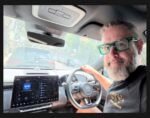
I picked up a new car recently. It’s clever, it’s electric, and it has no AM radio. FM and DAB+ sit in one list with nothing to tell them apart. The moment my phone connects, Apple CarPlay takes over the screen. Radio is still there. You have to go looking for it.
That moment captures one of the biggest challenges facing local media in Australia. A handful of global tech companies now control the routes between local broadcasters and their audiences. They decide what people see, they keep most of the value, and they set the terms.
Making great content is no longer enough. People have to be able to find it, and Big Tech increasingly decides whether they do.
I put this challenge to a record crowd at the Community Broadcasting Association of Australia (CBAA) conference this month. Community radio reaches 5.2 million Australians every week. Our sound is strong. But reach isn’t guaranteed.
For most of the last century, reaching an audience was a question of spectrum. Get a licence, switch on the transmitter, and listeners found you on the dial. The dial was neutral. Every station sat on it equally.
Today the dial is a dashboard, a smart TV, a smart speaker, a social feed or an AI chatbot. Apple, Google, Amazon, Meta, the TV manufacturers and the AI companies own those screens and the software behind them. They decide what appears first, what takes three clicks, and what doesn’t appear at all. Those are commercial decisions, made offshore, with no obligation to Australian audiences or local content.
Even the biggest Australian media organisations struggle to negotiate with these companies.
In January 2021, Google told a Senate hearing it would withdraw Google Search from Australia if the news bargaining code passed. A month later, Facebook blocked news in Australia, and took down the pages of charities, health services and emergency services with it. In March 2024, Meta refused to renew its deals to pay Australian publishers for news.
Free-to-air television needed legislation, not negotiation, to stay findable on smart TVs. Radio is now seeking the same on smart speakers.
If national networks can’t secure fair terms, a volunteer-run station in a regional town has no chance on its own. Access has to be set in law, not left to commercial goodwill.
Challenges
That creates three challenges.
The first is discovery. More than four in ten Australians now get news from creators and influencers, according to the Digital News Report: Australia 2026.
Those platforms’ algorithms reward engagement, not local relevance. In the car, Apple CarPlay and Android Auto put apps ahead of broadcast radio. On smart speakers, a voice assistant decides which station plays when you ask for one, or whether it plays at all.
This isn’t only a media problem. Car makers are dropping AM radio, mostly from electric vehicles, and some have started removing FM and DAB+ as well. That leaves internet-only dashboards.
In regional and remote Australia, mobile coverage is patchy or absent across large areas – even stretches of the Hume Highway between Melbourne and Sydney drop out.
AM carries ABC emergency broadcasts to places FM can’t reach. When networks fail in a fire or flood, an internet-only car goes silent. Broadcast radio keeps working.
Government has started to act, and television led the way. The TV prominence framework applies to all smart TVs and similar streaming devices made and supplied from 10 January 2026. We supported that reform. It keeps free-to-air services easy to find and protects the diversity of content available to Australian audiences.
But community television was left out. Today the framework covers the commercial and public broadcasters only. Community TV deserves the same visibility and access protections as every other free-to-air service. The CTV+ app is now available on smart TVs. Alongside Community TV stations, we’re asking the Minister to bring CTV+ into the framework by determination, so manufacturers must carry it on new TVs. We’re confident that will happen.
And through our new partnership with CTV+, community radio is heading there too. Anyone buying a new smart TV would then get community TV and community radio by default.
Radio is following – far too slowly. The Government’s reform package includes a radio prominence framework for online simulcasts on smart speakers. We worked alongside public and commercial broadcasters to secure that commitment. But smart speakers aren’t where most Australians listen to radio. Cars are.
Europe is ahead of us. Since December 2020, any radio fitted in a new car sold in the EU must be able to receive digital radio. But that rule doesn’t require carmakers to fit a radio at all.
European broadcasters are now pushing, through the cross-industry Radio Ready campaign and negotiations on the proposed Digital Networks Act, for FM and DAB+ in every new car, with direct, prominent access and no burying radio in menus.
Australia should act before vehicle software settles the question for us. That means broadcast receivers in new cars, and guaranteed, unmediated access for all licensed radio – national, commercial and community.
Global systems
The second challenge is value. Platforms profit from the audiences that news attracts, while the newsrooms producing it struggle to fund journalism.
The News Bargaining Incentive, passed in August, is a positive step, and local and independent media secured amendments so the benefits flow beyond the big companies.
But the largest players will still take most of the value, and many community outlets risk falling through the cracks in the scheme’s design. Government needs to watch who misses out and back them with targeted support.
AI companies have trained their models on creative work without permission or payment. Chatbots now answer questions directly, without sending audiences back to the source.
Community stations and their volunteers own copyright in what they broadcast – interviews, recordings and storytelling, including First Nations cultural knowledge. That’s why we signed the open letter calling on Government to protect creator consent, permission and payment when content is used to train AI. Local voices should not become free raw material for someone else’s product.
Discovery, value and AI look like separate debates. They’re one question: whether Australian public-interest media stays visible, and valued, in systems built by global companies for scale.
None of this makes us anti-tech. We meet audiences where they are, and that means working on big tech’s platforms. That’s why we built Community Radio Plus. Nearly all community radio licensees are on it. It works on Apple CarPlay, Android Auto and Alexa, so when the phone takes over the dashboard, community radio is back on the screen.
Our new national campaign for the app sums up the offer: Subscription free. Unlimited listening. Unfiltered stories. Unexpected discovery.
That last phrase is the real contrast with big tech. Algorithms are built to give you more of what you already like. Community radio does the opposite. It’s the show you didn’t know you needed, the program in the language you grew up with, the local band before anyone else plays it. That kind of discovery only survives if people find us in the first place.
Stations have work to do too – presence on social and streaming, young creators among their volunteers, clear names and logos on DAB+ screens.
But being found takes investment, and our research shows the pressure stations are under. One in six stations was at financial risk in 2025, up from one in nine in 2021.
The rules of access used to be set in Australia, in the public interest. Increasingly they’re set offshore, in shareholders’ interest. Prominence, fair payment and AI copyright are how we bring some of those decisions back home.
If you lead a local or independent media organisation, who controls the screen between you and your audience?
• This article was first published on LinkedIn and is republished here with permission.
Upcoming event
Angela Hehir will report for the Croakey Conference News Service on this discussion.
See Croakey’s archive of articles on digital platforms and public health







Add Comment