

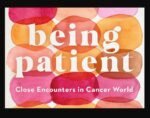


People with cancer, their carers, family and friends will benefit from a new book by three Australian academics who have lived experience of cancer – Being Patient: Close Encounters in Cancer World, according to the review below by Dr Debby Bachmayer.
Bachmayer, a GP working in Sydney who recently completed treatment for a lymphoma, says the “accumulated wisdom” shared in the book will also be useful for researchers and health professionals.
The review is timely with public events in Sydney this evening and on Friday featuring Dr Ophira Ginsburg, founding chair of a Lancet Commission on Women, Power and Cancer. (See more details at end of article).
Debby Bachmayer writes:
This is a powerful and moving book written by three academics from the University of New South Wales, all of whom have lived experience of cancer – Dr Na’ama Carlin, Scientia Professor Louise Chappell and the late Dr Siobhan O’Sullivan.
They write with honesty and bravery, drawing on both their individual and shared experiences to allow us into what they call ‘Cancer World’ – a complex and foreign landscape to be navigated by any newly diagnosed cancer patient.
Through conversations with fellow patients, healthcare professionals, carers, families and friends, the authors offer a rare glimpse into the stories that shape the patient experience of cancer in Australia today.
Each of the authors faced unique challenges during their cancer journeys – Carlin was diagnosed with breast cancer during her pregnancy in 2021, Chappell faced breast cancer recurrences in 2016 and 2020, and O’Sullivan confronted a worsening and ultimately terminal outcome three years into her diagnosis.
The book has three stated aims: to reveal the internal workings of Cancer World through the sharing of knowledge and experiences; to inform healthcare professionals of the challenges patients face in navigating this landscape; and to hear from healthcare professionals who themselves encounter multiple obstacles in trying to provide holistic patient care given resource constraints. The third aim was met through discussions with oncologists, GPs, nurses, surgeons, radiologists, and researchers, all of whom offer invaluable insights.
The authors achieve their aims admirably by informing and empowering patients, giving them the vocabulary and confidence to negotiate Cancer World.
Given the great power imbalance between doctor and patient, it takes much courage to challenge the establishment. Despite this they have a compelling message – be informed, ask questions and advocate for yourself whenever possible.
Based on their own experiences, they describe treatments only offered after they had done their own research, crowdfunded to pay for much needed but unaffordable drugs, or sought second opinions. Despite a global push for more person-centred cancer care, there remains a long way to go.

Focus on women
The book is essential reading for doctors and allied health professionals seeking to make cancer care more supportive, comprehensive, and inclusive.
This is especially so for women, who are at the centre of this book and for good reason. Reference is made to The Lancet’s 2023 report, Women, Power and Cancer, which highlighted the differences in how women and men experience a cancer diagnosis.
An alarming aspect is ‘medical misogyny’, which in part relates to mounting evidence of the dismissal of symptoms experienced by many women, especially those from marginalised groups and communities. Importantly this can result in delayed and often incorrect diagnoses, examples of which are shared in the book. This is a valuable addition to the limited literature on women and cancer.
The additional challenges faced by LGBTQI, Indigenous, rural and remote, and culturally and linguistically diverse groups are discussed, highlighting inequalities and fragmentation in service provision. In the context of a cancer diagnosis these system failures can make a significant difference to treatment outcomes.
I entered Cancer World myself during the spring of 2025 when I was unexpectedly diagnosed with a lymphoma. Being a GP obviously gave me medical knowledge but did not prepare me for the uncertainties and vulnerability I experienced being on the receiving end of such a diagnosis.
In the context of my own illness, I found this book both enlightening and reassuring, validating my experiences during diagnosis, treatment, and survivorship.
An example is the belief that one must be a ‘good patient’ in order to receive optimal care. The notion that being likeable and compliant with recommended management will secure the best possible treatment or even influence its successful outcome is flawed and irrational.
This ‘magical thinking’ shapes many interactions with specialists and other health professionals. Being positive and grateful are worthy attributes but they are not in themselves going to determine the result of a scan, blood test or biopsy. That said, maintaining hope and optimism whenever possible is extremely important when navigating complex care.
On survivorship
Another example that I encountered during my own journey, is the concept of ‘survivorship’, referring to the difficulties faced by some patients on completion of treatment, and the trepidation felt on leaving the care bubble.
Following chemotherapy, surgery or radiotherapy, it is often assumed that one will ‘get on with life’. However, this can be a difficult process. No matter how unpleasant, receiving treatment is a ‘contained’ period, a change from work and other daily responsibilities in which decisions about the future may be put on hold.
Post-treatment can be a challenging time to find one’s new rhythm without support. Survivorship is slowly being recognised as an important dimension of wrap-around cancer care, so that the physical, social, and emotional aspects of follow-up support are all considered.
The book does not shy away from difficult conversations such as intimacy after a cancer diagnosis, end-of-life care and voluntary assisted dying. These are discussed with sensitivity and compassion.
One of the authors, Dr Siobhan O’Sullivan, sadly died from ovarian cancer in 2023 during the writing of the book. Her contributions prior to her death (including advocating strongly for more funding and research into this disease), and her family’s sharing of their insights at the time of her death add depth and emotional impact to this work.
The book will also be of immense value to partners and families, acknowledging the load placed on loved ones and carers when supporting a person undergoing cancer treatment.
It highlights the complex interplay between the guilt experienced by the patient and the stress of caring for and helping a loved one negotiate treatment, when both parties feel frightened and vulnerable.
At the heart of Being Patient are the stories of three remarkable women, supplemented by those of fellow patients and medical care providers, who generously share their experiences with candour and sincerity. We – patients, carers, friends, observers, researchers and health professionals alike – are fortunate to benefit from their accumulated wisdom.
• Dr Debby Bachmayer is a GP working in Sydney, New South Wales.
Event details
Women, Power and Cancer: Shifting Paradigms: Wednesday ,14 October, 6:00 PM – 7:00 PM
Garvan Institute of Medical Research
Join a presentation by Dr Ophira Ginsburg, medical oncologist, global women’s health researcher and founding chair of the Lancet Commission on Women Power and Cancer, whose 2023 report examined the ways in which power dynamics shape the experiences of cancer for women as patients, clinicians and carers. Register here.
***
Women and Cancer Survivorship: Sex, Gender and Society: Friday, 16 October, 9am-11:15am
Seminar Room, Ground Floor, Health Translation Hub, UNSW Sydney, Randwick
The session will bring together cancer survivors, researchers, health experts and advocates to discuss how sex, gender and broader health needs shape cancer survivorship. The program will include a panel discussion with cancer survivors, a keynote address from Dr Ophira Ginsburg and a presentation from Women’s Health Victoria. Speakers will highlight key priorities, share lived experiences and consider practical opportunities to improve cancer care and survivorship outcomes for women in Australia. Register here.
See Croakey’s archives of articles on books (#CroakeyREAD), on cancer, and on women’s health





Add Comment