




Five facts about physiotherapy and anxiety
Chloe Pigneguy
Sophie Shephard, Dr Shelley Barlow, Dr Ryan McGrath, Emily Lile and Tessa Rose Gillespie of the APA Mental Health national group present five discussion points on
how physiotherapists can adapt and optimise their approach when treating patients who may be anxious.
1 Physiotherapists should avoid unintentionally contributing to patient anxiety
Physiotherapists work with people from a wide range of backgrounds and life experiences.
For some patients, health environments feel safe and supportive, while for others they evoke anxiety, distress or hypervigilance.

For many people, anxiety in healthcare settings may reflect previous negative experiences with healthcare professionals involving dismissal, discrimination, stigma or not having their needs adequately recognised or accommodated.
These experiences are particularly common within marginalised communities, including Aboriginal and Torres Strait Islander peoples (Jones et al 2020), those who are LGBTQIA+ (Mezzalira et al 2026) or neurodivergent (Shaw et al 2024) and people living with complex or poorly understood health conditions (Bontempo et al 2025).
One of the most powerful ways physiotherapists can support mental health is to first do no harm – by creating psychologically safe and inclusive healthcare environments.
Trauma-informed, neuroaffirming, culturally responsive and LGBTQIA+ inclusive practices should not be considered niche approaches relevant only to specific patient groups.
Instead, they are practices that can help all patients feel safer, more understood and better able to engage in care (Heywood et al 2025, McBeath et al 2026, Ross & Setchell 2025, Shear et al 2025).
By improving their awareness and approaches to these issues, physiotherapists can reduce their risk of unintentionally contributing to anxiety or distress while strengthening therapeutic relationships and supporting better outcomes.
2 Physiotherapists treat the body and the mind
Physiotherapy is no longer just about treating the body as a mechanical system (Nicholls & Gibson 2010) – it increasingly involves working with both the body and the mind.
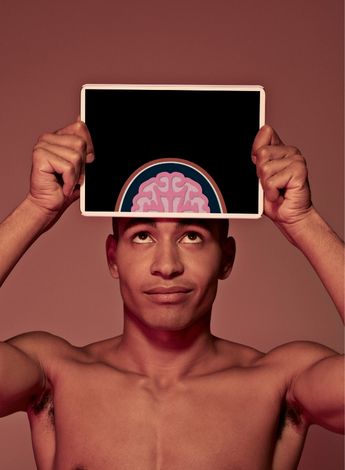
While the profession has traditionally focused on a biomedical approach, current practice sits within an integrative framework that includes the biopsychosocial model, holistic health and the inclusion of mental health (Justice et al 2023).
We already see this in everyday physiotherapy.
Approaches like pain neuroscience education and interoceptive awareness reflect how the brain and nervous system interact with movement, pain and recovery (Probst 2017).
Another key part of physiotherapy is the therapeutic relationship/alliance (Arrigoni et al 2024).
How we communicate with, listen to and show up for our patients matters.
Building trust, being present and working collaboratively can directly influence outcomes.
Trauma-informed care helps bridge the gap between theory and what we do in the clinic.
It reminds us that people don’t just have bodies – they live in them.
Therapeutic practices that combine body and mind are increasingly valued and the shift towards seamless integration is emerging (McGrath et al 2024).
3 Physiotherapists can help reduce anxiety
Physiotherapists can help reduce anxiety through both what they provide and how they provide it, particularly by prescribing exercise and by addressing pain-related anxieties.

A meta-analysis of 13 randomised controlled trials involving 731 adults with anxiety and related disorders found that exercise produced a small-to-moderate reduction in anxiety symptoms compared with control conditions (Ramos-Sanchez et al 2021).
Similarly, a meta-review from 2025 found that physical activity had a moderate effect on anxiety symptoms when provided alongside other treatments (Vancampfort et al 2025).
This highlights the potential contribution of physiotherapy as part of multidisciplinary care.
Pain may lead people to fear movement or reinjury and avoid activities they perceive as unsafe.
While protective behaviour can be helpful following an acute injury, persistent avoidance may contribute to reduced activity, disability and ongoing pain (Alaiti et al 2025).
Physiotherapists can help people understand their pain, identify feared movements and gradually return to meaningful activities.
Education, exercise, graded exposure and multimodal rehabilitation may reduce fear-avoidance beliefs and behaviours and support confidence in movement (Lu et al 2025).
Physiotherapy consultations can also be valuable touchpoints for people experiencing anxiety or psychological distress.
Regular contact and the development of a trusting therapeutic relationship may create opportunities for physiotherapists to notice distress, listen and encourage those experiencing symptoms of anxiety to seek help (McGrath et al 2024a).
4 Physical and mental health are interconnected
People living with a mental disorder are five times more likely to die prematurely from preventable physical illnesses (Equally Well Australia n.d.).

Mental health presentations are also increasing, with an estimated 43 per cent of Australians experiencing a mental disorder during their lifetime (Australian Institute of Health and Welfare 2026).
Mental and physical health are inseparable, yet physiotherapists commonly report feeling underprepared to manage mental health comorbidities (Ribeiro et al 2024).
Furness et al (2025) found that physiotherapists in Australia and New Zealand believed greater mental health content should be included in entry-level physiotherapy education, regardless of degree or year of graduation, alongside expanded postgraduate training opportunities.
While improving education is essential, it addresses only part of the challenge.
What about the clinical settings where physiotherapists are rarely present?
In 2017, fewer than one per cent of Australian physiotherapists identified mental health as their primary area of practice (Australian Government Department of Health).
When such significant health inequities exist, there is both an opportunity and arguably a professional responsibility for physiotherapy to increase its workforce capability and presence within mental health services.
Expanding physiotherapy into these settings would enable the profession to help address preventable physical illness, reduce health inequities and improve health outcomes for people living with mental illness.
5 Anxiety is often a response to a perceived threat
Some threats live within a patient’s experiences, thought patterns and/or expectations.
Perceived threats often arise in the absence of perceived control (Stapinski et al 2010).
Psychological first aid approaches and training are helpful but are not common practice among physiotherapists.
So, what potential threats could we address without additional training, to increase the patient’s sense of control?
Creating an environment that patients feel safe in is key.
Consider where the client may feel most comfortable in the room, including positioning, such as proximity to the door, sitting versus lying and their orientation to you.
For example, side-on is often more approachable, whereas a face-to-face position can feel more confrontational.
Additionally, it can be helpful to give a clear outline of appointment times, out-of-pocket costs, the level of dress or undress required, consent procedures, the structure of a typical session and the protocol on setting goals collaboratively.
Preparation of this kind can be addressed before the patient even gets to the treatment room and goes a long way towards reducing anxiety and building rapport.
If in doubt, you can just ask, ‘Is there anything I can do in my physio role to make you more comfortable?’
The asking can signal enough safety for the patient to relax (Heywood et al 2024, McGrath et al 2024b).
>>Sophie Shephard MACP is an APA Titled Pain Physiotherapist, director of Vive Pain and Fatigue and PhD candidate based in Wagga Wagga, New South Wales. Her experience spans clinical practice, research and leadership roles, supported by postgraduate qualifications including a Professional Certificate in Pain Science and Master of Science in Medicine (Pain Management). She contributes at a professional level through her involvement on the committees of the APA Mental Health national group and New South Wales Pain group.
>>Dr Shelley Barlow MACP is an APA Titled Pain Physiotherapist working in physiotherapy outpatients and transition care at Ballina Community Health. Shelley has an interest in chronic pain management going back 15 years. Her research has enabled her to combine chronic pain management and physiotherapy outpatients to see what is happening in rural and regional services.
>>Dr Ryan McGrath MACP is discipline lead and senior lecturer in physiotherapy at the La Trobe Rural Health School, La Trobe University in Bendigo, Victoria. An APA Titled Research Physiotherapist, Ryan is passionate about bridging the divide between physical and mental healthcare. In his research, teaching and clinical practice, he draws on a background in physiotherapy and psychology.
>>Emily Lile APAM is a physiotherapist and dance movement therapist. She is interested in adult mental health, falls prevention, dance movement therapy and group exercise.
>>Tessa Rose Gillespie APAM holds a Master of Physiotherapy, a Bachelor of Exercise and Sports Science (Advanced) from Griffith University and a Diploma of Applied Psychotherapy. As a physiotherapist and psychotherapist at Zephyr Movement, she works in breathing pattern physiotherapy and nervous system regulation, while also serving as co-chair of the Mental Health Peer Support group.
Quick links:
- References
- Download infographic (PDF)







Add Comment