



Exercise as medicine: from cancer diagnosis to recovery
Chloe Pigneguy
For cancer patients, adding exercise into their lives at a time when they are dealing with a cancer diagnosis and the whirlwind of surgery, treatments and management that follows might seem one step too far. The evidence, however, is mounting in favour of exercise as a critical component of cancer therapy.
Related articles:
Exercise is rapidly emerging as a key component of cancer therapy and management, with new clinical evidence supporting its role at every stage, from diagnosis to treatment and recovery and during the survivorship phase.
‘Whether before, during or after treatment, exercise can benefit people with cancer. Exercise should be offered to everyone according to their clinical needs and preferences,’ says Germaine Tan MACP, chair of the APA Cancer, Palliative Care and Lymphoedema national group.
The benefits of exercise for people with cancer include reduced risk and severity of side effects from other treatments as well as reduced complications from surgery and hospital stays.
During treatment, exercise can increase energy levels, strengthen bones and improve mobility and balance.
It improves sleep and fatigue; can relieve stress, anxiety and depression; and boosts mood.
Finally, it can reduce the risk of recurrence and improve comorbidities such as cardiovascular disease, osteoporosis and diabetes.
Until recently, a lot of the evidence about exercise in cancer came from smaller trials and anecdotal evidence.
Last year, however, a large randomised controlled clinical trial conducted by researchers in Canada, Australia and the United Kingdom rocked the oncology world with its results (Courneya et al 2025).
The CHALLENGE trial followed almost 900 high-risk stage II and III patients with colorectal cancer for up to eight years following adjuvant chemotherapy.
Half of the patients were enrolled in a three-year exercise program tailored to their preferences and led by physiotherapists and other exercise professionals.
The other half received usual care consisting of educational materials on exercise and living a healthy lifestyle.
The results were clear-cut – patients in the exercise group had a 28 per cent reduction in the relative risk of cancer recurrence, new primary cancers or death and a 37 per cent reduction in the risk of death when compared to the control group.
After eight years, 90 per cent of the patients in the exercise group had survived compared to 83 per cent in the usual care group.
‘The CHALLENGE trial was a game changer.
‘It was the first large randomised trial to show that exercise could improve cancer outcomes – not just how people feel or function but their risk of the cancer returning and their survival,’ Germaine says.

Germaine Tan is interested in the best time for patients to start an exercise program after a cancer diagnosis.
Germaine, a researcher at La Trobe University and a cancer physiotherapist at Eastern Health, is in the midst of several studies for her PhD looking at the timing of exercise rehabilitation for people with cancer.
Germaine’s research focuses on finding the best time for patients to start exercise rehab in terms of living longer and better lives.
‘From a health service point of view, I’m also looking at when to maximise these programs so we can engage the most patients at the right time.’
She recently published a systematic review examining whether a patient with cancer would benefit from beginning exercise rehabilitation earlier – for example, before treatment or surgery – compared to after the completion of their treatment (Tan et al 2026).
‘We initially thought that starting exercise earlier would lead to greater improvements.
‘But our systematic review found that people could achieve similar improvements regardless of when they started.
‘That was reassuring because it suggests that if someone isn’t ready to exercise before treatment, they haven’t missed their opportunity.
‘They can start later and still benefit.’
A second systematic review is underway, tracking the participation of cancer patients in exercise programs before, during and after treatment, which Germaine hopes to publish before the end of the year.
She is also in the process of publishing an international Delphi consensus study looking at when health professionals believe is the best time to start exercise after a cancer diagnosis.
‘We had strong agreement that earlier is better, where a person is able to exercise, but whenever someone starts, the program needs to be tailored to their individual circumstances at any time,’ she says.
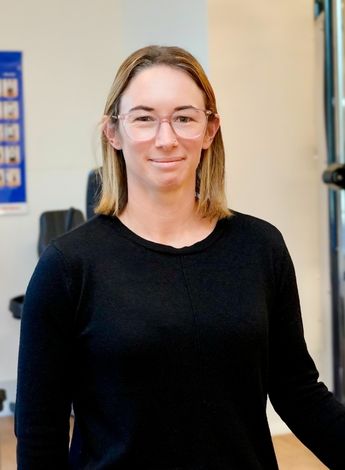
Jess Crowe says the research supports prehabilitation programs for patients undergoing cancer surgery.
Giving the patient something they can control is an aspect of exercise prehabilitation that is very rewarding, says Jessica Crowe, a cancer physiotherapist who has helped to develop, implement and deliver the prehabilitation programs at the Peter MacCallum Cancer Centre in Melbourne.
‘We know that the evidence supports cancer prehabilitation in improving important outcomes like reducing length of stay and complication rates.
‘The importance of these outcomes speaks for itself but if you can make an individual patient feel like they have some autonomy in a time when they’ve got minimal control in their life, that’s really rewarding for clinicians and meaningful for patients when we’re delivering prehab.’
Prehab, rehab and recovery
The timing of exercise can depend on many individual factors, including the type of cancer, the stage of disease and whether and when the patient might need surgery.
Some patients are keen to keep exercising through their treatment while others might start exercising during recovery.
Exercise even plays a role in palliative care, helping people to maintain function and quality of life for as long as possible.
Cancer prehabilitation is a needs-based multimodal intervention that aims to optimise patients’ physical, nutritional and psychological status prior to and during cancer treatment.
Evidence in surgical populations, including people with colorectal and lung cancers, is predominately supportive of efficacy.
A recent systematic review with network meta-analyses (McIsaac et al 2025) examined the efficacy of individual and combinations of prehabilitation interventions (exercise, nutrition and psychosocial) in mixed surgical populations that included 45 per cent with cancer.
When comparing individual components, exercise and nutrition were most likely to improve all critical outcomes, with the strongest level of evidence.
Trimodal interventions that include exercise may improve health-related quality of life and physical recovery.
Uptake of prehabilitation in Australia is growing.
Supporting this, the Peter MacCallum Cancer Centre (in collaboration with consumers and health services and funded by the Western and Central Melbourne Integrated Cancer Service) has developed the Prep-4 Cancer Surgery Toolkit.
The toolkit provides patient resources to help individuals and their families prepare for cancer surgery and health service guidance for clinicians and services to implement and deliver cancer surgery prehabilitation programs.
‘Sometimes you have no time at all before they go into surgery.
‘But the evidence shows that even a one-off physio appointment one or two weeks before surgery can make a difference to outcomes,’ Germaine says.
Professor Catherine Granger FACP (above), a Specialist Research Physiotherapist (as awarded by the Australian College of Physiotherapists in 2020) and researcher at the University of Melbourne, agrees.
From her perspective as a respiratory physiotherapist who works with lung cancer patients, a single session with a patient is enough to show them a few breathing exercises they might need following surgery and give them some understanding of the importance of exercise as they recover.

Professor Catherine Granger says even one session with a physiotherapist before surgery can have positive impacts.
‘That single session is about teaching the breathing exercises and providing education on how to avoid developing a surgical complication.
‘[We also talk about] good pain control after surgery so the patient knows when to speak up and ask for more pain relief,’ Catherine says.
‘Even in a two-week window, we can run a good aerobic and resistance exercise program to get them fitter and stronger as well as providing education but for some patients you just can’t fit that in.’
Exercise during chemotherapy, radiation therapy and immunotherapy can help patients to manage side effects like pain, fatigue and mood changes while maintaining strength and fitness levels.
Exercise also forms a key part of recovery after cancer.
While some people will be able to start exercising while they undergo treatment, others may have significant impairments following surgical procedures and may require rehabilitation to improve mobility or regain health.
Hospitals and cancer centres are increasing the number of inpatient and outpatient programs for patients with cancer, although access depends on the hospital or health system and, to some extent, the type of cancer.
Oncologists and nurses are also becoming more aware of the importance of exercise throughout the cancer journey and this can have a huge influence.
‘We work very hard with our oncologists and other medical colleagues and sometimes it’s the luck of the draw for the patient if they do get an oncologist who talks about exercise alongside the other treatments and it comes up in the conversation.
‘Because we know that if patients hear it from the oncologist, they’re more likely to take it up.
‘The support nurses and liaison nurses are some of our biggest referrers because they help to manage linking in with different services that the patient can access,’ says Germaine.
However, it can be hit and miss, says Catherine.
‘In my specialist field of lung cancer, typically our medical colleagues are very pro-exercise but I hear stories from patients and families about doctors in other areas saying don’t bother exercising and terrible stories of people being put off or not receiving any information.
‘You think, how could they possibly not have said just one sentence, like go and have a chat to a physio or have you thought about exercise?
‘It amazes me but that’s the situation we’re in.’
It’s not just for cancer physiotherapists
The limited number of exercise programs and services available to patients with cancer means that patients seeking care during their cancer treatment spill over to private practice physiotherapy.
Catherine says it’s not feasible for acute metropolitan hospitals in Australia to offer exercise programs for every patient who needs them.
‘There’s no space and patients don’t want to come in.
‘Everyone is trying to facilitate healthcare delivery in the community and the home, not necessarily coming into the hospital three times a week.’
While telehealth is useful, many people seek care through community programs and private practice physiotherapists.
And with more people being diagnosed with cancer as well as more people surviving cancer, almost every physiotherapist will have patients who have or have had cancer.
‘Due to the increasing incidence and survival rates of cancer in Australia, if you’re working in private practice, you are most likely seeing people with cancer, whether or not they’re there for specific cancer needs,’ says Jessica.
The skills needed to work with patients who have or have had cancer are skills that all physiotherapists are familiar with – prescribing exercise, supporting patients through behaviour change, using clinical reasoning to overcome musculoskeletal problems and focusing on person-centred care.
‘In an ideal world everyone would be exercising before they get diagnosed with cancer but we know that’s not the case.
‘The earlier we engage patients and deliver meaningful exercise therapy, the better.
‘However, exercise therapy is only successful when the individuals engage and adhere to the program.
‘Behaviour change should be incorporated into all exercise sessions,’ Jessica says.
Working around a patient’s side effects and delivering patient-centred care is an important consideration for physiotherapists working with patients undergoing chemotherapy and other treatments.
At the Peter MacCallum Cancer Centre, the physiotherapists use a traffic light system to understand how the patient is feeling that day.
Symptoms might include pain, fatigue, shortness of breath and mood changes.
‘We can alter their program based on how they’re feeling on a particular day because we know how toxic the treatments are and how much they impact a patient from a symptom perspective.
‘During active treatment, any exercise is better than nothing and we want to acknowledge the patient’s symptoms while still trying to maintain function and fitness,’ Jessica says.

Dr Amy Dennett has created resources and programs to help physiotherapists upskill in working with cancer patients and survivors.
Clinician and La Trobe University researcher Dr Amy Dennett MACP has designed a toolkit and a training course to help upskill physiotherapists to work with cancer patients and survivors (see below).
‘They’re unsure about what they can do – how much they can push people – especially in the context of advanced disease,’ Amy says.
‘We’ve got all the skills needed to treat people with cancer but there’s a confidence issue, unlike some other professions, who have very similar training to us but are much more confident treating this population.
‘I think it’s important to reinforce what we already know and give clinicians up-to-date guidelines because information and research are developing so fast in this area, probably more so than in many other areas of physio practice.’
Through her research and development of toolkits and education for physiotherapists, Amy hopes to increase that confidence and upskill clinicians in any setting where they might see cancer patients and survivors.
‘Every single hospital department and private practice should have someone who has some understanding of oncology in their setting because one in two people will be diagnosed with cancer and have it in their medical history when they come through the door.
‘They need to be able to provide baseline exercise advice to their patients,’ Amy says.
Courses and resources for physios
The APA’s professional development courses ‘Cancer and exercise rehabilitation – part A’ and ‘Cancer and exercise rehabilitation – part B’ are an excellent starting point for learning more about working with patients with cancer.
A key advantage of part A is its flexible online format, allowing participants to complete the course at their own pace after registration.
These courses have been developed by CanRehab, a UK-based international provider of evidence-based specialist training and education in cancer and exercise for health and fitness professionals.
CanRehab was chosen because it developed a similar cancer exercise rehabilitation course for the American College of Sports Medicine, reflecting its recognised expertise in this field.
Beyond that, there are an increasing number of toolkits and guidelines developed in Australia.
Both the Clinical Oncology Society of Australia (Cormie et al 2018) and Exercise and Sports Science Australia (Hayes et al 2019) have published position statements about exercise during and after cancer treatment and the Cancer Council and its state-based groups also have resources about exercise and cancer, although these are mostly patient-focused.
Dr Amy Dennett MACP is a clinician and researcher based in Melbourne, who has developed tools and courses for physiotherapists working in oncology.
‘The toolkit came about when I was a clinician being contacted by physios wanting to know how to set up an oncology rehabilitation program, how to prescribe exercise.
‘Its foundation is the core knowledge that physios need when treating someone with cancer.’
Her early research identified a big gap in Australia in cancer-specific exercise rehabilitation programs – in fact, in 2015, there were only 31 programs delivering these services across Australia, compared to more than 300 cardiopulmonary rehabilitation programs.
She also noted that many physiotherapists lacked confidence in this area.
‘The toolkit gives physios the tools that they need to be able to give individual interventions but if they’re wanting to set up new oncology programs in practice, it also provides resources on how to do that.’
Funded by a grant from the Pat Cosh Trust, the Cancer Exercise Toolkit was launched in 2022.
It provides a range of resources – covering topics from types of rehabilitation to screening, safety considerations, assessment and exercise prescriptions – and includes case studies, videos and examples of assessment forms.
‘It’s quick and easy information that clinicians can access and run with the other knowledge that they have from their undergraduate training.’
The toolkit has been widely used and while the content is tailored for use in the Australian context, Amy says it has had broad reach overseas as well.
However, confidence is still a problem for many physiotherapists and Amy’s current project aims to address this through the PhysioCaRe training program, also developed with support from a Pat Cosh Grant, awarded in 2023.
‘We’ve had some very positive feedback about the toolkit and we know that it can help improve self-reported knowledge, confidence and skills but a lot of the literature out there shows that physios learn best when they have practical, hands-on training.
‘There’s a gap in the market in terms of what is available in postgrad training options, specifically in oncology.
‘We’re trying to help bridge that gap.’
PhysioCaRe is a two-day hybrid program that expands on the toolkit, providing clinicians with interactive activities and case studies as well as in-person training to learn to apply exercise skills and to learn from people with lived experience of cancer.
‘For physios who haven’t worked in an oncology space before, it’s eye-opening to get the patient perspective on how they’ve been able to manage by having physiotherapy and exercise therapy.’
A key part of PhysioCaRe is that it provides ongoing mentorship and support to attendees.
Ultimately, Amy would like to structure the program like GLA:D, the popular exercise and education program for osteoarthritis, training physiotherapists to offer a 12-week exercise program to cancer patients as a group class at their private practice or as a hospital-based program.
Another fantastic resource for physiotherapists working with patients with cancer is the Prep-4 Cancer Surgery Toolkit developed at the Peter MacCallum Cancer Centre in Melbourne.
This toolkit provides patient resources to help individuals and their families prepare for cancer surgery as well as health service guidance for clinicians and services to implement and deliver cancer surgery prehabilitation programs.
In addition, a lung cancer rehabilitation toolkit developed by Professor Catherine Granger FACP and her team is due to be launched soon, again with funding from the Pat Cosh Trust.
Breathwise: The Lung Cancer Educational Toolkit for Physiotherapists has been codesigned by physiotherapists, physiotherapy students, nurses, medical professionals, patients and their families and is pitched at clinicians working with people with lung cancer.
The Peter MacCallum Cancer Centre also runs an annual Foundations in Cancer Care course for allied health clinicians and students, focused on how to deliver best practice for cancer patients and their carers.
Quick links:






Add Comment