


Introduction by Croakey: As racist and anti-migration rhetoric from far-right populists ramps up once more in Australia, three health professionals highlight their lived experience of the impacts of such rhetoric.
For the article below, freelance journalist Rebecca Whitehead spoke with First Nations surgeon Professor Kelvin Kong AM, rural GP Dr Shiraz Mahkri, and Ana (not her real name), a health researcher in Brisbane.
A Croakey webinar on the health impacts of populism heard this week that Australia’s health and aged care workforce relies heavily on migrant labour and expertise.
Almost half (40.2 percent) of all healthcare workers in Australia are migrants, according to a 2026 review of Census data, and 46 percent of GPs in rural communities are international medical graduates.
Conversations matter
Professor Kelvin Kong AM, First Nations surgeon

For Professor Kelvin Kong AM, a proud Worimi man with Malaysian Chinese heritage, and a legendary ear, nose and throat (ENT) surgeon, recent statements from One Nation’s Pauline Hanson are “nothing new, in the long fight for equity, using old tactics to stoke the fire”.
“For my entire medical career, I’ve felt an undertone of racism, particularly dealing with Aboriginality and where we stand in society,” he told Croakey.
“If I can take any positive out of it, it’s about us having these deep-seated, heartfelt conversations with colleagues to make them realise this has been happening for many, many years. Before One Nation, before Pauline Hanson.”
Kong describes the traumas inflicted by the White Australia policy and revealed in the experiences of the Stolen Generations by the Bringing them Home report; these continue to affect opportunities in employment and education, as well as life expectancy.
Kong’s mother was Grace Kinsella, a pioneering Indigenous registered nurse; his father and two sisters are doctors.
“My grandparents, my mother, lived under a very different world,” he says. “Trauma is, when my mother went to the movie theatres, they weren’t allowed in until it was dark, and they were all hushed up the front. And you’d hear my aunties all laugh about it because they were all with sore necks because they were up the front.”
Kong stresses the importance of exposing and addressing inequities. “So that’s why we have university programs, and school programs. That’s why we have so much mentoring around these young kids who have got so much potential. And I’m a product of some of that.”
Kong works in Newcastle, on Awabakal and Worimi Country; as well as surgery, he contributes to clinical research, medical education, medicine, paediatrics, health policy and Indigenous education.
He says Indigenous peoples have never felt safe in non-Indigenous systems, and the current political rhetoric is further undermining cultural safety and trust in health systems and having a direct impact upon his work.
“It re-traumatises people and we’re left to deal with the fallout. In Indigenous health, our patients arrive with a justified timidity, a learned fear of institutions and systems, and the distress triggered by this discourse, especially when we’ve got patients who are already nervous and timid about presenting to institutions, which are traditionally not fair to us,” he says.
“And so just when we break that barrier, then we’ve got to go through this again.
“In healthcare, one of the biggest things we hold true to is trust, and trust is absolutely crucial and critical for Aboriginal families. Trust is crucial in healthcare, full stop. And particularly in surgery.
“This rhetoric complicates the rapport building that we have, when people perceive mainstream services as an extension of the hostile political system.”
Kong says he is spending extra time with patients to address all the undermining of trust that’s happened. “That takes a lot more of my time than I’ve got, to help people dealing with trauma that has nothing to do with their ear health,” he says.
“The systemic problems and the systemic distrust, I’ve been trying to unwind and tease out for the last 20 years. We normalise the discrimination that occurs.
“People think, ‘It’s OK to say this, because it’s talked about in public.’ It’s not OK.”
Kong describes the gains that have been made, for individual patients and in growing the Aboriginal health workforce.
“We’re bringing kids in to test their hearing, so that their pathway through the system has decreased from five years down to two months. We’ve seen over 500 kids over the last two years, which is a huge deal, he says.
“For Australia, this is a time for us to show that cohesion, and that strength.”
Providing care and service
Dr Shiraz Mahkri, GP in rural Victoria

Dr Shiraz Mahkri is a GP in rural Victoria. He’s a second-generation Australian, born in Queensland after his parents immigrated from India.
A practising Sunni Muslim, he says Pauline Hanson’s Islamophobic rhetoric is more of what the community has always seen.
And his patients just want good healthcare.
“I work in a small rural town north of Shepparton, and an urgent care centre in another rural town, north of Melbourne,” says Mahkri.
He also works at a nursing home. He’s worked in two prisons, and also in forensic medicine, with victims of sexual assault and family violence.
“I’ve always thrived on helping people from vulnerable backgrounds, and rural health falls in that category,” he told Croakey.
“My faith requires that I do my best in my everyday practice, with sincerity, and with the intention of helping people.”
The RACGP has reported that more than 18,400 people in remote and very remote Australia lack access to primary healthcare services within an hour’s drive from their home.
Mahkri feels he has to represent a ‘good’ example of his faith.
“Working in rural medicine, I may be the only Muslim my patients have ever interacted with. In some ways I see it as a privilege and also a responsibility. Hopefully they have a good experience and get some insight in interacting with a person of an Indian ethnicity and a different faith background.”
African American thinker Dr Beverly Daniel Tatum wrote that people of colour are often seen as representatives of a group rather than as individuals:
“People of colour learn early in life that they are seen by others as members of a group. For Whites, thinking of oneself only as an individual is a legacy of White privilege.”
Mahkri says Islamophobia has always been there in his life.
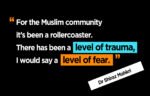
“For the Muslim community it’s been a rollercoaster. There has been a level of trauma, I would say, a level of fear.”
Mahkri was in early high school on 11 September, 2001.
“There was a rise in Islamophobia. The backlash was severe and the temperature was high in the media, politicians, and the Liberal Party,” he recalls.
“It felt like our community was under the microscope. And that our stance as a community often felt apologetic; we were on the back foot, and we had nothing to do with terrorism.
“Women that dressed in a visibly Muslim way were more at risk. I had family members that felt unsafe.
“We went through it before, and we’re going through it now. Like the devastation overseas, particularly in Palestine (a majority of the Palestine population is Sunni Muslim). We witnessed what happened in Christchurch.
“We’ve noticed an increase in Islamophobic reports with the Islamophobia register. Islamophobia in healthcare is real, too: Muslim women, whether health professionals or patients, are very identifiable as Muslim.”
Nevertheless, Mahkri says his experience is mostly positive, and that his focus is on helping others.
“As a GP, I’m privileged to be in a position of helping people, and people come in a very vulnerable state. Regardless of the doctor’s faith and background, people just want to be listened to and be provided with good quality care,” he says.
“Occasionally I hear an opinion that’s confronting. Particularly older Australians will say that they’ll vote for One Nation. And I think, ‘I wonder if she knows that I’m Muslim.’ I try not to take it personally.
“The stuff we see from Pauline Hanson is superficial. It’s headline-making rhetoric that’s meant to create tension – such as wearing that burqa in Parliament.
“It’s human nature to feel fear and worry. We look to hold others responsible. But I think the majority of Australians, come election time, will see past that rhetoric, because it’s not solution oriented.
“The healthcare system is getting busier and more costly for a lot of Australians especially in rural areas. For the most part our patients are not scared of our faith. They just want to see a caring health professional that can provide the care that they deserve.”
Ana, health researcher in Brisbane
‘Ana’, a former clinician working in health research, grew up in Zimbabwe and migrated to Australia several years ago.
She watched Pauline Hanson’s National Press Club address when it came across her news feed.
“I felt a deep sadness and disappointment,” she told Croakey, asking that we not use her name, for anonymity.
“It is really scary. I’m an immigrant; I fit that demographic that she speaks about.
“For me, and friends or colleagues I’ve spoken with, you start questioning how the general public perceives you. What does it mean for you in your community, in your workplace? It triggers that sense of not belonging. Not being sure where you fit in.”
Ana works in Brisbane, her research focusing on the health of disadvantaged groups.
Her family moved to the UK when she was young. She trained in clinical medicine there and came to Australia for better opportunities some years ago.
“I’ve always wanted to work with people and communities. Growing up and seeing the challenges many people faced in accessing healthcare inspired my commitment to supporting marginalised communities.”
Ana says that things have felt different since the Voice referendum.
“For me, it intensified after the Voice. I found myself reflecting on conversations I’d had during that period – the same rhetoric was there, and so was a lot of racism. It made me more hypervigilant, more questioning, and more aware of how these narratives shape people’s perceptions. I’m not on social media, but I hear about the posts and comments that circulate.”
She said: “I’ve had my own challenges with belonging and integration, but now those experiences feel much more prominent because of the narrative that is being pushed.”
She says that she saw rhetoric like One Nation’s in the UK: “I feel chased by it. I’m like, ‘Oh, here we are again.’”
She sees the frustration on the part of non-immigrant Australians.
“When there’s an economic crisis – the rhetoric is the same: ‘Immigrants contribute to this economic burden’,” she said.
“When there’s an economic crisis, immigrants are often positioned as part of the problem. Brexit, back in 2016, was accompanied by similar rhetoric: that immigrants contribute to economic pressures or place a burden on society.
“I see echoes of that here now. Economic frustrations are real, but instead of addressing the broader causes, blame can be shifted towards immigrants.
“That has been a common experience. Sadly, it feels inevitable.”
As a woman of colour, Ana has experienced racism.
“For many people from culturally diverse backgrounds, racism can manifest in both explicit and subtle ways – from everyday comments and assumptions about language to unequal recognition and opportunities in professional settings. I have experienced these forms of bias,” she said.
“English is my first language; it’s the official language of Zimbabwe. And yet you get comments like, ‘Oh, you speak English very well’.
“These experiences can create a sense of having to continually prove capability, belonging and expertise.
“It’s sad, but the colour of your skin is synonymous with the lesser… as an immigrant, you’re always trying to prove that you’re worthy. Sometimes the burden is having to challenge the stereotypes that others hold — to show that you are capable. There can be this expectation to continually demonstrate that we are just as deserving of opportunities, recognition and respect as anyone else.”
Ana stressed the importance of allies, and would also like to see the Government supporting stronger narratives about the benefits of multiculturalism, and investing in strengthening multiculturalism itself.
“In the workplace, there are policies and procedures that support inclusion and diversity, but I sometimes feel they can be more tokenistic than transformative,” she said.
“I would like to see us move beyond tokenism and towards genuine, deliberate investment in challenging those narratives – recognising and celebrating the strengths, perspectives and contributions that diversity brings.”
Ana wants to use her voice so that other migrants and people of colour can know they’re not alone.
“I want more people to feel able to speak up about these experiences, because silence can be a barrier. People are often afraid to share their stories and may not realise that what they are experiencing is shared by others.”

• Rebecca Whitehead is a freelance journalist from Naarm who specialises in writing on health issues.
See Croakey’s archive of articles on racism




Add Comment