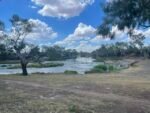


Introduction by Croakey: An online survey has launched today so Aboriginal and Torres Strait Islander people can nominate their priority topics for scientific inquiry, to inform future work by CSIRO.
The Our Way Science survey – developed by Yulang, an Aboriginal-led consultancy, with funding from CSIRO – asks about priorities across many areas, including around Caring for Country, health and wellbeing, climate, and cultural heritage and knowledge.
Below, Dr Cas Sedran-Price, a proud Muruwari/Gangugari woman and a Senior Researcher at the University Centre for Rural Health, University of Sydney, explains the survey’s significance, and encourages Croakey readers to help share the news.
“The aim is not to ask communities to fit their priorities into an existing science agenda, but to help shape what that agenda should be,” she says.
Cas Sedran-Price writes:
Aboriginal and Torres Strait Islander Peoples have been practising, growing and sharing science and knowledge for more than 65,000 years. Our knowledge systems come from deep relationships with Country, careful observation, practice, testing, teaching and responsibility across generations. They are living knowledge systems, continually evolving, adapting and responding to change.
From a Muruwari perspective, the natural, spiritual and cosmological worlds are interconnected. Mayi (meaning Country) is not something separate from us: we are part of Country, and Country is part of us. Our relationships extend to our kin, including our non-human relations, and to our Mayi. These relationships shape how we understand knowledge, evidence, responsibility and science.
This matters because Indigenous science does not simply offer another source of information to be extracted or added to colonial science. There is a fundamental difference. It comes from our ways of knowing, being and doing. We have relationships and responsibilities to the data we create, the species we work with, and the lands and waters from which knowledge comes. Science that affects our communities and Country should reflect those relationships and responsibilities.
As Aboriginal and Torres Strait Islander people, we have cultural responsibilities to look after and care for our Country, and these responsibilities have not stopped with colonisation. Nor did it stop the ongoing development of Indigenous knowledge systems and scientific practice.
Yet we as Aboriginal and Torres Strait Islander people are often the research subject, rather than the people who shape the research questions, methods, priorities or outcomes.
It is essential for Aboriginal and Torres Strait Islander people to be involved in science. But how we are involved and what roles we have are critical to ensure our Indigenous knowledges are used appropriately and are protected. Also, the sharing of these knowledges and any Indigenous data collected are on the terms outlined by Aboriginal and Torres Strait Islander people.
Survey matters
Science and technology create enormous opportunities: to care for and reconnect with Country, to improve health and wellbeing, to strengthen communities, to create new industries, to protect knowledge and to respond to climate change.
But they can also create risks when research is extractive, when Indigenous knowledge is used without proper authority or benefit, or when communities have little say over what is researched and why.
That is why the Our Way Science survey, released today, matters. It’s been developed by Yulang, with funding from CSIRO, to hear directly from Aboriginal and Torres Strait Islander people about the science questions, challenges and opportunities that matter to mob now and into the future.

The survey asks about priorities across Caring for Country; health and wellbeing; climate; energy, minerals and resources; technology and data; research, development and economic opportunities; and cultural heritage and knowledge.
The aim is not to ask communities to fit their priorities into an existing science agenda, but to help shape what that agenda should be.
What we hear will help guide CSIRO’s future science priorities and make sure they better reflect what Aboriginal and Torres Strait Islander peoples want and need from science. This survey will also help tell us what you don’t want CSIRO to do.
We have until 21 September to shape the agenda. So do us all a favour and answer the survey, and send the link or this article to others. The more the better.
Author details
Dr Cas Sedran-Price is a proud Muruwari/Gangugari woman and currently a Senior Researcher at the University Centre for Rural Health, University of Sydney.
She is an interdisciplinary researcher, her work spans Indigenous health, climate and environmental research, and Indigenous Data Sovereignty and Governance. Cas is the founder and Director of the Collaboratory for Indigenous Data Governance Australia.
For this project, she is consulting with Yulang, continuing a long relationship.

See Croakey’s archive of articles on the cultural determinants of health




Add Comment