





Australian-founded Kraken Coding has received $2.12 million from the NSW Medical Device Fund to expand its Clinical Branches platform beyond antimicrobial prescribing into 12 additional disease areas.
The company has recruited regulatory and pharmacy staff, expanded its development team and appointed its first business development manager Niko Sourlos as head of partnerships and engagement.
Clinical Branches converts hospital guidelines into interactive clinical decision pathways delivered through web and mobile applications, with offline access and synchronisation designed for remote settings.
Rather than expecting a clinician to read a lengthy guideline during a busy shift, the platform asks a series of questions and directs the user to the relevant recommendation.
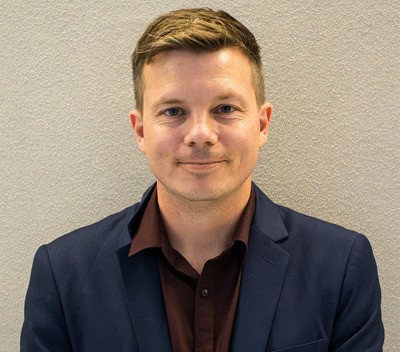
Founder John Shanks told Pulse+IT the platform was now used by more than 72 hospitals in Australia and Canada, including a rollout across WA Country Health Service sites, four Canadian hospitals and five Victorian health services.
Mr Shanks said accreditation was an important commercial driver. Kraken Coding produces dashboards to help hospitals assemble evidence for accreditation, including antimicrobial stewardship requirements under National Safety and Quality Health Service Standard 3.
He said demand for accreditation support was also driving adoption in Canada.
Inspiration from the NT
The origins of the technology can be traced to the Northern Territory, where Mr Shanks developed the original system while working as an antimicrobial stewardship pharmacist across several widely dispersed hospitals.
He said the rate of methicillin-resistant Staphylococcus aureus, or MRSA, was much higher than in cities.
“My job was to check all the antimicrobial scripts across the Top End of the NT, make sure they’re all treating the right bugs, and that was hard to do because we had four hospitals, really far apart, and there was no way to identify patients of interest,” he said.

With little funding available for a commercial system, he began building tools to help him keep track of antimicrobial prescriptions.
“It was just a bunch of Excel macros at the start. We just used what we had,” he said.
“We had a couple of hundred rules in there for identifying patients of interest. I just built them as I went. As I was doing ward rounds, I’d see a patient and know that the rule engine could have found them. And then I’d find another patient. I’d think, the rule engine could find those guys in the future.”
The first patient-identification tool combined medication and pathology information and applied hundreds of rules to flag issues including inappropriate antibiotic selection, drug interactions and renal dosing problems.
Mr Shanks said he eventually relied on it to identify patients requiring intervention across the hospitals he covered.
In 2021, Mr Shanks and his sister Esther co-founded Kraken Coding and named the product Clinical Branches, referring to the branches coming off different points in treatment and decision-support algorithms.
A clinical feedback loop
Mr Shanks said the new funding would support pathways covering 12 additional disease areas and begin to address the most common reasons people present to hospital.
“We have some exciting projects. We’ve built an AI engine which can digest hospital guidelines, or whatever you want, any content, and then it turns it into a pathway straightaway,” he said.
“And then that renders onto your mobile app as well. So you upload a guideline and, after review and approval, it turns into a mobile app.”
The company is separately developing a system to link patient outcomes with the answers clinicians provide while navigating its pathways.
It plans to use dashboards and machine-learning models to identify patient groups with poorer outcomes, compare treatments and over time help hospitals reduce length of stay, readmissions and mortality.
Australian Therapeutic Guidelines is partnering with Kraken Coding on the project, with aggregated treatment and outcome information to be fed back into national guideline development.
“We grab the clinician’s answers to the questions and then we tie that to how that patient went,” Mr Shanks said.
“This is the important thing because we are now getting a great feedback loop, and we’re feeding that back to the national guidelines”, the Australian Therapeutic Guidelines.
“We are building a really cool dashboard for them to show how people do on different treatments on a national level. We can then improve Australia-wide how our hospitals manage patients across the board, so we can bring down that length of stay for that person so they get out of the door quicker.”
Mr Shanks said the same information could eventually help hospitals forecast patient demand, bed use and staffing requirements.
“The hospital will eventually be able to predict they’re going to need, for example, 10 agency staff on Wednesday,” he said.
“We will be able to tell them what their bed stay and their patient load will be. You can start predicting how busy the hospital is going to be.”





Add Comment