


How Australian physiotherapy claimed its independence
Melissa Trudinger
Fifty years ago this month, Australian physiotherapists voted to repeal a 70-year-old ethical principle that prevented them from treating patients without a medical or dental referral. That landmark decision transformed physiotherapy in this country and paved the way for Australia to become a global leader in first contact physiotherapy. We look back at the people, politics and courage behind one of the most significant turning points in the profession’s history.
The ballroom at Sydney’s Wentworth Hotel was packed.
It was 29 August 1975 and in the cavernous room sat students, clinicians and many of Australian physiotherapy’s most influential figures.
There had been plenty of discussion throughout the week at the APA’s national conference but one session in particular had attracted a lot of attention.
Word had spread that a young physiotherapist from Queensland had written a paper and intended to challenge one of the profession’s most deeply entrenched ethical principles – that it was unethical for a physiotherapist to act in a professional capacity without a referral from a medical or dental practitioner.
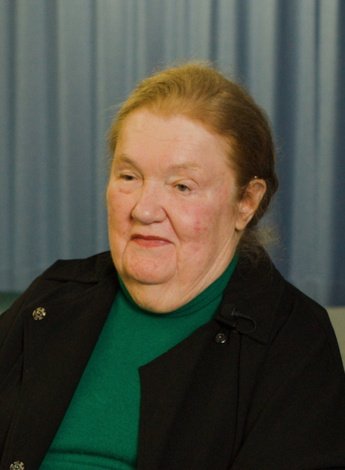
Standing backstage ready to do that was Prue Galley APAM (left).
Young.
Nervous.
Prue had never presented at a national conference before.
She was a long way from home and she knew there was no shortage of people about to disagree with what she had to say.
Walking out on stage, Prue sat on a panel.
She was the only woman and, notably, she was a young woman.
Beside her sat men of distinction and authority.
A lawyer, a senior academic (non-physiotherapist) and an orthopaedic surgeon.
She knew that the panel – and some in the audience – would not be pleased with the paper she was about to deliver, ‘Ethical principles and patient referral’.
Prue stood on stage, the nine-page typed paper in her hands and the words of her dying University of Sydney mentor and the conference’s scientific committee chair Jan Benn echoing in her ears:
‘You will go through with it.’
As Prue looked out across the audience that day, she took a deep breath and posed a question that would change the face of Australian physiotherapy:
‘Is it in the public’s best interest that the decision whether or not an individual may have the professional services of a physiotherapist should be left solely to medical or dental practitioners?’
It was the beginning of a series of events that would culminate in a decisive moment a year later, on 14 August 1976, when physiotherapy delegates at the APA’s Federal Council meeting in Melbourne voted to rescind the medical/dental referral ethic.
The trailblazer
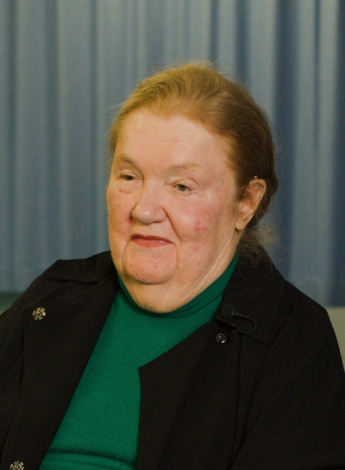
Physiotherapist Prue Galley led the charge towards first contact physiotherapy.
Looking back 50 years later, Prue remembers feeling ‘a bit like a lamb to the slaughter’.
She had been contemplating leaving the profession but had realised that it had so much to offer the community but currently had its hands tied behind its back.
How could she stay in a profession in which there seemed to be no future of advancement, she mused.
For more than 70 years, physiotherapists had been bound by the ethic that they could not treat a patient without a referral from a medical or dental practitioner.
While that wasn’t enshrined in law anywhere in the country other than New South Wales, the referral ethic had defined physiotherapy’s relationship with medicine – and physiotherapy’s place in the healthcare system.
For some in the room at the conference, Prue’s proposal to remove the referral ethic was exciting.
But for others it was confronting.
Prue is the first person to insist that the story of first contact physiotherapy did not start with her.
‘There were many people involved.
‘One thing I want to emphasise straightaway – it wasn’t only me,’ she says.
She points to the work of Louise van der Meene, Beverley Shanahan, Aura Forster, Deirdre Jones, Marie Hammond, Beryl Kennedy, Yvonne Burns AO, Pam Marsh and others, many of whom have long since passed away, who had been examining the profession’s ethical principles and future direction well before Prue stepped onto that stage in Sydney.
Nevertheless, there is little doubt that Prue became the public face of the movement and the person most closely associated with the campaign that followed.
This story really began with a letter.
In July 1974, Prue received a typed letter from physiotherapist Jan Benn, the influential head of the APA’s New South Wales School of Physiotherapy (a precursor to the Cumberland College of Health Sciences) and chair of the 1975 APA conference scientific organising committee.
Jan had heard on the grapevine that Prue was interested in professional ethics and the future of referral practices.
‘Do be big and brave and develop it as a paper,’ Jan annotated on the letter to Prue.
Looking back now, the APA Honoured Member laughs at the memory.
‘She called my bluff.’
At the time Prue was in her late 20s and a lecturer at the University of Queensland.
She had become increasingly interested in professionalism and the obligations that professions owed the communities they served.
The more she examined the literature, the more she became convinced that physiotherapy’s referral ethic, established in the early 1900s, no longer reflected the reality of modern practice in the 1970s.
What troubled Prue was not the profession’s relationship with medicine but the public consequences of maintaining a system that restricted access to physiotherapy.
In the months that followed Prue’s acceptance of Jan’s request to write a paper about patient referral,
Prue immersed herself in the literature on ethics, professionalism, education and healthcare.
She examined the historical origins of the referral ethic and questioned whether a profession that claimed expertise in movement and rehabilitation could justify requiring another profession to determine who could access its services.
Then, only months before the conference, the story took a deeply personal turn.
Prue had arranged to travel to Sydney to meet with Jan to discuss her paper and other matters.
During the conversation, Jan revealed that she had terminal cancer and only had a short time to live.
Naturally, Prue was devastated.
The conversation that followed would remain with Prue for the rest of her life.
‘She looked at me and said, “You will go through with it” after I had expressed some reluctance to deliver the paper,’ Prue says.
The responsibility began to weigh heavily on Prue.
By the time she arrived in Sydney in August for the 1975 conference, anticipation about the presentation had grown significantly.
The session had been structured to encourage debate and there were plenty of people – including some inside the physiotherapy profession itself – who were ready to challenge her position.
When she finally stood before the audience and delivered her paper, the response exceeded anything she had expected.
Rather than arguing for independence as an end in itself, she challenged physiotherapists to think about responsibility.
If they wanted to be recognised as professionals, she argued, they needed to be prepared to accept the accountability that accompanied professional autonomy.
The audience responded with a standing ovation and for a brief moment it seemed as though the debate had been settled.
In reality, it was only just beginning.
While many physiotherapists supported the proposal, others were deeply uncomfortable with it.
Some questioned whether physiotherapists had sufficient knowledge to act safely as first contact practitioners.
Others worried about damaging relationships with doctors or jeopardising the profession’s standing internationally – justifiably, as it would unfold.
Australia’s position had placed it at odds with the World Confederation for Physical Therapy (WCPT) (now World Physiotherapy), which continued to support referral-based practice.
There were genuine concerns that Australia could be expelled from the WCPT over its stance (see breakout at end of article).
Then there were the legalities of the issue to consider.
Prue suddenly found herself at the centre of controversy she hadn’t anticipated.
‘There were people who thought I was anti-medical,’ she recalls.
‘I wasn’t anti-medical at all.
‘I never, ever thought that we should turf the medicos out but that was an accusation levelled at me at the time.’
The criticism could be personal and at times isolating for Prue.
Yet support continued to grow as physiotherapists around the country debated the issue in state branches, committees and professional publications.
The witness

Jennifer Paratz was in the audience when Prue Galley stood up to deliver her paper.
As a then final-year physiotherapy student, Specialist Cardiorespiratory Physiotherapist (as awarded by the Australian College of Physiotherapists in 1994) Dr Jennifer Paratz FACP (left) attended the 1975 conference expecting to learn from some of the profession’s most respected clinicians and educators.
Like many students at the conference, Jennifer was excited by the opportunity to hear from leaders whose names she had encountered throughout her training in Sydney.
What she did not expect was to witness a moment that would remain vivid in her memory for the next 50 years.
At the time, physiotherapy students were taught within the existing referral system and accepted it largely without question.
Physiotherapists exercised considerable clinical judgement but medical referral remained a routine part of practice – and few students could imagine that it would one day disappear.
That was why Prue’s presentation made such an impact.
‘I sat in on that and even then, as a student, I realised the significance of it,’ Jennifer says.
What struck Jennifer the most was the courage involved.
Looking back now, Jennifer appreciates the professional and personal risks Prue was taking by publicly questioning a principle that had existed for generations.
‘It was something completely new in my mind.
‘We were being taught to be professionals but we were always told that you had to get referrals and check with people and those sorts of safe guidelines,’ Jennifer says.
Five years later, after moving to Queensland and eventually meeting Prue at the university, Jennifer finally had the chance to tell Prue what the presentation had meant to her.
‘I said to her, “I was so awe-struck when you gave your talk.
‘You’re the famous person that got first contact physiotherapy for us.”
‘I think Prue should be justifiably proud of where the profession has gone and how much confidence and knowledge people have these days and how well respected they are and hopefully that will continue.’
The supporter
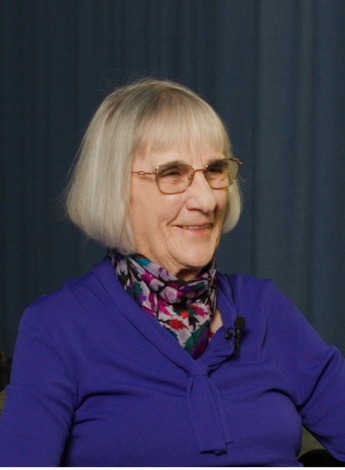
Elaine Unkles did her training and later worked with Prue Galley at the University of Queensland.
Few people are better placed to reflect on Prue’s contribution to the profession than Elaine Unkles OAM APAM (left), who first met Prue in 1962 when they were first-year physiotherapy students at the University of Queensland.
More than six decades later, the friendship remains strong.
Elaine has little hesitation when asked whether Prue was the right person to lead such a significant debate.
‘She was absolutely the right person for Jan Benn to ask to do it.’
What distinguished Prue, Elaine says, was her willingness to challenge accepted practice and the way she approached the issue.
Rather than relying on emotion or rhetoric, Prue immersed herself in the history of professionalism and ethics, determined to understand why the referral ethic existed and whether it remained relevant.
‘She went back to all the original sources to look at medical professionalism and all of that,’ Elaine says.
‘She also has the intellect to be able to think outside the box and think really broadly.’
Elaine, with their mutual friend the late Jill Hurley, recalls going up to Prue at the 1975 conference after she had presented her paper to congratulate her.
What she remembers clearly from the time immediately after the presentation was that some people were reluctant to publicly align themselves with what was considered a controversial cause.
‘Prue always said that Jill Hurley and I were the only two people who came up and congratulated her after the presentation.
‘She felt that people were a bit wary of associating themselves with this renegade.’
Not everyone was comfortable with the proposal to change the ethic.
Elaine remembers that many physiotherapists, especially those who had worked under the referral ethic for decades, worried about what greater autonomy would bring.
Nevertheless, Elaine thought the profession was ready.
One of the strongest arguments in favour of first contact physiotherapy was that physiotherapists were already doing much of what the profession claimed they couldn’t do, Elaine points out.
Although referral remained ethically mandatory, clinicians routinely received medical referrals with very little useful information in them – such as ‘sore shoulder, please treat’.
Physiotherapists, she says, were expected to work out the problem for themselves.
They were already exercising substantial clinical judgement, yet the profession continued to operate under an ethic suggesting that it could not safely function without medical referral.
‘We would still get referrals from the orthopaedic surgeons that said “painful shoulder, heat and exercise three times a week”.
‘A painful shoulder tells you absolutely nothing.
‘So we were already having to start from scratch and work out what the problem was,’ she says.
Fifty years later, Elaine can see the impact of first contact physiotherapy throughout the healthcare system.
Advanced practice roles, emergency department physiotherapists and highly specialised clinical positions have become commonplace.
What once seemed radical has become accepted practice in Australia and continues to influence physiotherapy internationally.
The clinician
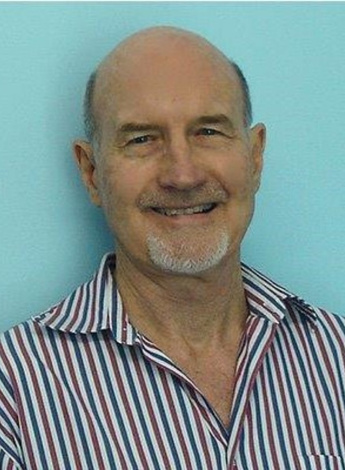
Peter Dornan was a strong supporter of the proposed changes.
The debate about first contact physiotherapy was never simply an ethical or political discussion for young sports physiotherapist Peter Dornan AM APAM (left) in the early 1970s.
It was something he encountered every day in his practice.
‘When I started practice, we accepted that the doctors were in charge,’ he says.
Peter began practising in 1967 and quickly found himself immersed in Queensland sport, working with rugby teams and treating athletes at a time when sports physiotherapy was still developing as an area of expertise.
As his reputation grew, so too did the number of athletes who sought him out directly.
‘They tried to shortcut the doctor because I saw far more injuries than any doctor or GP did at the time,’ he recalls.
Yet despite Peter’s experience and expertise, patients were still required to obtain a medical referral before treatment could begin.
In many cases, the referral added little value to the process, Peter says.
As the years passed, Peter became increasingly aware of the contradiction.
Physiotherapists were expected to manage complex musculoskeletal conditions yet formally remained dependent on another profession to authorise access to their services.
‘I knew far more about sporting injuries from day to day and on the sporting field than most GPs did,’ Peter says.
The introduction of first contact physiotherapy removed a barrier that had never made much clinical sense to him in the first place.
‘It was completely liberating,’ Peter says.
‘It meant I had the monkey off my back.
‘I wasn’t looking over my shoulder the whole time for a doctor’s referral and the patient was quite comfortable to come along to see me directly.’
He had felt, for many years, that the ethic was ‘demeaning’ from the patients’ perspective.
‘It really meant that to patients, we were on a very low level compared to the doctors.’
To this day, Peter considers the introduction of first contact physiotherapy to be one of the pivotal moments of his 60-year career.
But with the introduction of first contact physiotherapy came greater responsibility for practitioners.
‘If we were going to see patients first contact, we had to suddenly become able to pass critical observation by anybody that we knew what we were doing, so we had to increase our own education levels very quickly.’
Coupled with an increase in academic qualifications across the profession after the late Professor Margaret Bullock AM APAM became the first physiotherapist to hold a PhD in physiotherapy, the introduction of first contact physiotherapy heralded a new era for physiotherapy, Peter says.
‘Physios started to get our academic qualifications up and we started to run physiotherapy; you will find in sports medicine over the past 20 or 30 years that physios have been the most prominent profession in sports medicine and that came about, I feel, because of first contact,’ he says.
The president
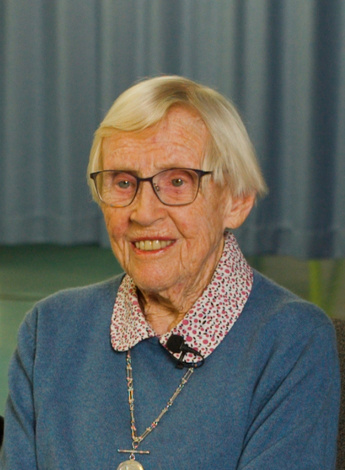
As the first physiotherapist to be president of the APA, Margaret Peel encouraged Prue’s advocacy for first contact physiotherapy.
When Margaret Peel MBE APAM (left) became the APA’s first physiotherapist national president in 1972, the profession was still finding its feet as a national entity.
‘There wasn’t really any national body,’ she recalls. ‘Each state had their own president and they did their own thing.’
The APA operated with limited resources and much of the profession’s effort was focused on building stronger national structures – a task Margaret was charged with.
Until then, each state had its own president and state delegates would be sent to Melbourne twice a year for meetings.
Margaret says that alongside the formation of a national entity came a time of improving recognition of the profession and forging its place within Australia’s changing healthcare system.
This was the backdrop to the debate over referral.
Margaret, now 95, recalls the hard work done by Prue and others to challenge one of the profession’s oldest ethical principles.
Before becoming the APA president in 1972, Margaret had been the Queensland president of the then-state-based organisation, which was where she first encountered Prue.
‘I’ve known Prue really right from the start.
‘She’s always been a very excellent physio and a very moral sort of person… I admire her greatly.’
Like many physiotherapists of her generation, Margaret had spent years working within the referral system.
Looking back now, she sees the obvious flaws in that system.
‘Somebody would come in and say, “My grandson’s got flat feet; what can you do?” and you’d have to say, “You’ll have to talk to the doctor first and see if he agrees.”
‘I mean, it was ridiculous.
‘Absolutely stupid, but that’s how it was.’
As the debate about referral progressed, Margaret became convinced that the profession was ready for greater responsibility, provided physiotherapists understood the limits of their expertise and referred appropriately when required.
As president, she felt it was her responsibility to help the profession navigate the new way forward.
‘We had to make sure that people realised that if they were going to be self-styled practitioners, they had to have the expertise to do it and work within the limits of their expertise.’
When the proposal was finally put to the Federal Council meeting on 14 August 1976 in Melbourne, the result was emphatic.
Physiotherapists overwhelmingly supported the rescinding of the referral ethic and a new ethic was enacted allowing for direct access.
‘We couldn’t have stayed as we were,’ Margaret reflects.
What happened during those years for physiotherapists was nothing less than a complete transformation of professional identity, the APA Honoured Member says.
‘It was an exciting time, really.
‘The profession came of age over those few years.
‘We were a force then to be reckoned with.’
The reformer
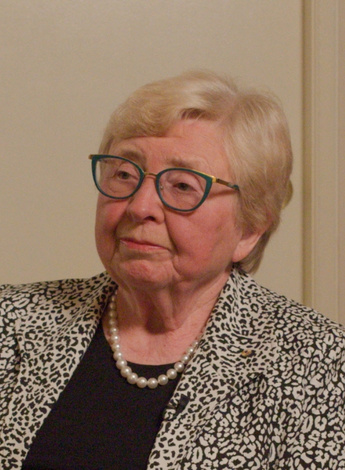
Pat Trott was the APA’s president at the time the ethic was rescinded, and felt that concerns about whether physiotherapists were ready for the move was unwarranted. .
Taking over the reins from Margaret Peel as APA president in 1975 was Associate Professor Pat Trott AM FACP (left), who joined the APA in 1963.
Pat recalls that many of the concerns about first contact physiotherapy came not from doctors but from some physiotherapists.
In particular, many senior members of the profession worried that removing the referral ethic would place responsibilities on young graduates that they were not equipped to manage.
‘The older members felt quite concerned and thought it was a retrograde step,’ Pat says.
‘They didn’t feel that physiotherapists could diagnose a patient’s problem.’
Pat, a Specialist Musculoskeletal Physiotherapist (as awarded by the Australian College of Physiotherapists in 1984) and an APA Honoured Member, recalls being asked to speak to two gatherings of 200–300 physiotherapists in Sydney and Brisbane about rescinding the ethic and being challenged quite strongly by some in the audience.
‘They asked, “Would the president mind telling us of any single benefit there will be?” – you know, that sort of thing.
‘They were really very concerned that we were taking this step.’
While she says she understood their concerns, Pat felt that they underestimated the profession’s capabilities.
As a lecturer at the University of South Australia (now Adelaide University), Pat was among a group of educators who strongly supported direct access.
She notes that every head of every physiotherapy school that existed in Australia at the time backed the move, believing that graduates possessed the knowledge and skills required to assess patients safely and refer when necessary.
‘They all felt that we did provide a good education and that our young graduates were equipped to go out and treat patients – to examine them, treat them and then, if they felt that the treatment was not effective, to refer back the other way to a doctor,’ she says.
Pat says that prior to the rescinding of the ethic, physiotherapy had become an anomaly among health professions.
‘We were the only health profession that actually needed to be guided by a doctor’s referral.’
Speech pathologists, occupational therapists, pharmacists and dietitians all operated with greater independence, despite having educational standards comparable to physiotherapy.
Having worked in both public and private settings at the time, Pat says that despite the upheaval that the rescinding of the ethic created within the profession, few in health professions outside of physiotherapy were impacted by the change.
‘Lots of the doctors didn’t really know that we had changed.
‘I still received referrals from them and was able to take other patients, of course.’
She adds that in many ways, the change helped to bring physiotherapy closer to medicine because referrals between the two professions worked both ways and mutual respect for what each could offer patients grew exponentially.
‘I think it was a privilege to have been national president at that time in the history of our profession,’ Pat says.
The new guard
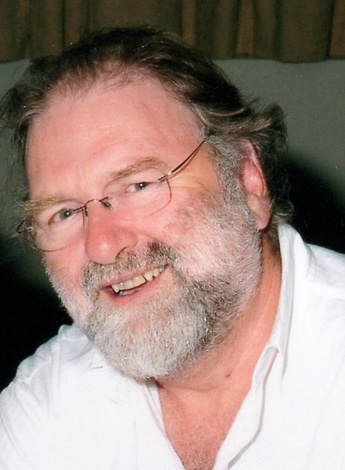
As a delegate to the WCPT in 1982, Rod Farr and his colleagues blocked moves by the Dutch to reinstate the medical referral ethic.
When Rod Farr (left) arrived back in Australia in 1972 after working in Canada, he discovered that private practice physiotherapy in Australia was at a crux, with an increase in male graduates and private physiotherapy practices, recognition of the physiotherapist’s value in the sporting arena and workplace, increased interest in manual therapy thanks to the likes of Geoff Maitland, Bob Elvey and Brian Edwards, and significantly increasing competition from osteopaths and chiropractors, who were unrestrained in their public access and self-promotion.
Rod opened a practice in both Albury and Wodonga and operated with direct access for private patients due to the personal relationships he developed with local medical practitioners, who came to see physiotherapists as professional equals.
Being elected to the local hospital board assisted in this relationship.
‘I had worked for 18 months in Ontario, where all referrals were dependent on medical practitioners, who were the “gatekeepers” of the provincial health insurance fund that was the payer.
‘I was determined to practise independently in Australia.’
Rod had long been an active member of the APA, joining as a new graduate in 1968.
As a student, he and fellow student Peter Duras had created the Australian Physiotherapy Students Association at the time of the WCPT conference in Melbourne in 1967.
Rod served on the Victorian APA Branch Council and the Private Practitioners Group Victoria in the 1970s, at a time when these groups, both in the state arena and federally, were actively supporting the rescinding of the referral ethic.
Subsequently, as a delegate and chairman of the National Private Practitioners Group, he was involved in the writing, testing and implementation of the practice accreditation program for private practices in Australia, one of the purposes of which was the quality of service delivery to patients.
This was the first such national program in the world.
Along with primary contact and Australia’s mixed remuneration system, it made Australian physiotherapists the most independently practising physiotherapists in the world – a great responsibility recognised by both the practitioners and the educators who were charged with preparing them.
Rod was an APA delegate at the WCPT conference in 1982 in Stockholm, when the Royal Dutch Society for Physiotherapy attempted to reinstate the medical referral ethic to the WCPT ethical rules and consequently remove Australia from the WCPT.
Rod believes that this was their trade-off with the Royal Dutch Medical Association in exchange for support in their fee negotiations with their government.
‘We successfully lobbied the other delegates, most of whom were keen to remove their own access restriction, and consequently the move by the Dutch was unsuccessful,’ says Rod.
An APA Titled Sports and Exercise Physiotherapist who retired from clinical practice in 2011 to lecture at Charles Sturt University, Rod firmly believes that he would not have continued in the profession for 40 years had he not had the ability to practise independently with the status of a primary contact practitioner.
This status has been sought and achieved by multiple national physiotherapy organisations across the world over the past 50 years and Australia has been in the vanguard of that movement.
The advocate

Jonathon Kruger believes moving to a first contact model is one of the most important developments in the history of the physiotherapy profession, both within Australia and globally.
The significance of first contact physiotherapy became very clear to Jonathon Kruger APAM (left) when he began working internationally and saw how difficult it remained for many countries to achieve what Australia had accomplished half a century earlier.
A physiotherapist by training, the APA’s former general manager of Advocacy and International Relations and former chief executive officer of World Physiotherapy (formerly WCPT), Jonathon spent many years helping member organisations around the world pursue direct access.
‘It was the number one global physiotherapy advocacy issue,’ Jonathon says.
The realisation struck him forcefully during a direct access conference in Washington DC, USA, in 2009.
‘I realised that we’d [Australia] been the leaders of this.
‘We need to put our flag in the ground about it and make people aware that there’s an amazing history in physiotherapy and a few pretty amazing women who led the charge for something that we take for granted now but was so radical at the time,’ he says.
That reflection led Jonathon to revisit Prue’s landmark paper and write about its significance in the Journal of Physiotherapy.
In his article, published in 2010, Jonathon wrote, ‘The move to become primary contact professionals was perhaps the most significant move in the over hundred year history of the profession.
‘This was a change not taken lightly but one that grew out of a sense that the profession had matured and that it was time to move beyond our close association with the medical profession.’
Sixteen years later, Jonathon remains convinced that first contact physiotherapy was one of the most important developments in the profession’s history.
‘The realisation of the enormity of what Prue and her colleagues managed to do has just grown,’ he says.
‘No-one likes the 20-somethings telling them what to do.
‘And her persistence… to have done hard-core letter-writing campaigns and to write editorials and get things published – it was far more of an uphill battle for her at the time, at that age, being a woman, to get people to listen to her.’
What impresses Jonathon most is the courage of all those involved in bringing it about.
Australia knew it risked international isolation.
It knew there was opposition.
Yet the profession was prepared to proceed anyway because physiotherapists believed so strongly that the profession was ready.
Australia, a founding member of the then- WCPT, helped shape the conversation about direct access internationally.
The consequences of that unshakable conviction continue today.
Physiotherapy evolved into a profession recognised for research, specialisation through the Australian College of Physiotherapists, innovation, advanced clinical practice and leadership.
‘I think there would have been a ceiling on the profession if we’d never got direct access.
‘We would have been technicians who work as handmaidens to the doctors,’ Jonathan says.
Now the chief executive officer of the Australian Dental Council, he says that while many countries have embraced direct access, others are still working to achieve it.
As the profession marks the 50th anniversary of first contact physiotherapy, Jonathon hopes younger physiotherapists will take the time to understand the story behind something they now take for granted.
‘It’s important that junior physiotherapists know that it was leaders who did this and how fortunate we are,’ he says.
The legacy
More than 50 years after Prue stood before a packed audience in Sydney and asked whether physiotherapy was ready to accept greater responsibility, the answer seems self-evident.
First contact physiotherapy is woven into every aspect of Australian practice.
Generations of physiotherapists have entered the profession assuming that patients can seek care directly.
Advanced practice roles have flourished.
Research has expanded, clinical reasoning has become more sophisticated and the profession has elevated its standards through increasingly rigorous educational pathways including doctoral-level qualifications and specialisation through the Australian College of Physiotherapists.
Internationally, Australia is recognised as a leader of the profession.
Yet the story of first contact physiotherapy serves as a reminder that none of those developments was inevitable.
It took courage and it also took a personal toll on Prue, who to this day supports countries around the world in their fight for direct access to physiotherapy.
The Australian physiotherapy profession of today that Prue and others helped to transform continues to benefit from the decision five decades ago to repeal the medical referral ethic.
First contact physiotherapy is now woven into every aspect of Australian practice.
Generations of physiotherapists have entered the profession assuming that patients can seek care directly.
The story of how that came to be serves as a reminder of the conviction that so many had in the profession 50 years ago.
Leading the world efforts
At the World Confederation for Physical Therapy’s (WCPT) 8th General Congress in Tel Aviv, Israel, in May 1978, Australia was ready to risk expulsion from the international entity if the resolution it planned to table failed.
That resolution was ‘that the issue of primary practitioner status be interpreted by each country in terms of their own standards’.
Just two years earlier, Australia had repealed the ethical principle requiring physiotherapists to treat only under a medical referral.
This move put Australia at odds with some in the international physiotherapy community.
Standing ready to plead Australia’s case in Tel Aviv were physiotherapy luminaries Pat Cosh and Doreen Moore, who, with a team of physiotherapist educators, practitioners and leaders, had drafted a solid argument to present to the WCPT executive.
‘We thought we might be thrown out,’ Prue Galley recalls.
Prue was in Israel for the event, part of the Australian contingent travelling to show support for first contact physiotherapy and to help secure votes ahead of the resolution.
Pat Trott recalls that Doreen had been a previous president of WCPT, so the executive knew her and her standards.
‘I understood from them [Doreen and Pat Cosh] that at that meeting, they were quite nervous when they presented.
‘But other than one or two questions, which they answered capably, there was no kickback.’
The 1978 resolution passed, Australia remained a member of the WCPT and Australia became the first country in the world where registered physiotherapists were able, under their professional association’s ethics, to assess, diagnose and treat patients under a general scope of practice without a medical referral.
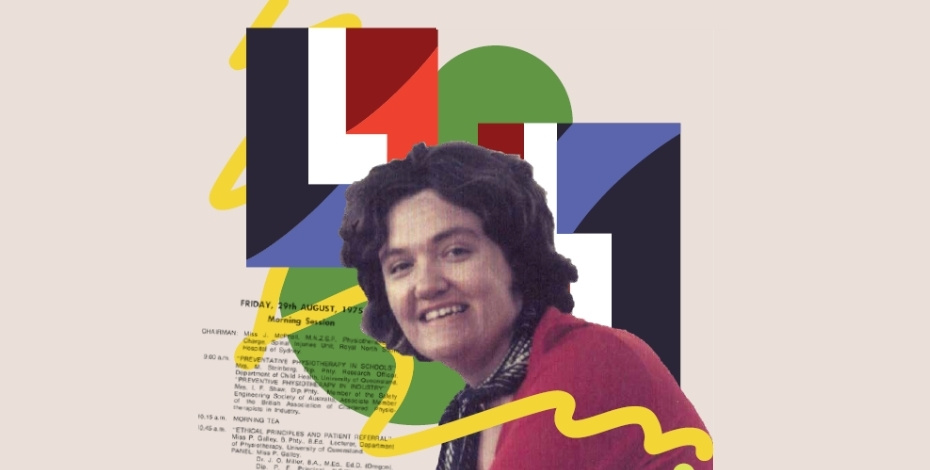
>> On World Physiotherapy Day (8 September 2026), the APA is launching a short documentary about physiotherapist Prue Galley and her campaign to allow physiotherapists to practise independently as first contact physiotherapists. We invite you to join us at the premiere – online or in person at the APA national office.





Add Comment