



Peer simulation for physio students
Brendan Bugeja
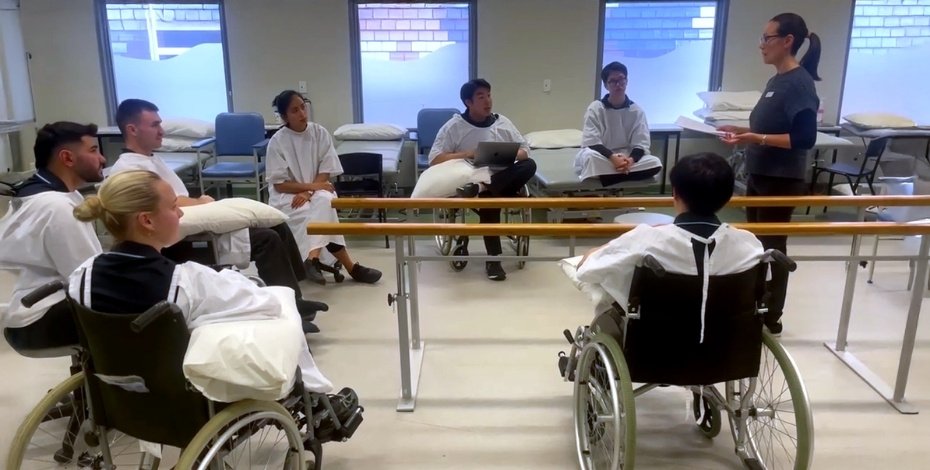
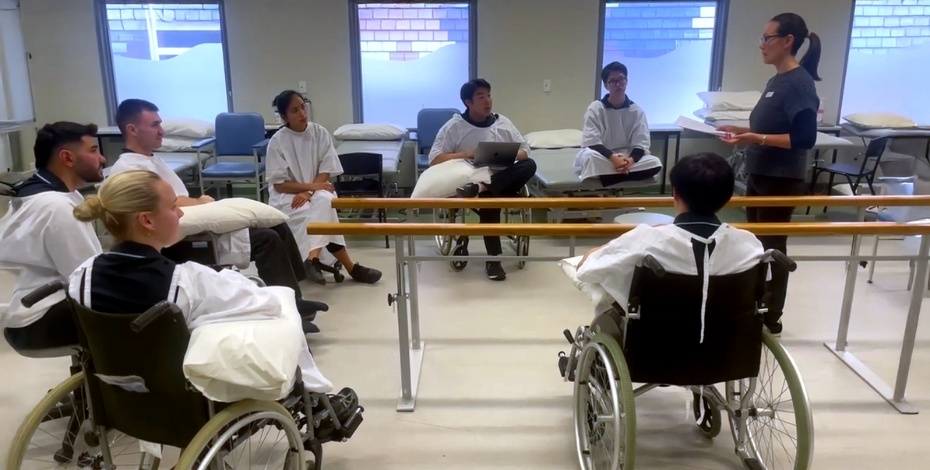
A previous recipient of a PRF Seeding Grant is investigating the use of peer simulation for training physiotherapy students.
Simulation-based education is a learning approach that supports the training of health practitioners by exposing students to realistic scenarios that prepare them for clinical practice.
One method of simulation-based education has actors, or sometimes fellow students, portraying the role of the patient.
Narelle Dalwood MACP is a senior lecturer and neurology team lead in physiotherapy at Monash University, Victoria.
In 2023, she was awarded a Physiotherapy Research Foundation Seeding Grant for her research on peer simulation, a type of simulation-based education where physiotherapy students take turns portraying the role of clinician and patient.
‘Around 12 years ago, we had an opportunity to develop a new learning activity and the third-year unit coordinator asked if I wanted to do something “neuro-ish” within a four-hour session.
I said, “Wouldn’t it be fantastic if we could set up a real clinical scenario and have students interacting with ‘patients’ exactly as they would on placement?”
That was the genesis of the peer simulation program.
‘The cohort were third-year students who had completed two and a half years of foundational theory and skills practice.
‘We split the cohort into two, so half of them were portraying “patients” and half of them were “physiotherapists”.
‘We developed cases, provided some education or preparation to those portraying the patient role and worked in the nursing simulation labs.
‘As the simulation started there were students in tears because they were so stressed and anxious about applying their skills with a patient who was actually just a fellow physio student.
‘At that point, I thought we were really onto something – there was some valuable learning happening here that could be harnessed as preclinical training.’
The current research focused on student preparation for the patient role.
The project investigated whether the method of education for patient portrayal would affect portrayal accuracy, empathy development and academic performance.
Fifty-seven third-year physiotherapy students were randomised into either an intervention group, which prepared the students for patient portrayal using best-practice guidelines for training simulated patients, or a control group, which offered unstructured preparation similar to that used for role-play.
Before each peer simulation session, all students preparing for the patient role had 40 minutes to prepare for their patient portrayal.
Students in the intervention group had video snippets demonstrating the patient’s communication and movement, tutor guidance, prompted rehearsal and feedback on their patient portrayal.
The control group reviewed written materials about the patient and were encouraged to prepare independently in the presence of a tutor who was available to answer questions.
Results demonstrated that there were no significant differences between the two groups in terms of portrayal accuracy, empathy or grades.
However, when assessed by a blinded observer for accuracy of patient portrayal, there was a significant association with the students’ third-year Objective Structured Clinical Examination scores as well as their overall subject grade.
Seventeen students (seven from the intervention group and 10 from the control group) then volunteered to participate in a focus group, where themes were identified relating to perspectives on education approaches for patient portrayal.
Overall, students reported that scaffolded, tutor-led preparation with a focus on portrayal accuracy and role commitment was important for their learning.
The addition of brief videos highlighting key patient information was considered useful and time efficient.
Tutor guidance prompting engagement with patient portrayal education and providing feedback on accurate patient portrayal is key.
Students from both groups reported that switching roles between physiotherapist and patient within each session promoted empathy development.
Further stages of the research aim to incorporate co-design elements into preparation for the patient role.
‘One thing that will strengthen the program is building the patient voice.
‘I would like more consumer involvement and more co-creation in the cases themselves and in the education of students for patient portrayal.
‘It would be incredibly valuable to have people with lived experience help educate the students on accurate, realistic and authentic patient portrayal.’






Add Comment