



Practice, progress and possibility
Chloe Pigneguy
AWARD Bridget Shaw AM’s King’s Birthday honour reflects a career spent helping physiotherapy take on a greater role
in patient care and the health system. Marina Williams reports.
Bridget Shaw MACP AM has spent more than 40 years in physiotherapy – across hospitals, education, research, advocacy and service development – as the profession’s role in public health, clinical training and advanced practice has expanded.
In the 2026 King’s Birthday Honours, Bridget was appointed a Member of the Order of Australia (AM) in the General Division for significant service to physiotherapy, to clinical training and to advanced practice leadership.
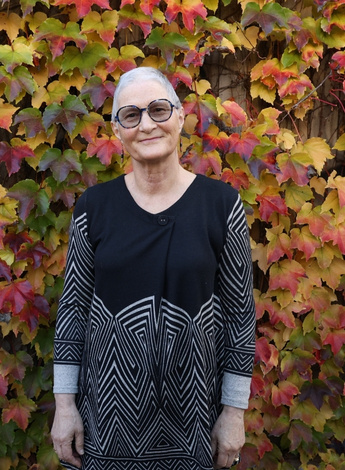
For Bridget, the honour has prompted reflection after decades as an APA volunteer and leader, advocate, clinician, educator, manager and researcher. It is personal recognition but she sees it as more than that.
‘It’s been a lovely, affirming way to reflect back. But I’m also so proud that it’s a recognition of physio and of the roles that I have taken on in support of the profession.’
The official notification did not immediately feel real. As with many people who receive unexpected correspondence from the Governor-General’s office, Bridget’s first response was to question its authenticity.
‘My first thought was spam.’ She checked the email address separately before replying to confirm the nomination was genuine. ‘It was completely surreal.
It just never occurred to me that I would even be considered for something like that.’
The recognition comes while Bridget continues to contribute to the APA’s work on how advanced practice physiotherapists are trained, recognised and supported to work to their full capability.
Bridget has been an APA member since 1979 and her first APA committee role was with the Paediatric national group in 1982, when she was working at the Royal Children’s Hospital. Her involvement with the APA has continued across almost every decade of her career.
Her many roles have included president of the APA Victorian Branch, chair of the APA Leadership and Management national group, chair of the Victorian branch of the Advanced Practice (including Emergency Department) national group and member of the APA Advanced Practice Career Pathway Working Group. Bridget graduated from the former Lincoln Institute of Health Sciences in 1978 and completed a Master of Manipulative Physiotherapy at La Trobe University in 2001.
Her clinical and leadership roles have taken her from paediatrics, burns and plastics to hospital physiotherapy management, general musculoskeletal outpatient practice and advanced practice in emergency departments and specialist spinal services.
The Royal Children’s Hospital provided a formative early role. Bridget worked in the burns and plastics unit and began to understand the responsibility physiotherapists could hold in complex care.
It was completely surreal. It just never occurred to me that I would even be considered for something like that.
Bridget Shaw AM
‘It was the first time I had responsibility for a clinical area. It really opened my eyes to what roles physios could do.’ The work was deeply multidisciplinary and, she says, highly functioning.
‘A lot of people think “awful, burns” but it was a fantastic multidisciplinary team – doctors, nurses, other allied health professionals.’
Later, Bridget became deputy chief physiotherapist at the Alfred Hospital, then chief physiotherapist at Western Health.
She particularly valued the leadership opportunity at Western as Sunshine Hospital opened and the physiotherapy department grew.
Her subsequent postgraduate study in musculoskeletal physiotherapy strengthened the clinical reasoning that would later underpin her advanced practice work.
That move drew together earlier experience: clinical reasoning and knowledge, team leadership, service development and the ability to work across professional boundaries.
It also gave her a practical view of the policy and workforce settings needed if physiotherapists are to use their skills more fully. Bridget’s first advanced practice role was in the emergency department at the Royal Melbourne Hospital.
She later worked in advanced practice at St Vincent’s Hospital Melbourne, including as clinical lead, before joining Northern Health. Today, she is an Advanced Musculoskeletal Physiotherapist in Northern Health’s Orthopaedic Spinal Surgical Clinic.
Across those roles, Bridget has seen advanced practice physiotherapy become more recognised in public health, although she adds that there is still more to do.
She says advanced practice physiotherapists ‘reduce hospital wait times and costs and improve accessibility.
They have highly developed knowledge, skills, experience and clinical reasoning. With a high degree of autonomy, they take primary responsibility for patient assessment, diagnosis and management.’ Working in multidisciplinary teams, she says, advanced practice physiotherapists can safely escalate patients for urgent medical care where needed or discharge them when further specialist care is not required.
‘Physiotherapists are pivotal to improving productivity and safe care in our health system. The profession is highly skilled and educated, providing evidencebased, value-based care across the entire health spectrum.’
For advanced practice to keep developing, Bridget says physiotherapists need clear and consistent recognition, supported by appropriate legislative, regulatory and funding settings and a widely recognised standard of competence and capability.
As part of her work in this area, she has represented the APA in prescribing and advanced practice career pathway work, including work to develop a pathway for APA titling in advanced practice.
‘There’s huge potential.’ Bridget has worked with the Department of Health, public health services, the APA and other bodies on projects intended to advance physiotherapy’s scope of practice and improve patient care.
Public health has also shaped her practice and outlook through contact with people from diverse linguistic, social, educational and cultural backgrounds.
Professional service has helped build a strong sense of belonging, she says.
Long-term involvement in the APA has connected her with leaders, colleagues and ideas well beyond her own workplace. ‘By encouraging knowledge-sharing and breaking down silos, these experiences have fostered a strong sense of belonging to a broader professional community.’
The people around her have also shaped the way she practises and leads.
‘I have had the privilege of working with many inspiring colleagues, particularly those defined by their integrity, deep knowledge and high standards.
Beyond their skills, their everyday kindness – rooted in respect, empathy and compassion – has truly anchored my own roles in clinical practice and leadership.’
The King’s Birthday honour has brought messages of congratulation and affirmation from colleagues across physiotherapy, something Bridget says has been deeply meaningful.
‘I feel like I’ve grown with the profession. It matters to me that the profession progresses.’






Add Comment